
Ingredient Guide
Jojoba Oil
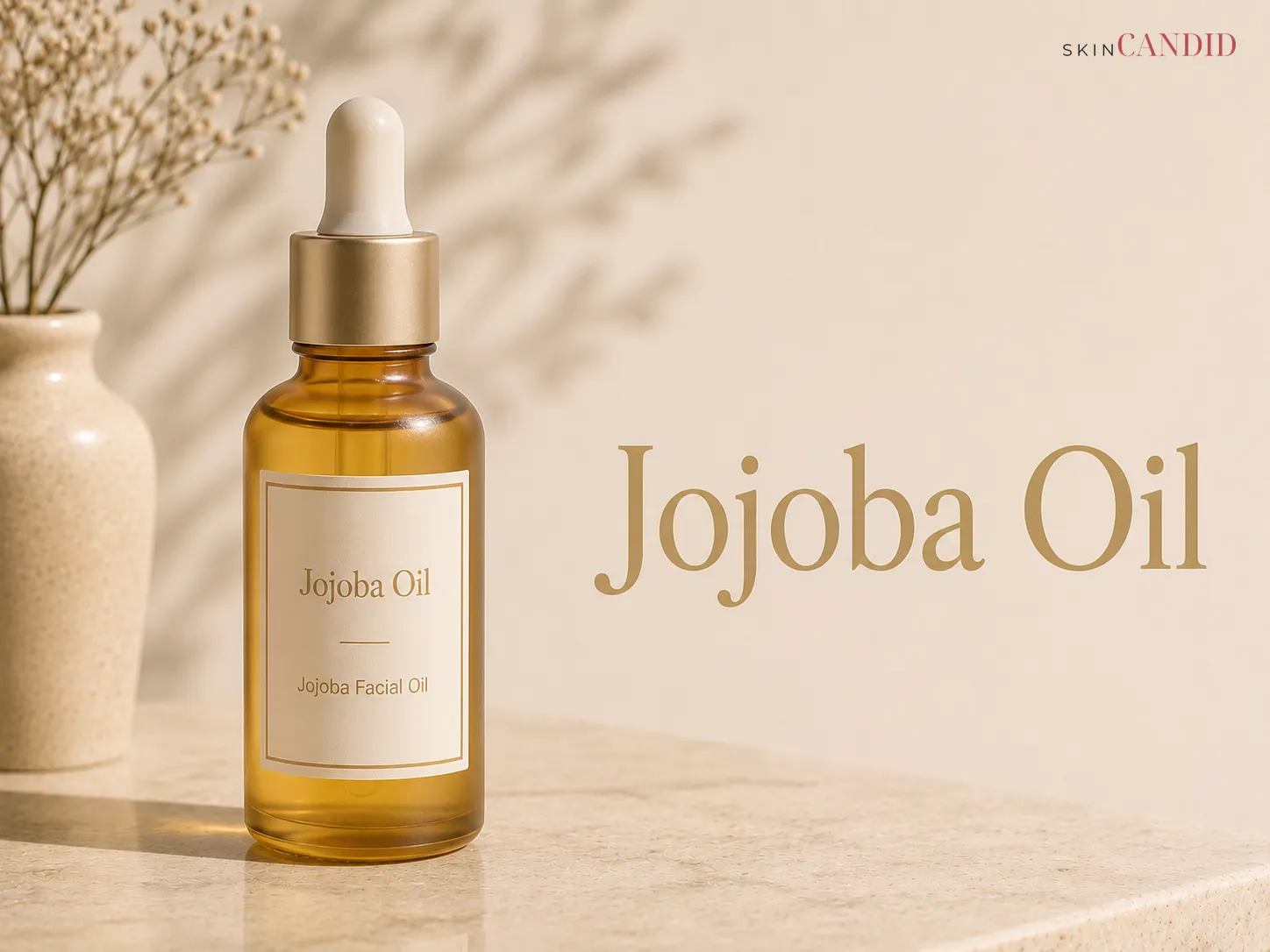
Jojoba oil is a plant-derived liquid wax that closely resembles skin’s own natural sebum, used as a lightweight emollient suited to a range of skin types, including oily and acne-prone skin.
Evidence profile
How confident is this recommendation?
Confidence is shown in plain categories, not a numerical trust score.
Reasonable evidence for emollient and moisturizing benefits, supported by its similarity to natural skin lipids.
Concentration is less relevant than for actives; it’s typically the primary or a major ingredient when included.
Its lightweight, non-greasy feel is a genuine practical advantage.
It’s a supportive emollient rather than a targeted active ingredient.
Direct head-to-head studies between different facial oils are limited.
What it is
A liquid wax that closely mimics skin’s own sebum.
Despite being called an ‘oil,’ jojoba is technically a liquid wax ester extracted from the seeds of the jojoba plant. Its molecular structure closely resembles human sebum, which is thought to explain why it’s generally well absorbed and rarely feels greasy.
This similarity to natural skin oils also contributes to its reputation as non-comedogenic, making it a popular choice even for oily and acne-prone skin types that might react poorly to heavier oils.
Evidence at a glance
Useful evidence, with important limits.
Emollient and moisturizing support
Reasonable evidence supports jojoba oil’s role as an effective, well-tolerated emollient.
Limit: Like most emollients, benefits are supportive for hydration and comfort rather than treating specific skin conditions.
Suitability for oily and acne-prone skin
Its structural similarity to sebum and generally non-comedogenic reputation make it a popular choice for these skin types.
Limit: Individual tolerance still varies, and patch-testing is reasonable for acne-prone skin.
Concentration guide
Typically used as a primary or near-pure ingredient.
| Concentration or form | How to interpret it | Practical use |
|---|---|---|
| Near-pure jojoba oil | Common in dedicated facial oil products. | A straightforward way to evaluate what you’re using. |
| Blended with other oils | Common in multi-oil facial oil formulas. | Check the full ingredient list to understand jojoba’s relative proportion. |
Skin Candid view: Because jojoba oil is generally used as a primary ingredient rather than a small-percentage active, judge products by their overall oil blend and how they feel on your skin.
How to use it
Use as a moisturizing step, any time of day.
Easy to introduce: Jojoba oil’s gentle, well-tolerated profile means it generally doesn’t require careful gradual introduction.
Using it with other ingredients
Reduce routine complexity before testing combinations.
Retinol
Can help support the skin barrier during retinoid use, though applying at a separate time from actives is common practice.
Side effects and caution
Generally very well tolerated.
- Irritation is uncommon; jojoba oil is considered one of the gentler facial oils available.
- Those with a specific nut or plant sensitivity should patch-test first.
- Discontinue if unexpected breakouts or irritation occur, though this is uncommon.
Frequently asked questions
Jojoba Oil, without the pressure to tolerate everything.
Will jojoba oil clog my pores?
It’s generally considered non-comedogenic and well tolerated even by oily and acne-prone skin, though individual reactions can vary.
Can I use jojoba oil instead of a moisturizer?
It can work as part of a routine, though many people still prefer to pair it with a traditional moisturizer for a more complete hydration strategy.
Is jojoba oil good for sensitive skin?
Generally yes, its gentle, sebum-like profile makes it a reasonable option for sensitive skin, with the usual caveat of patch-testing new products.
Related decisions
Continue from the question you are actually trying to solve.
Sources reviewed
Primary evidence and medical guidance behind this page
- NIH NCBI Bookshelf (StatPearls): Moisturizers
- American Academy of Dermatology: Dermatologists’ top tips for relieving dry skin
Sources support the general editorial conclusions shown here. They do not prove that every product containing this ingredient will produce the same result.