
Skin Type
Combination Skin
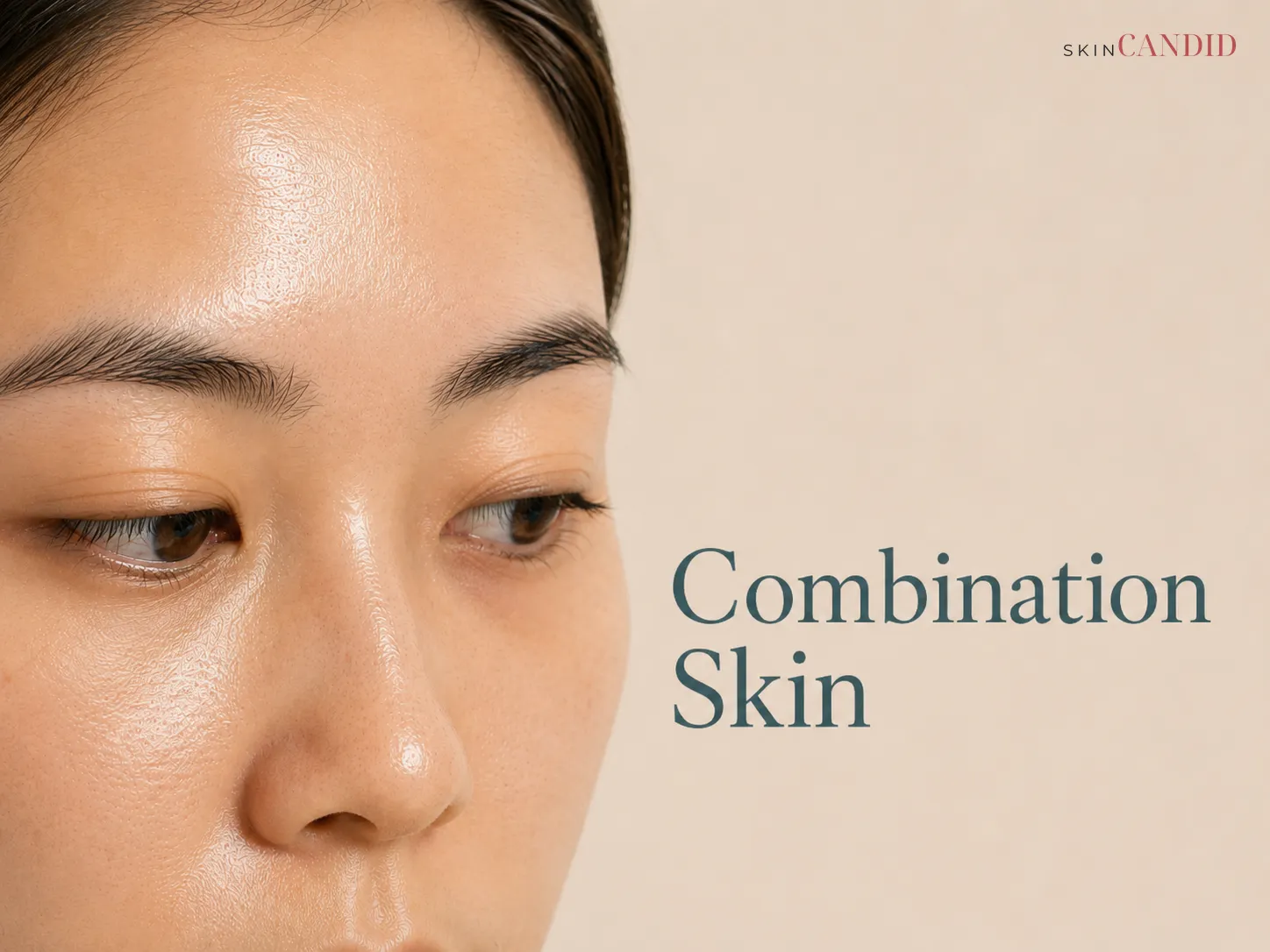
Combination skin means an oilier T-zone alongside drier or more balanced cheeks, which often calls for treating different areas of the face somewhat differently.
The direct answer
What does it mean to have combination skin?
Combination skin describes an oilier T-zone (forehead, nose, chin) alongside drier or more balanced cheeks, consistently over time.
This is one of the more common skin types, and it often means a single moisturizer or cleanser doesn’t feel equally right across the whole face. Many people find that treating the T-zone and cheeks somewhat differently works better than applying one approach everywhere.
How combination skin commonly behaves
What to expect day to day
Shine concentrated in the T-zone
The forehead, nose and chin tend to look oilier than the cheeks by midday.
Cheeks can feel dry or tight
The outer face often behaves more like dry or normal skin, sometimes feeling tight after cleansing.
Can shift with season
Many people notice their T-zone gets oilier in summer and their cheeks get drier in winter.
One product rarely fits perfectly everywhere
A single formula that’s ideal for the T-zone may feel too rich for it, or too light for the cheeks.
How it differs from temporary conditions
Combination skin isn’t the same as uneven dehydration
Combination skin
A consistent, ongoing pattern of an oilier T-zone and drier or balanced cheeks.
Uneven dehydration
Some areas of any skin type can temporarily lack water more than others, without this being a fixed combination-skin pattern.
Seasonal shifts
Combination skin’s balance can shift with weather, which is a normal variation rather than a sign something’s wrong.
Why the distinction matters
A consistent T-zone/cheek pattern calls for a zone-specific routine; a one-off dehydrated patch just needs a hydrating product for a few days.
A simple routine framework
One base routine, with zone-specific adjustments
- Cleanse with a balanced formulaA gentle cleanser that isn’t too stripping for the cheeks or too rich for the T-zone.
- Apply a lightweight treatment, if usedNiacinamide is generally well tolerated across both oilier and drier areas.
- Moisturize by zone, if neededSome people apply a lighter formula to the T-zone and a richer one to the cheeks.
- Protect with a broad-spectrum sunscreenChoose a texture that feels comfortable across the whole face.
Ingredient and texture guidance
What tends to help, and what to use cautiously
Generally well suited
- Niacinamide, which suits both oilier and drier areas
- Lightweight, gel-cream moisturizer textures as a single all-over base
- Zone-specific layering (extra richness on cheeks, lighter on the T-zone)
- Non-comedogenic sunscreen formulas
Use more cautiously
- Very rich, heavy moisturizers applied uniformly across the whole face
- Harsh, stripping cleansers that can worsen cheek dryness
- Assuming one product line’s entire routine will suit every zone equally
Common mistakes
What can make combination skin harder to manage
- Treating the whole face as purely oily, which can leave cheeks feeling stripped.
- Treating the whole face as purely dry, which can worsen T-zone shine and clogged pores.
- Assuming your balance is fixed rather than adjusting with the seasons.
- Using multiple targeted products for every zone instead of one flexible base routine.
When symptoms suggest a condition, not a skin type
Some signs point beyond a simple skin-type tendency.
- Frequent breakouts concentrated in the T-zone rather than occasional shine
- Redness or irritation on the cheeks beyond typical dryness
- A sudden, significant shift in the oily/dry balance that’s new for you
- Discomfort that doesn’t improve with a reasonable, zone-adjusted routine
Frequently asked questions
Short answers about combination skin
Do I need different products for my T-zone and cheeks?
Not necessarily separate products, though some people find applying moisturizer more heavily on the cheeks and lightly on the T-zone works well.
Is combination skin the most common skin type?
It’s commonly reported as one of the more frequent skin type patterns, though exact prevalence varies by population and how skin type is assessed.
Why does my T-zone get oilier in summer?
Heat and humidity can increase oil production, which is a normal seasonal shift rather than a sign of a different skin type.
Can combination skin use the same sunscreen everywhere?
Yes, most people find one broad-spectrum sunscreen texture works across the whole face, even with combination skin.
Related routines and concerns
Continue building a routine that fits your skin
Sources reviewed
Guidance behind this page
- American Academy of Dermatology: Dermatologists’ top tips for relieving dry skin
- NIH NCBI Bookshelf (StatPearls): Moisturizers
Sources support general editorial guidance. They do not replace personal skincare advice from a qualified clinician.