
Skin Type
Oily Skin
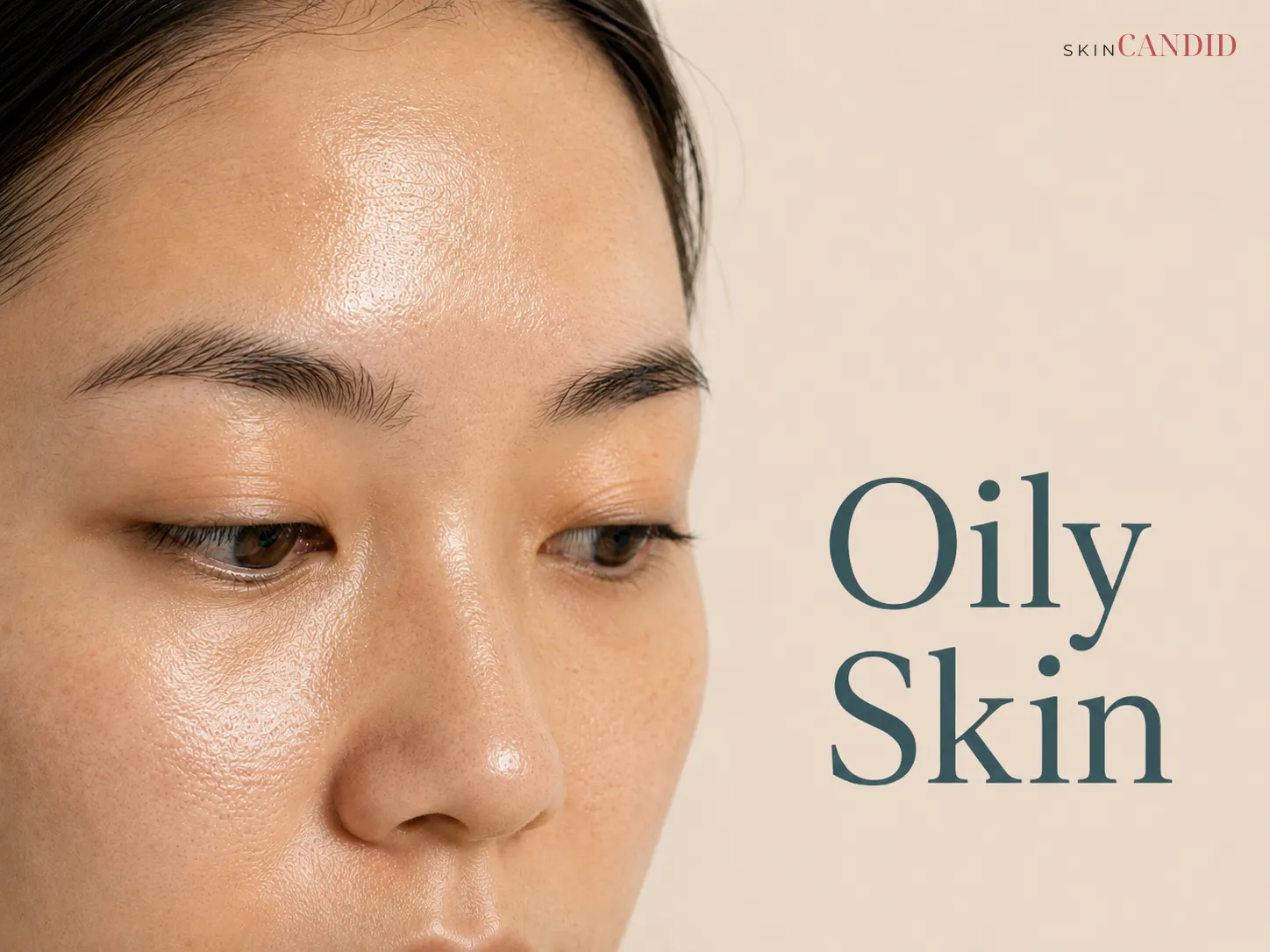
Oily skin describes a consistent tendency toward higher natural oil production, not something to fight aggressively. The goal is balance, not elimination.
The direct answer
What does it mean to have oily skin?
Oily skin is a consistent tendency toward higher sebum production, generally stable over time rather than a short-term reaction.
Oily skin still needs moisturizer and gentle care; stripping it aggressively often triggers more oil production as skin tries to compensate. Oil production can also shift with hormones, climate, and age, so this tendency isn’t necessarily fixed for life.
How oily skin commonly behaves
What to expect day to day
Shine returns by midday
A consistent pattern of visible shine, especially in the T-zone, even shortly after cleansing.
Often paired with larger-looking pores
More visible pores, particularly on the nose and forehead, commonly accompany oilier skin.
More prone to clogged pores
Excess oil can contribute to a tendency toward blackheads and clogged-pore-related texture.
Tolerates richer actives better
Oilier skin often tolerates exfoliating acids and other actives with less dryness than drier skin types.
How it differs from temporary conditions
Oily skin isn’t the same as acne-prone skin or a breakout
Oily skin
An ongoing tendency toward higher oil production. Doesn’t necessarily mean frequent breakouts.
Acne-prone skin
A separate tendency toward clogged pores and breakouts that often, but not always, overlaps with oily skin.
A single breakout
An occasional blemish doesn’t necessarily indicate oily skin as an ongoing type; context and frequency matter.
Why the distinction matters
Oily skin needs oil-balancing, non-comedogenic care generally. Active breakouts may call for a more targeted acne routine on top of that.
A simple routine framework
Balance oil without over-stripping
- Cleanse gentlyA gel-based cleanser removes excess oil without over-stripping skin.
- Apply a lightweight treatment, if usedNiacinamide or a BHA can help manage oil and pores over time.
- Moisturize with a lightweight formulaA gel or fluid moisturizer hydrates without adding heaviness.
- Protect with a non-comedogenic sunscreenChoose formulas specifically labeled for oily or acne-prone skin if regular sunscreen feels too heavy.
See the full Oily Skin Routine for morning and evening steps →
Ingredient and texture guidance
What tends to help, and what to use cautiously
Generally well suited
- Niacinamide for oil and pore support
- Salicylic acid (BHA) for clogged pores
- Lightweight gel or fluid moisturizers
- Non-comedogenic, oil-free sunscreen formulas
Use more cautiously
- Heavy, oil-based occlusive moisturizers as a daily default
- Skipping moisturizer entirely to manage shine
- Alcohol-heavy toners marketed for oil control, which can over-strip
- Aggressive daily physical scrubbing
Common mistakes
What can make oily skin harder to manage
- Over-washing or using harsh, stripping cleansers that trigger more oil production.
- Skipping moisturizer out of concern it will add shine.
- Layering multiple oil-control actives at once instead of introducing them gradually.
- Choosing heavy, comedogenic products out of habit rather than checking labels.
When symptoms suggest a condition, not a skin type
Some signs point beyond a simple skin-type tendency.
- Frequent, painful or scarring breakouts rather than occasional shine or clogged pores
- Sudden or significantly increased oiliness that’s new for you
- Redness or irritation alongside oiliness, which can suggest a different underlying issue
- Oiliness that doesn’t respond at all to a consistent, appropriate routine
- Suspected hormonal factors contributing to sudden changes
Frequently asked questions
Short answers about oily skin
Should oily skin skip moisturizer?
No. Skipping moisturizer can trigger more oil production as skin tries to compensate; a lightweight, non-comedogenic formula is generally better tolerated.
Is oily skin the same as acne-prone skin?
Related but not identical; oily skin refers to oil production, while acne-prone skin specifically involves a tendency toward breakouts. They often overlap but aren’t the same thing.
Can oily skin become dry or combination over time?
Yes, oil production can shift with age, hormones and climate, so the balance can change over time.
Do I need special oil-control products?
Not necessarily; a gentle cleanser, lightweight moisturizer and non-comedogenic sunscreen cover the basics, with niacinamide or a BHA as reasonable optional additions.
Related routines and concerns
Continue building a routine that fits your skin
Sources reviewed
Guidance behind this page
Sources support general editorial guidance. They do not replace personal skincare advice from a qualified clinician.