
Skin Type
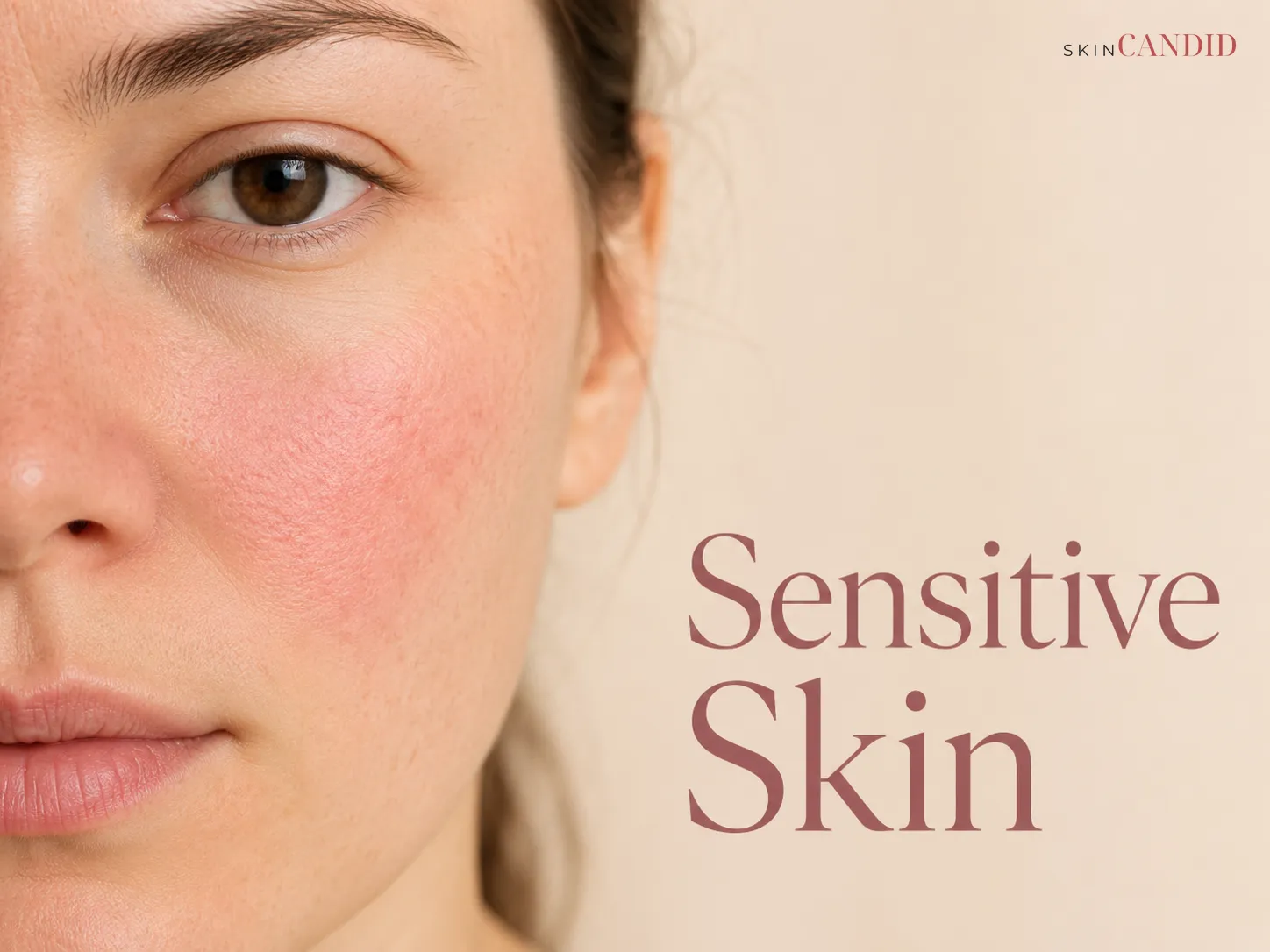
Sensitive Skin
Sensitive skin describes a consistent tendency to react to products or environmental factors more readily than most, calling for a simpler, more deliberate approach to skincare.
The direct answer
What does it mean to have sensitive skin?
Sensitive skin is a consistent tendency toward reactivity, stinging, redness or discomfort in response to products or environmental factors that many other people tolerate well.
This is a broad, self-reported tendency rather than a single diagnosable condition, though it can sometimes overlap with or point toward conditions like rosacea or eczema. A minimal, fragrance-free approach with gradual product introduction is the standard starting point.
How sensitive skin commonly behaves
What to expect day to day
Reacts to new products more often
A higher-than-average likelihood of stinging, redness or breakouts when trying something new.
Sensitive to environmental factors too
Weather changes, sun exposure or even water temperature can sometimes trigger discomfort.
Fragrance is a common trigger
Many people with sensitive skin find fragranced products, even “natural” ones, cause irritation.
Can overlap with other skin types
Sensitive skin can occur alongside dry, oily or combination skin; it’s not mutually exclusive with these.
How it differs from temporary conditions
Sensitive skin isn’t the same as a damaged barrier or an allergic reaction
Sensitive skin
An ongoing tendency toward reactivity, generally consistent across many products and situations over time.
Damaged skin barrier
A specific, usually resolvable episode of barrier stress, often traceable to a recent product or habit.
An allergic reaction
A response to one specific ingredient, which may not mean your skin is broadly sensitive overall.
Why the distinction matters
Ongoing sensitivity calls for a simplified, careful baseline routine; a one-off reaction just means avoiding that specific trigger.
A simple routine framework
Minimal, fragrance-free, introduced slowly
- Cleanse gentlyA fragrance-free, non-foaming cleanser minimizes irritation risk.
- Moisturize simplyA minimal-ingredient, barrier-supporting formula reduces the number of potential triggers.
- Protect with mineral sunscreenZinc oxide or titanium dioxide formulas are often better tolerated than chemical filters.
- Add anything new slowlyPatch-test first, then introduce one product at a time, days apart.
See the full Sensitive Skin Routine for morning and evening steps →
Ingredient and texture guidance
What tends to help, and what to use cautiously
Generally well suited
- Fragrance-free formulas specifically (not just “unscented”)
- Ceramides and other gentle, barrier-supporting ingredients
- Mineral sunscreen filters
- Simple, short ingredient lists
Use more cautiously
- Added fragrance and essential oils
- Physical scrubs and high-percentage acids
- Multiple new products introduced at once
- Chemical sunscreen filters, if these have caused irritation before
Common mistakes
What can make sensitive skin harder to manage
- Introducing several new products at once, making it hard to identify a trigger.
- Assuming “natural” or “unscented” automatically means low-risk.
- Skipping patch-testing for products marketed as gentle.
- Reaching for stronger actives to “fix” sensitivity rather than simplifying first.
When symptoms suggest a condition, not a skin type
Some signs point beyond a simple skin-type tendency.
- Persistent redness, visible blood vessels or flushing, which can suggest rosacea
- Recurring patches of dry, itchy, inflamed skin, which can suggest eczema
- Frequent or unpredictable reactions even to minimal, fragrance-free products
- Signs of an allergic reaction, including swelling, hives or significant itching
- Symptoms that don’t improve despite a genuinely simplified routine
Frequently asked questions
Short answers about sensitive skin
Is sensitive skin the same as having rosacea?
No, though they can overlap. Sensitive skin is a broader, self-reported tendency, while rosacea is a specific diagnosable condition with its own patterns, including persistent redness and visible blood vessels.
What’s the difference between “unscented” and “fragrance-free”?
Fragrance-free means no added fragrance ingredients at all; unscented can still contain masking fragrances designed to neutralize other scents, which may still trigger sensitivity.
Can sensitive skin use active ingredients like retinol?
Often yes, but starting at the gentlest available option and introducing it very gradually is especially important for sensitive skin.
How long should I patch-test a new product?
24 to 48 hours on a small, discreet area is a reasonable standard before applying it more broadly.
Related routines and concerns
Continue building a routine that fits your skin
Sources reviewed
Guidance behind this page
- American Academy of Dermatology: Dermatologists’ top tips for relieving dry skin
- American Academy of Dermatology: How to select a sunscreen
Sources support general editorial guidance. They do not replace personal skincare advice from a qualified clinician.