
Redness & Irritation
Seborrheic Dermatitis
Seborrheic dermatitis is a chronic, relapsing inflammatory condition that causes flaky or greasy-looking scale, redness or colour change, and sometimes itch on the scalp, face and other oil-rich areas.
Overview
What is seborrheic dermatitis?
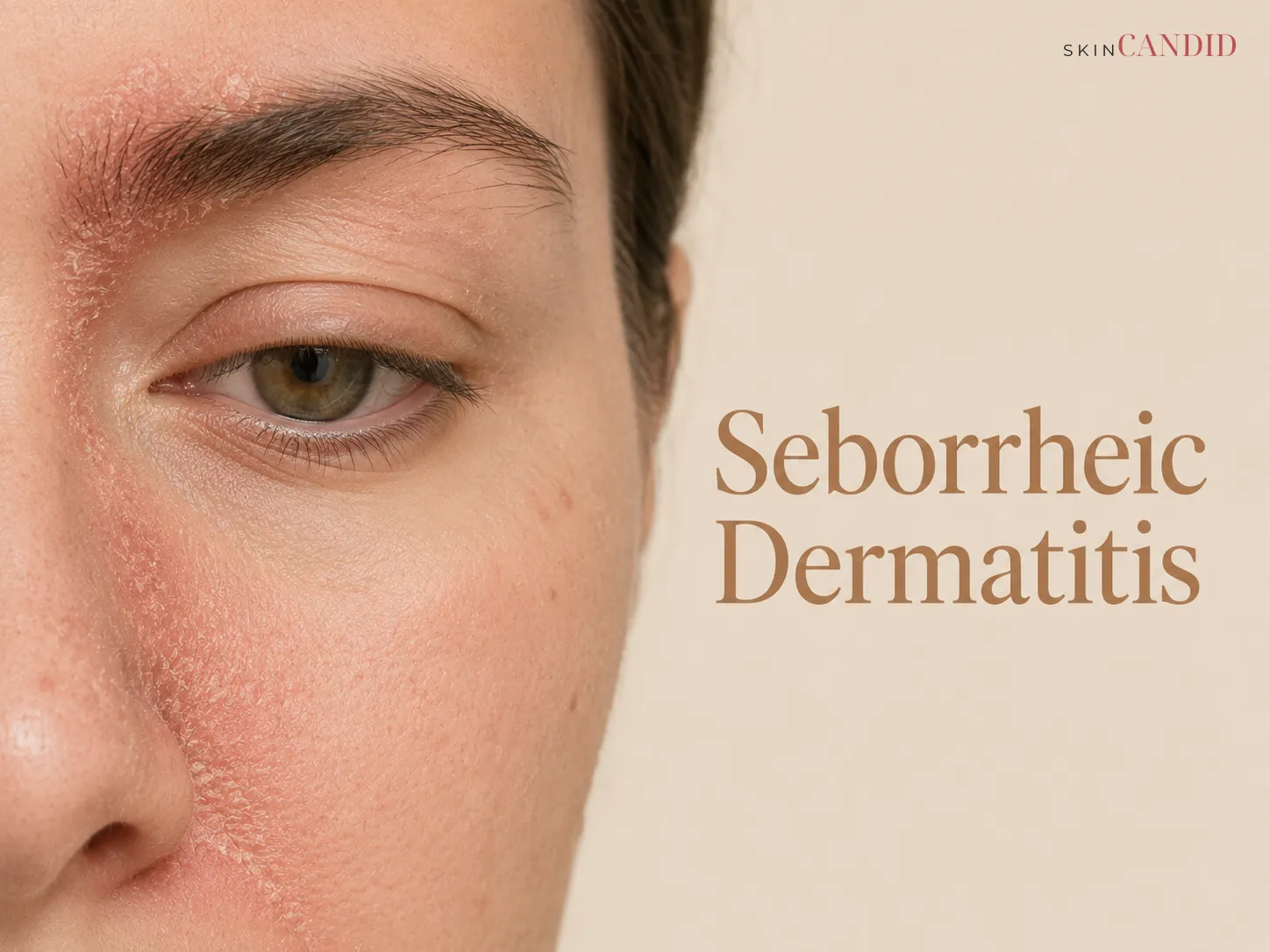
Seborrheic dermatitis is an inflammatory skin condition that develops mainly in areas containing many oil-producing glands. Common locations include the scalp, eyebrows, sides of the nose, ears, eyelids, beard area and central chest.
The visible pattern may include loose flakes, greasy-looking scale, thin scaly patches and inflammation. Redness may be less obvious on deeper skin tones, where the affected area can appear lighter, darker, pink or slightly purple.
In infants, seborrheic dermatitis commonly affects the scalp and is often called cradle cap. In teenagers and adults, it usually behaves as a recurring condition with periods of improvement and flare-up.
Common signs and patterns
What seborrheic dermatitis can look or feel like
These features can provide context, but a photograph or symptom list cannot confirm the diagnosis.
Scalp flakes and scale
The scalp may develop loose white flakes, yellowish or greasy-looking scale, or more defined scaly patches. Dandruff is often considered the mildest scalp presentation.
Facial patches
Scaling commonly develops around the eyebrows, sides of the nose, ears, hairline, eyelids and beard area.
Itch, burning or sensitivity
Symptoms may be mild, but some people experience persistent itch, stinging or burning, particularly on the scalp or during a flare.
Changes in visible skin colour
Affected skin may look red, pink, purple, lighter or darker than the surrounding area depending on skin tone and the degree of inflammation.
Causes and contributors
The condition involves more than oil or dry skin alone.
The exact cause is not fully understood. Current evidence points to an interaction between oil-rich skin areas, Malassezia yeasts that normally live on the skin, skin-barrier function and an individual inflammatory or immune response.
Stress, cold or dry weather, illness and irritating skin or hair products may contribute to flare-ups. Some neurological conditions and immune-system disorders are associated with more extensive or persistent disease, but most people with seborrheic dermatitis do not have a serious underlying illness.
What it may be confused with
Similar-looking rashes may need different treatment
Persistent scale or facial inflammation should not automatically be assumed to be seborrheic dermatitis, particularly when the symptoms, location or response to treatment do not fit.
Psoriasis
Psoriasis often forms thicker, more sharply defined plaques and may involve other body areas, the nails or a border extending beyond the scalp hairline.
Eczema
Atopic eczema is often intensely itchy and may appear with dryness, cracking or thickened skin in a different distribution.
Contact dermatitis
This may follow exposure to a particular cosmetic, hair dye, fragrance, preservative or other irritant and can closely match the contact area.
Folliculitis
Folliculitis centres on inflamed hair follicles and usually produces more distinct bumps or pustules rather than primarily flaky patches.
Bottom line
Treat the scale and inflammation, then use the lightest maintenance plan that prevents frequent flares.
Seborrheic dermatitis often improves with consistent treatment but may return after treatment stops. Different areas of the body may need different formulations.
A scalp shampoo should not automatically be used on the eyelids or sensitive facial skin. Product instructions, regional medicine rules and professional guidance take priority.
Evidence-supported options
Treatment should match the affected area and severity
This is general education, not a personal treatment plan. Product strengths, permitted uses, prescription status and recommended duration vary by country.
Topical antifungal treatment
Antifungal shampoos or creams can reduce yeast-associated scale and inflammation. Common treatment categories include ketoconazole, ciclopirox and selenium-based scalp products.
Limit: The correct formulation and schedule depend on whether the scalp, face or another area is affected. Irritation or contact reactions can occur.
Short-course topical corticosteroids
A low-potency corticosteroid may be used for a limited period to settle inflammation during a flare, particularly when redness and itch are prominent.
Limit: Repeated or prolonged unsupervised use can cause problems, especially on the face, eyelids and skin folds.
Non-steroid anti-inflammatory treatment
Topical calcineurin inhibitors may be considered for recurrent facial disease when repeated corticosteroid use is unsuitable.
Limit: These are prescription treatments in many regions, may be used off-label for this condition and can cause temporary burning or stinging.
Other prescription options
Newer topical anti-inflammatory medicines or systemic treatment may be considered for persistent, widespread or treatment-resistant disease.
Limit: Availability and regulatory approval differ by country. These options require clinician selection and monitoring.
Supportive skincare
A simple routine while seborrheic dermatitis is being managed
Supportive skincare should reduce irritation and improve treatment tolerance. It does not replace antifungal or anti-inflammatory treatment when those are needed.
Morning
- Cleanse gently Use lukewarm water and a mild, fragrance-free cleanser on affected facial skin. Avoid scrubbing away visible scale.
- Apply treatment if directed Use only a formulation intended for that body area and follow the product label or clinician’s instructions.
- Support comfort and protection Use a lightweight moisturiser if the skin feels dry and a comfortable broad-spectrum sunscreen on exposed areas.
Evening
- Wash the scalp or affected skin as scheduled Medicated shampoos need adequate contact time and thorough rinsing, but the correct schedule depends on the product.
- Use the selected anti-inflammatory treatment Apply only to the affected area and avoid extending short-course treatment without guidance.
- Reduce unnecessary irritants Keep fragranced styling products, harsh exfoliants and multiple new actives away from inflamed skin.
Common mistakes
What can make seborrheic dermatitis harder to control
- Scratching, picking or aggressively removing scale, which can increase inflammation and damage the skin.
- Using a strong anti-dandruff shampoo on the eyelids, face or another area for which it was not designed.
- Applying topical corticosteroids repeatedly or for prolonged periods without guidance.
- Treating the condition only as dry skin and layering heavy or fragranced oils over an active flare.
- Assuming every flaky or red rash is seborrheic dermatitis and repeatedly self-treating an uncertain diagnosis.
- Stopping maintenance immediately after improvement when previous flares have repeatedly returned.
When professional help makes sense
Seek assessment when the diagnosis is uncertain or the condition is not staying controlled.
- Symptoms involve the eyelids or eyes, particularly with swelling, pain, discharge or visual changes
- The rash is widespread, rapidly worsening, very painful, weeping, crusted or showing possible infection
- There is unexpected hair loss, broken hair or a scalp pattern that does not resemble ordinary dandruff
- Consistent over-the-counter treatment has not produced meaningful improvement
- Frequent flares require repeated corticosteroid use or significantly affect sleep, confidence or daily life
- An infant has an extensive, inflamed or persistent rash rather than uncomplicated cradle cap
Related reading
Continue with the next useful question
Editorial record
What this page knows, and what remains uncertain
Evidence summary
Authoritative dermatology guidance and recent reviews support topical antifungal treatment, limited anti-inflammatory treatment, gentle skincare and maintenance strategies adapted to the affected area.
Review status
Financial transparency
No paid product placement, sponsored treatment ranking or affiliate recommendation is included on this foundation page.
Recommendation logic
Options are organised by common first-line role, affected body area, flare control, maintenance needs and the point at which prescription care becomes more appropriate.
Frequently asked questions
Short answers to common questions
Is seborrheic dermatitis the same as dandruff?
Dandruff is often considered the mildest scalp form of seborrheic dermatitis. Seborrheic dermatitis can also cause visible inflammation and affect the eyebrows, sides of the nose, ears, beard area and chest.
Is seborrheic dermatitis contagious?
No. Seborrheic dermatitis is not contagious and is not caused by poor hygiene.
Can seborrheic dermatitis be cured permanently?
In teenagers and adults, it often behaves as a recurring condition. Treatment can control scale, redness and itch, but maintenance may be needed because flares can return.
Should I put oil on seborrheic dermatitis?
Oil can soften scale for some people, but heavy or fragranced products may irritate or worsen the pattern for others. Use a simple approach and follow condition-specific treatment rather than relying on oil alone.
Sources reviewed
Guidance behind this page
- American Academy of Dermatology: Seborrheic dermatitis diagnosis and treatment
- American Academy of Dermatology: Seborrheic dermatitis signs and symptoms
- DermNet: Seborrhoeic dermatitis
- European Journal of Dermatology: International expert consensus on adult scalp seborrheic dermatitis
- Journal of Cutaneous Medicine and Surgery: Current understanding of seborrheic dermatitis treatment options
Sources support general editorial guidance. They do not replace regional product labels, prescribing information or personal medical assessment.