
Redness & Irritation
Eczema
Eczema (atopic dermatitis) is a chronic inflammatory skin condition that causes dry, itchy, inflamed patches, often in the creases of the elbows and knees, that flares and settles over time.
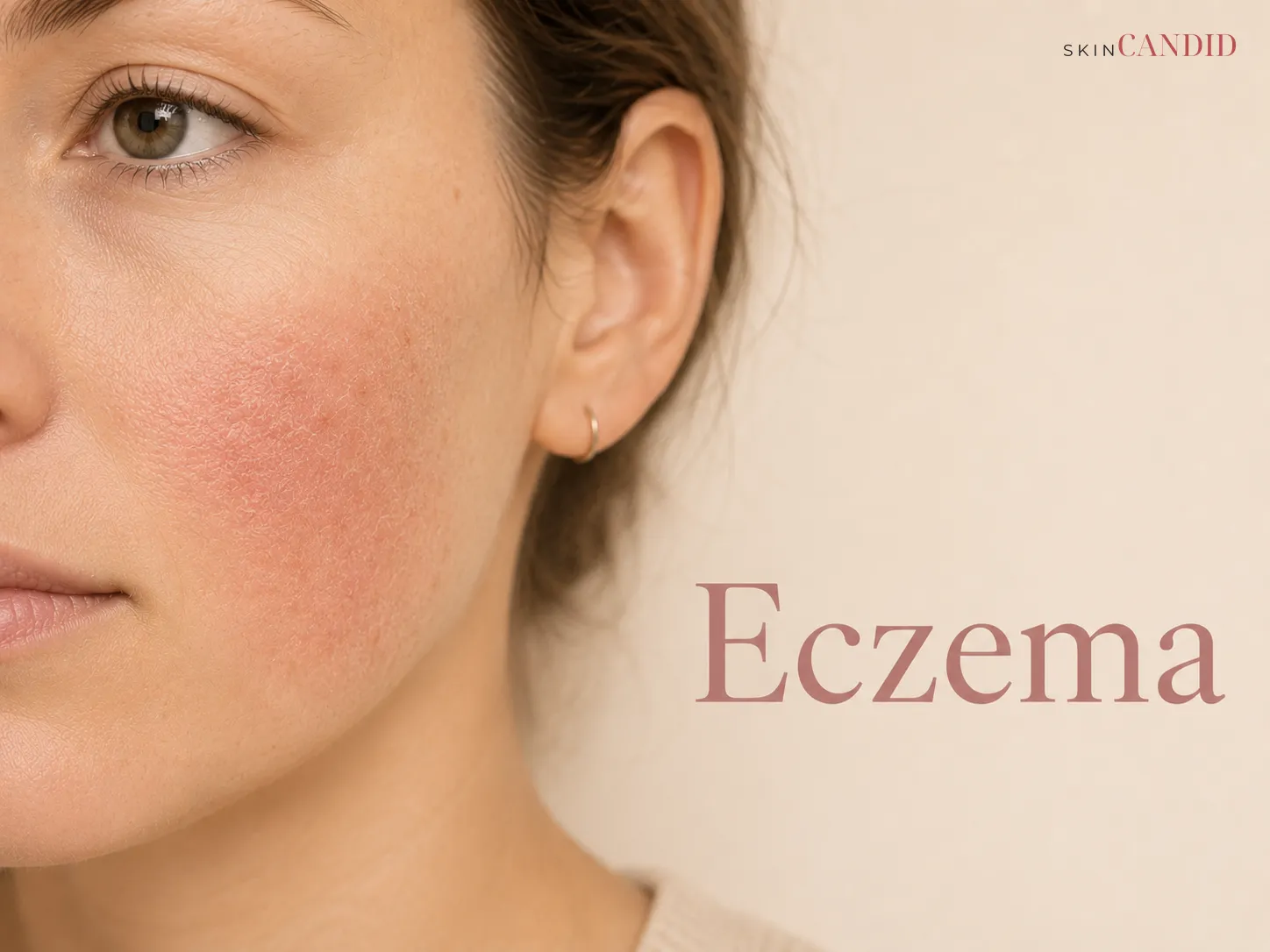
Overview
What is eczema?
Eczema, most often atopic dermatitis, is a chronic relapsing inflammatory skin condition linked to a disrupted skin barrier and an overactive immune response. It often starts in childhood but can persist or begin in adulthood.
It typically affects the creases of the elbows and knees, though it can appear anywhere, including the face and hands. It is closely associated with a personal or family history of asthma, hay fever or other allergies.
Common signs and patterns
What eczema can look or feel like
These features can provide context, but they do not confirm a diagnosis on their own.
Dry, itchy patches
Skin can look rough, dry and scaly and often itches before it looks visibly inflamed.
Red or discoloured inflamed skin
During flares, patches become red on lighter skin, or brown, purple or grey on deeper skin tones.
Weeping or crusting
Scratched or infected patches can weep clear fluid or develop a golden crust, which needs prompt attention.
Thickened, leathery skin
Long-term scratching and rubbing can thicken frequently affected skin over time.
Causes and contributors
Eczema develops through a combination of barrier and immune factors.
Skin-barrier gene changes reduce the skin’s ability to retain moisture and keep out irritants, while an overactive immune response drives itching and inflammation.
Triggers include dry air, harsh soaps or detergents, wool or synthetic fabric, sweat, stress and sometimes allergens. The exact combination of triggers varies significantly from person to person.
What it may be confused with
Similar-looking concerns need different decisions
Dry, itchy or inflamed skin should not automatically be treated as eczema, especially when the distribution or triggers do not fit.
Contact dermatitis
Follows direct contact with an irritant or allergen and may be confined to that exact area, rather than the classic flexural pattern of eczema.
Psoriasis
Tends to have thicker, well-defined plaques with silvery scale rather than the softer, less defined patches typical of eczema.
Seborrheic dermatitis
Concentrates on oily areas like the scalp, eyebrows and nasolabial folds rather than the elbow and knee creases typical of eczema.
Dry skin
General dryness without the inflammation, intense itch or flare pattern that defines eczema.
Bottom line
Treat the flare, then protect the barrier every day, not just when skin looks irritated.
Anti-inflammatory treatment brings active flares under control, and daily moisturising afterward extends the time between flares.
Skipping the daily maintenance step, even when skin looks clear, is one of the most common reasons eczema keeps returning.
Evidence-supported options
Choose the option that matches how active the flare is
This is general education, not a personal treatment plan. Product strengths, permitted uses and prescription status vary by country.
Daily moisturiser (emollient)
A core management step that relieves dryness and can reduce flare frequency and severity.
Limit: Alone, it is usually not enough to settle an active, visibly inflamed flare.
Topical corticosteroids
First-line treatment for flares, reducing inflammation and itch across all skin areas.
Limit: Potency should be matched to the area treated, with lower potency on the face and skin folds, and prolonged high-potency use can thin the skin.
Topical calcineurin inhibitors
Tacrolimus or pimecrolimus reduce inflammation and itch without the skin-thinning risk of steroids, useful on the face and skin folds.
Limit: Mild stinging is possible when first applied to active flares.
Newer topicals or systemic treatment
Crisaborole, topical ruxolitinib, or systemic treatment may be recommended for cases that do not respond well to standard topical care.
Limit: Requires clinician assessment and is typically reserved for more persistent or widespread disease.
Supportive skincare
A simple routine while eczema is being managed
Supportive skincare should reduce dryness and support treatment tolerance. It does not replace the selected anti-inflammatory treatment during an active flare.
Morning
- Cleanse gentlyUse a fragrance-free cleanser and lukewarm, not hot, water.
- Apply treatment if directedFollow the product label or clinician’s instructions.
- Moisturise generouslyUse a thick, fragrance-free moisturiser over the whole body, not just visibly affected areas.
Evening
- Cleanse gentlyAvoid hot water and harsh, fragranced soaps.
- Apply treatment to active patchesFollow the full course rather than stopping as soon as skin looks better.
- Moisturise generouslyReapply as needed if skin feels tight or dry before bed.
Common mistakes
What can make eczema harder to assess or manage
- Only moisturising when skin looks visibly flared, rather than daily as a preventive habit.
- Using hot water or harsh, fragranced soaps that strip the skin’s barrier further.
- Stopping topical steroid treatment the moment skin looks better, rather than following the full course.
- Scratching intensely, which can break the skin and increase infection risk.
When professional help makes sense
Seek assessment when flares are widespread, infected-looking, or disrupting daily life.
- Widespread, weeping or crusted patches, or signs of infection such as increasing pain, warmth, pus or fever
- Eczema that disrupts sleep or daily life despite consistent moisturising and treatment
- No meaningful improvement after a consistent course of topical treatment
- A personal or family history suggesting a broader allergic pattern worth discussing
Related reading
Continue with the next useful question
Editorial record
What this page knows, and what remains uncertain
Evidence summary
Current AAD guidance strongly supports daily moisturising, topical corticosteroids as first-line flare treatment, and topical calcineurin inhibitors for sensitive areas, with newer non-steroidal options for harder-to-treat cases.
Review status
Evidence reviewed 25 July 2026. Medical and practical reviewer approval remain pending and must not be implied until completed. The hero image also remains pending dermatologist-reference comparison and Medical Visual Approval.
Financial transparency
No paid product placement or affiliate ranking is included on this foundation page.
Recommendation logic
Options are organised by how active the flare is, evidence grade, tolerability for sensitive areas, and the point at which professional or systemic care becomes more appropriate.
Frequently asked questions
Short answers to common questions
Can eczema be cured?
No. Eczema is a chronic condition managed through flares and remission. Many people, especially children, see significant improvement over time, but it can persist or return.
Is eczema contagious?
No. Eczema cannot be spread by touch or contact with another person.
How often should I moisturise?
At least once, ideally twice daily, and more often during flares, even on skin that currently looks clear.
When does eczema need more than moisturiser?
Persistent, widespread, weeping or sleep-disrupting flares need an anti-inflammatory treatment and, if they don’t settle, a professional assessment.
Sources reviewed
Guidance behind this page
- American Academy of Dermatology: Updated atopic dermatitis guidelines — topical therapies
- Annals of Allergy, Asthma & Immunology: AAAAI/ACAAI joint atopic dermatitis guideline
Sources support general editorial guidance. They do not replace regional product labels, prescribing information or personal medical assessment.