
Body Concerns
Keratosis Pilaris
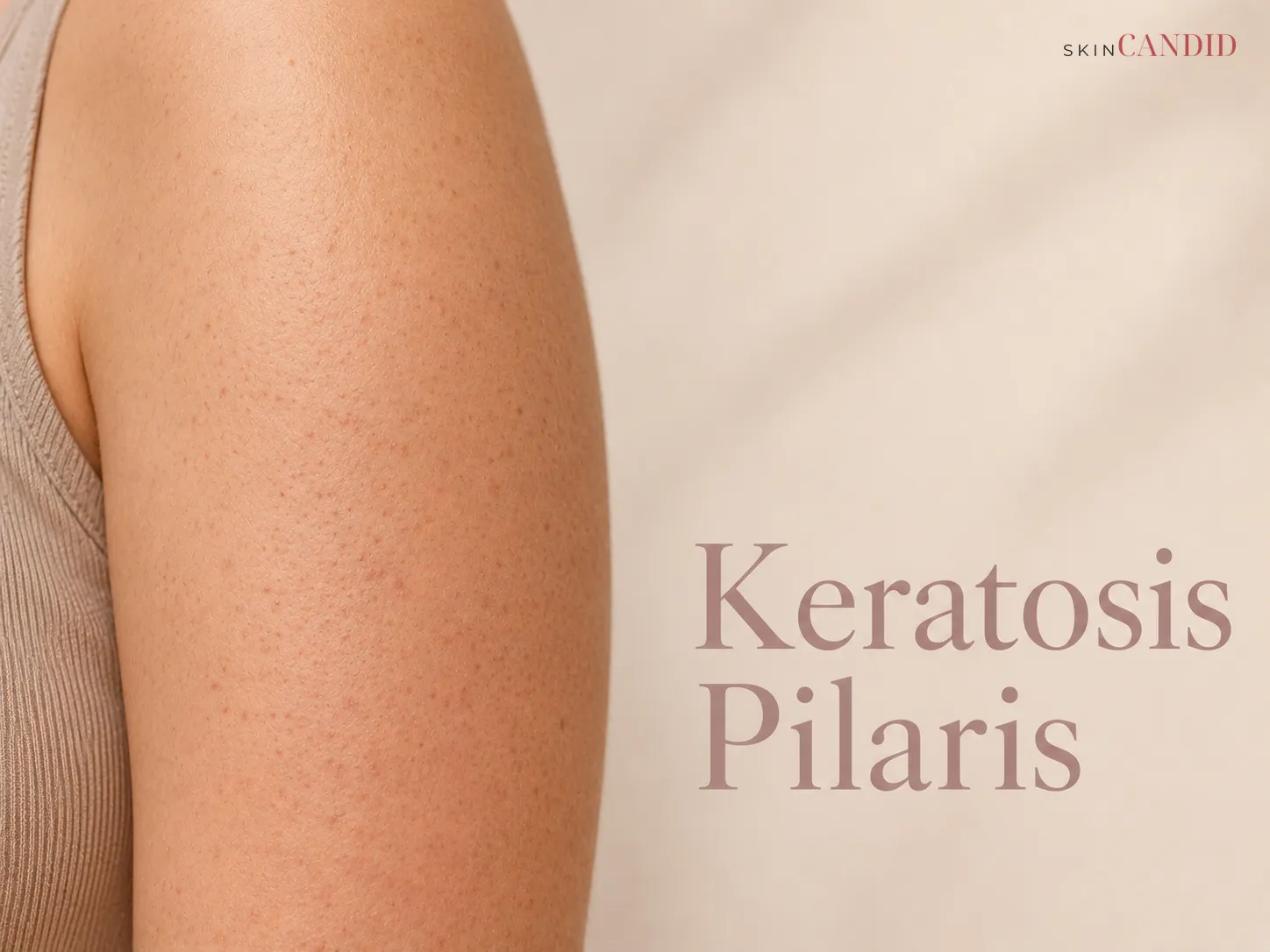
Keratosis pilaris is a common, harmless condition that causes small rough bumps, most often on the upper arms, thighs or cheeks, caused by a build-up of keratin around hair follicles.
Overview
What is keratosis pilaris?
Keratosis pilaris is a harmless, very common condition where keratin builds up around hair follicles, forming small rough bumps. It most often appears on the upper arms, thighs, cheeks or buttocks.
It commonly starts in childhood or adolescence and often improves with age, though it can persist into adulthood. It frequently occurs alongside generally dry skin.
Common signs and patterns
What keratosis pilaris can look or feel like
These features can provide context, but they do not confirm a diagnosis on their own.
Small rough bumps
Tiny, skin-coloured or slightly red bumps that feel like sandpaper or gooseflesh to the touch.
Upper arm and thigh distribution
Most commonly appears on the backs of the upper arms and the fronts of the thighs.
Mild surrounding redness
Bumps can sit within a subtly pink or red patch, especially on fair skin.
Worse in winter
Bumps and dryness often become more noticeable in cold, dry weather and improve somewhat in summer.
Causes and contributors
Keratosis pilaris is a genetic tendency, not a hygiene issue.
Excess keratin, a structural skin protein, builds up around hair follicles, plugging them and creating small bumps. The tendency is thought to be largely genetic and often runs in families.
It is frequently associated with generally dry skin and can be more prominent during colder, drier months.
What it may be confused with
Similar-looking concerns need different decisions
Small rough bumps should not automatically be treated as keratosis pilaris, especially when the texture, location or history do not fit.
Acne
Keratosis pilaris bumps are typically uniform, rough and non-inflamed, without the blackheads, whiteheads or deeper lesions seen in acne.
Folliculitis
Involves follicle inflammation that can look similar but is usually more acutely red or pus-filled and can be infection-related.
Dry and flaky skin
General dryness without the distinct small bumps and follicular pattern typical of keratosis pilaris.
Milia
Milia are smoother, pearly-white bumps rather than the rough, sandpaper-like texture typical of keratosis pilaris.
Bottom line
Smooth the texture with consistent care; expect gradual improvement, not disappearance.
Most people see meaningful softening of bumps after four to six weeks of consistent moisturising and gentle exfoliation.
Keratosis pilaris tends to improve with age for many people even without treatment, but ongoing maintenance is usually needed to keep bumps smooth in the meantime.
Evidence-supported options
Choose the option that matches how bothersome the texture is
This is general education, not a personal treatment plan. Product strengths, permitted uses and prescription status vary by country.
Urea or lactic acid moisturiser
Applied after bathing while skin is still damp, this can meaningfully reduce roughness and dryness with regular use.
Limit: Needs ongoing use; bumps can return if moisturising stops.
Alpha or beta hydroxy acid treatment
A randomised trial found a substantial reduction in bumps with 10% lactic acid over 12 weeks.
Limit: Mild irritation is possible, and this is body-specific evidence that shouldn’t be assumed to apply to facial skin equally.
Topical retinoids
Can help normalise the shedding of skin cells around follicles over time.
Limit: Can be irritating when introduced, especially in combination with acids.
Prescription-strength treatment or laser therapy
May be considered for persistent or cosmetically bothersome keratosis pilaris that hasn’t responded to consistent at-home care.
Limit: Requires clinician assessment and cannot guarantee full resolution, since the underlying tendency often remains.
Supportive skincare
A simple routine while keratosis pilaris is being managed
Supportive skincare should soften texture and support tolerance. It does not need to be elaborate to work.
Morning
- Cleanse gentlyUse a mild cleanser without harsh scrubbing.
- Moisturise while dampApply a urea or lactic acid moisturiser within a few minutes of bathing.
- ProtectUse sunscreen on exposed areas, especially the face if affected.
Evening
- Gently exfoliateUse a soft cloth or mild chemical exfoliant rather than an abrasive scrub.
- Apply treatment if directedFollow the product label or clinician’s instructions.
- Moisturise generouslyReapply moisturiser afterward to support the skin barrier.
Common mistakes
What can make keratosis pilaris harder to manage
- Using rough physical scrubs, loofahs or brushes aggressively, which can irritate the skin further.
- Expecting the bumps to disappear completely rather than gradually smooth with maintenance.
- Skipping moisturiser once bumps improve, allowing dryness and roughness to return.
- Confusing keratosis pilaris with acne and using harsh acne treatments that aren’t suited to it.
When professional help makes sense
Seek assessment when bumps are widespread, inflamed, or unresponsive to care.
- Bumps that are widespread, very inflamed, or significantly affecting confidence
- No improvement after a consistent six-to-eight-week routine of moisturising and gentle exfoliation
- Uncertainty about whether the bumps are keratosis pilaris or another condition
- Interest in prescription-strength topical treatment or laser therapy
Related reading
Continue with the next useful question
Editorial record
What this page knows, and what remains uncertain
Evidence summary
Current AAD guidance and a randomised trial support urea or lactic acid moisturisers and alpha/beta hydroxy acid treatments as core, consistent care, with topical retinoids and professional options for more persistent cases.
Review status
Evidence reviewed 25 July 2026. Medical and practical reviewer approval remain pending and must not be implied until completed. The hero image also remains pending dermatologist-reference comparison and Medical Visual Approval.
Financial transparency
No paid product placement or affiliate ranking is included on this foundation page.
Recommendation logic
Options are organised by evidence grade, irritation potential, and the point at which professional or laser-based care becomes more appropriate.
Frequently asked questions
Short answers to common questions
Can keratosis pilaris be cured?
No, there is no permanent cure, but consistent care can noticeably smooth the skin, and it often fades somewhat with age.
Why are the bumps worse in winter?
Cold, dry air reduces skin moisture, which tends to make keratosis pilaris bumps and dryness more noticeable.
Is keratosis pilaris the same as acne?
No. Keratosis pilaris bumps are rough and uniform, without the comedones or deeper lesions typical of acne.
How long before I see improvement?
Most people notice softer skin within four to six weeks of consistent moisturising and gentle exfoliation.
Sources reviewed
Guidance behind this page
- American Academy of Dermatology: Keratosis pilaris — overview
- American Academy of Dermatology: Keratosis pilaris — diagnosis and treatment
- PubMed: Epidermal permeability barrier in the treatment of keratosis pilaris (randomised trial)
- DermNet NZ: Keratosis pilaris
Sources support general editorial guidance. They do not replace regional product labels, prescribing information or personal medical assessment.