
Redness & Irritation
Facial Redness
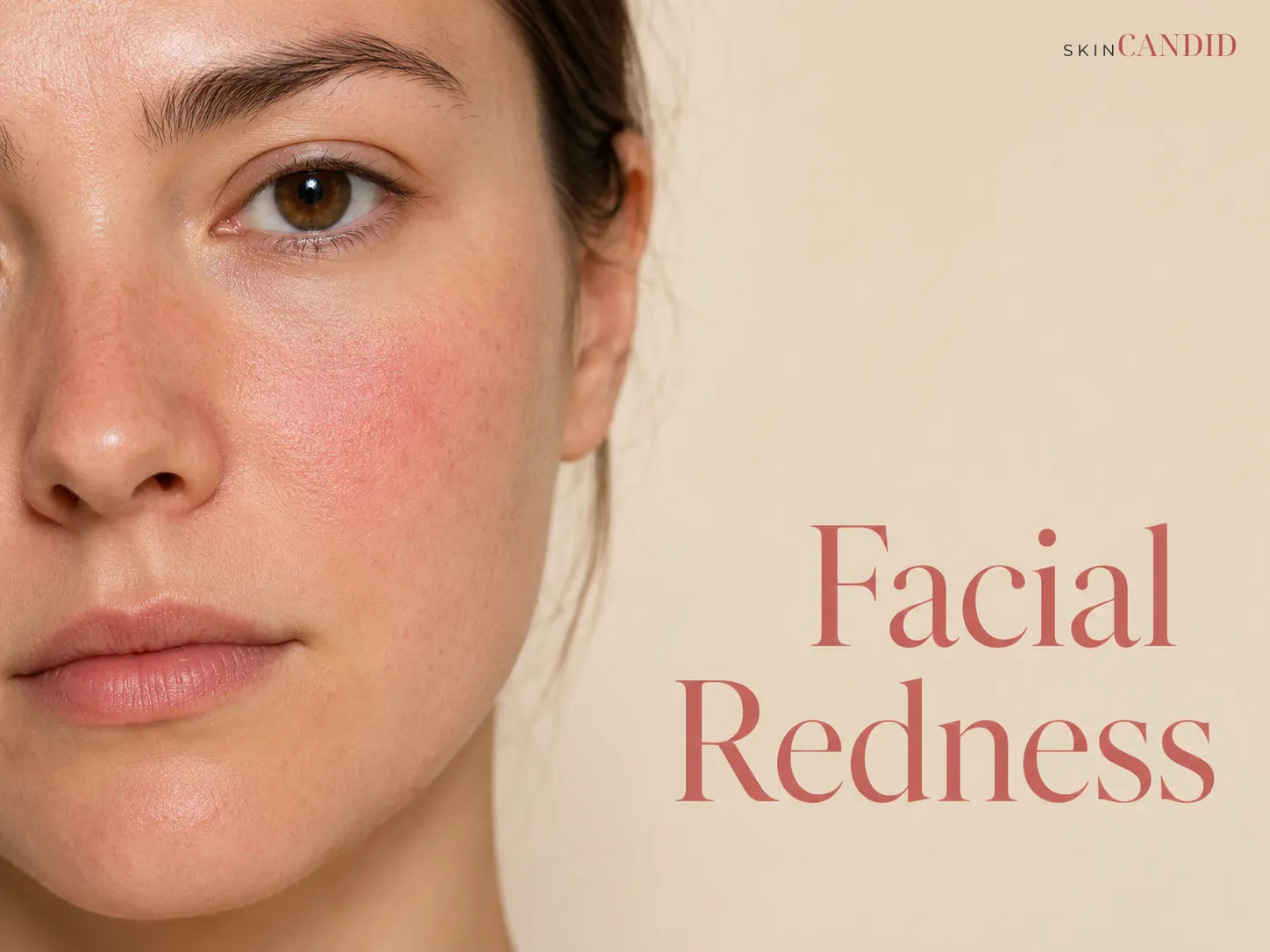
Facial redness is a symptom rather than a single condition, ranging from a short-lived flush to a persistent flush or rash caused by an underlying skin condition.
Overview
What does facial redness mean?
Facial redness happens when blood vessels near the skin’s surface widen, or when inflammation makes the skin appear pink or red. It can be temporary, such as a blush or a heat flush, or persistent, when it reflects an ongoing skin condition.
Because so many different conditions can produce redness, the pattern, triggers and accompanying symptoms matter more than the redness itself.
Common signs and patterns
What facial redness can look or feel like
These features can provide context, but they do not confirm a diagnosis on their own.
Temporary flushing
Redness triggered by heat, exercise, alcohol or spicy food that fades within minutes to an hour.
Persistent central redness
Redness across the cheeks, nose and forehead that does not fully fade between flare-ups.
Redness with scaling or itch
Redness paired with flaking, dryness or itch that points toward eczema, seborrheic dermatitis or psoriasis rather than simple flushing.
Redness that stings after products
Redness that appears shortly after a new skincare product or fragrance suggests contact irritation.
Causes and contributors
Facial redness has many possible underlying causes.
Common contributors include rosacea, eczema, seborrheic dermatitis, contact dermatitis from a product or fragrance, sun-damaged blood vessels, a damaged skin barrier, and certain medications that increase sun sensitivity.
Heat, alcohol, spicy food and temperature changes can trigger or worsen redness regardless of the underlying cause.
What it may be confused with
Similar-looking concerns need different decisions
Because redness is a shared symptom, distinguishing between these conditions changes the right next step.
Rosacea
Persistent central facial redness, often with visible blood vessels or small bumps, that tends to flare with known triggers.
Eczema
Itchy, dry, sometimes scaly redness that can flare in response to irritants or weather.
Seborrheic dermatitis
Redness with greasy yellowish scale concentrated around the nose, brows and hairline.
Damaged skin barrier
Redness, tightness and stinging that often follows over-exfoliation or a harsh routine.
Bottom line
Identifying the underlying cause matters more than treating redness on its own.
Two people with visibly similar redness can need very different routines depending on the underlying cause.
A general calming routine can help in the meantime, but persistent redness benefits from an accurate diagnosis.
Evidence-supported options
Choose the option that fits your skin’s tolerance
This is general education, not a personal treatment plan. Product strengths, permitted uses and prescription status vary by country.
Daily broad-spectrum sunscreen
Sun exposure can worsen most causes of facial redness, so daily protection is a supportive baseline regardless of the underlying cause.
Limit: Supportive rather than a direct treatment for the underlying condition.
Gentle, fragrance-free routine
Removing potential irritants can calm redness linked to contact irritation or a compromised barrier.
Limit: Will not resolve redness from rosacea, eczema or other diagnosed conditions on its own.
Condition-specific prescription treatment
Rosacea, eczema, seborrheic dermatitis and psoriasis each have distinct guideline-supported treatments once diagnosed.
Limit: Requires an accurate diagnosis first.
Vascular laser treatment
Can reduce visible redness linked to broken or widened blood vessels in some diagnosed conditions.
Limit: A cosmetic option after diagnosis, not a first-line treatment.
Supportive skincare
A simple routine while the cause is being identified
Supportive skincare should calm the skin without adding new irritants while a cause is confirmed.
Morning
- Cleanse gentlyUse a mild, fragrance-free cleanser and lukewarm water.
- MoisturiseSupport the barrier with a simple, calming moisturiser.
- Apply sunscreenChoose a broad-spectrum, fragrance-free formula.
Evening
- Cleanse onceAvoid hot water and vigorous rubbing.
- Pause active ingredientsHold off on new actives until a cause is identified.
- MoisturiseReinforce the barrier with a bland, fragrance-free formula.
Common mistakes
What can make facial redness harder to manage
- Assuming all redness is rosacea and self-treating without a diagnosis.
- Adding multiple new active ingredients at once while trying to “fix” redness.
- Skipping sunscreen because skin already looks irritated.
- Continuing a fragranced or harsh product that may be the actual trigger.
When professional help makes sense
Seek assessment when redness is persistent or the cause is unclear.
- Redness that persists for more than two weeks
- Redness accompanied by bumps, scaling, stinging or swelling
- Redness that keeps returning despite removing likely triggers
- Sudden or severe redness, especially with pain, blistering or fever
Related reading
Continue with the next useful question
Editorial record
What this page knows, and what remains uncertain
Evidence summary
Authoritative dermatology guidance identifies rosacea, eczema, seborrheic dermatitis, contact dermatitis and sun-damaged vessels among the most common causes of persistent facial redness, each requiring different treatment.
Review status
Financial transparency
No paid product placement or affiliate ranking is included on this foundation page.
Recommendation logic
Options are organised by whether they support any type of redness generally or depend on first confirming a specific diagnosis.
Frequently asked questions
Short answers to common questions
Is facial redness always rosacea?
No. Redness can come from many causes, including eczema, seborrheic dermatitis, contact irritation, sun damage and a compromised skin barrier, so a diagnosis matters before treating it as rosacea.
When should I see a dermatologist about facial redness?
Persistent redness lasting more than two weeks, or redness with scaling, swelling or pain, is worth a professional assessment.
Can skincare alone fix facial redness?
A gentle, fragrance-free routine can calm mild irritation, but redness linked to a diagnosed condition usually needs a treatment matched to that condition.
Does spicy food or alcohol cause permanent redness?
These can trigger temporary flushing, and in some underlying conditions like rosacea, repeated flushing may contribute to more persistent redness over time.
Sources reviewed
Guidance behind this page
- American Academy of Dermatology: 10 reasons your face is red
- Cleveland Clinic: Skin flushing — causes and treatment
Sources support general editorial guidance. They do not replace regional product labels, prescribing information or personal medical assessment.