
Dryness & Barrier
Damaged Skin Barrier
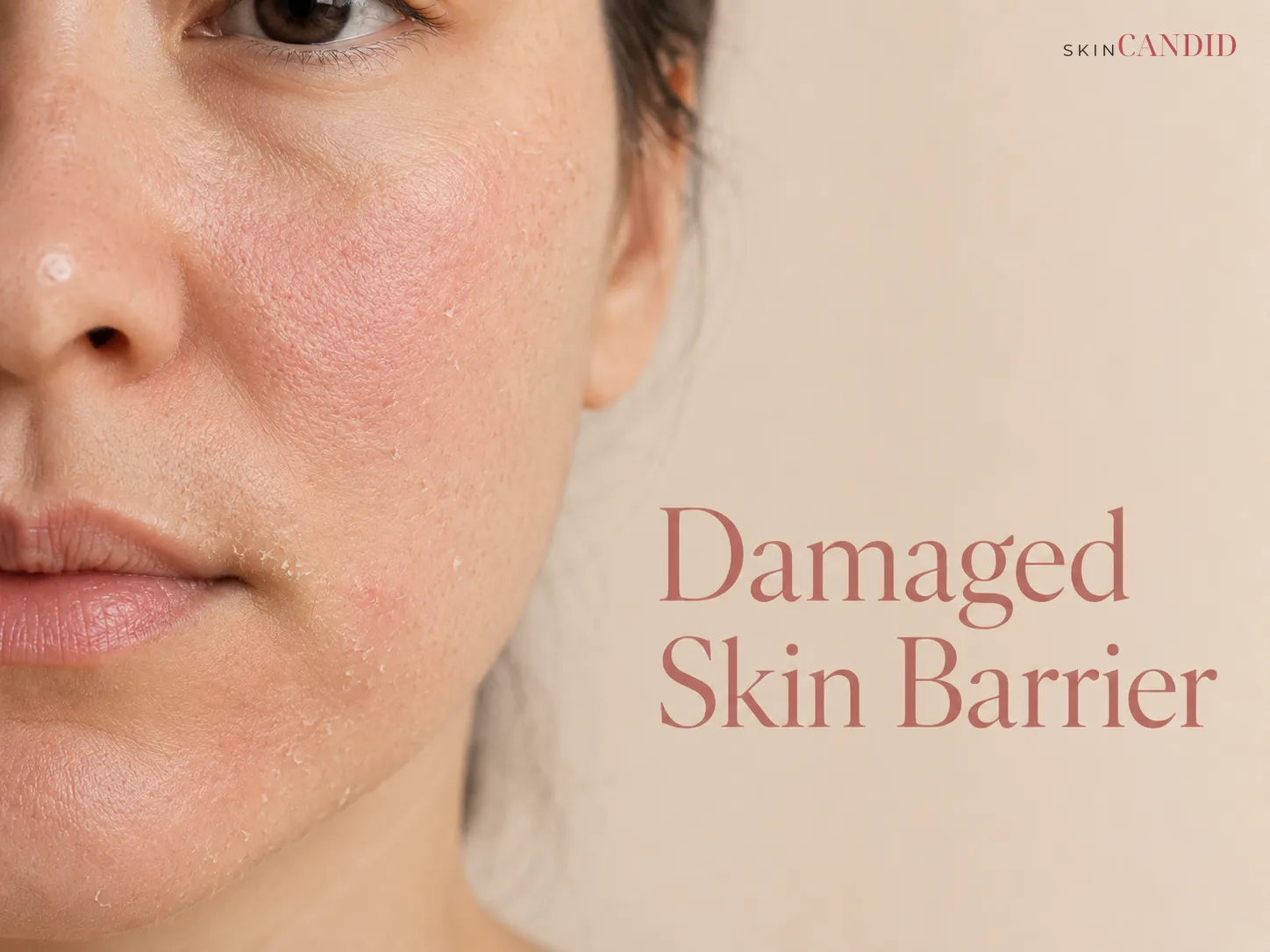
A damaged skin barrier means the outermost layer of skin can no longer hold in moisture or keep out irritants as effectively, often showing up as redness, tightness and unusual sensitivity to products.
Overview
What is a damaged skin barrier?
The outermost layer of the skin, the stratum corneum, acts as a barrier that holds moisture in and keeps irritants, allergens and microbes out. When this layer is disrupted, water loss increases and outside substances can penetrate more easily, leading to dryness, sensitivity and inflammation.
Barrier disruption can happen suddenly, from a harsh product or over-exfoliation, or build gradually from ongoing irritation, dry weather or an underlying skin condition.
Common signs and patterns
What a damaged barrier can look or feel like
These features can provide context, but they do not confirm a diagnosis on their own.
Tightness and rough texture
Skin can feel dry, rough or uncomfortable, even shortly after moisturising.
Redness and stinging
Products that were previously well tolerated may start to sting, burn or cause visible redness.
Subtle flaking
Fine, dry flakes can appear, particularly around the mouth, nose and cheeks.
Increased overall sensitivity
Skin can become reactive to products, weather and touch that previously caused no issue.
Causes and contributors
A damaged barrier usually results from too much, too fast, or an underlying condition.
Over-exfoliation, combining too many active ingredients at once, harsh cleansers, hot water, dry or cold weather, and certain skin conditions such as eczema can all disrupt the skin barrier. Nutrient factors and disruption to the skin’s natural pH can also impair how well the barrier holds together.
Once disrupted, the barrier is more vulnerable to further irritation, which is why symptoms can escalate quickly if the same routine continues.
What it may be confused with
Similar-looking concerns need different decisions
Redness, dryness and sensitivity are shared symptoms across several different skin concerns.
Eczema
A diagnosed inflammatory condition that involves barrier dysfunction as part of its underlying cause.
Facial redness
A broader symptom that can come from a damaged barrier or from a range of other conditions.
Rosacea
Persistent central facial redness with its own distinct triggers, sometimes alongside barrier sensitivity.
Allergic contact dermatitis
A reaction to a specific allergen or ingredient rather than general barrier disruption.
Bottom line
Recovery takes weeks, and simplicity supports it more than any single “repair” product.
Removing triggers and rebuilding with gentle, barrier-supporting ingredients is more effective than adding new treatments.
Most people see meaningful improvement within a few weeks of a simplified routine.
Evidence-supported options
Choose the option that fits your skin’s tolerance
This is general education, not a personal treatment plan. Product strengths, permitted uses and prescription status vary by country.
Ceramide-containing moisturisers
Ceramides are a key structural component of the skin barrier and support its repair and hydration.
Limit: Works best alongside removing the ingredients or habits that caused the damage.
Pausing active ingredients
Temporarily stopping exfoliating acids, retinoids and other actives allows the barrier to recover.
Limit: Requires patience, since recovery is gradual rather than immediate.
Gentle, fragrance-free cleansing
Reduces additional irritation while the barrier repairs itself.
Limit: Supportive rather than a standalone fix if damage is significant.
Dermatologist assessment
Helpful when barrier symptoms overlap with a diagnosable condition like eczema or contact dermatitis.
Limit: Needed when self-care alone does not resolve symptoms within a few weeks.
Supportive skincare
A simple routine while the barrier recovers
Supportive skincare should be as simple as possible, focused on repair rather than treatment.
Morning
- Cleanse with water or a gentle cleanserAvoid hot water and vigorous rubbing.
- Apply a ceramide-rich moisturiserSupport the barrier before anything else.
- Apply sunscreenChoose a fragrance-free, mineral or gentle chemical formula.
Evening
- Cleanse onceUse a mild, fragrance-free cleanser.
- Pause active ingredientsHold off on acids and retinoids until symptoms settle.
- Moisturise generouslyReapply a ceramide-rich formula as needed.
Common mistakes
What can make a damaged barrier harder to manage
- Continuing exfoliating acids or retinoids while symptoms are active.
- Introducing several new “repair” products at once, adding more variables to track.
- Using hot water or vigorous scrubbing, which further strips the barrier.
- Expecting full recovery within a few days rather than several weeks.
When professional help makes sense
Seek assessment when symptoms are severe or do not improve.
- No improvement after several weeks of a simplified, barrier-supporting routine
- Symptoms that overlap with a possible diagnosis such as eczema or contact dermatitis
- Significant pain, cracking, oozing or signs of infection
- Uncertainty about which products or habits are contributing to the damage
Related reading
Continue with the next useful question
Editorial record
What this page knows, and what remains uncertain
Evidence summary
Current dermatology references describe the skin barrier’s role in retaining moisture and blocking irritants, and support ceramide-based moisturisers and routine simplification as core repair steps.
Review status
Financial transparency
No paid product placement or affiliate ranking is included on this foundation page.
Recommendation logic
Options are organised from simplification and barrier-supporting ingredients through to the point where a professional assessment is appropriate.
Frequently asked questions
Short answers to common questions
How long does it take to repair a damaged skin barrier?
Most people notice improvement within a few weeks of simplifying their routine, though full recovery can take longer depending on the extent of the damage.
Should I stop all skincare products if my barrier is damaged?
Not necessarily all products, but pausing exfoliating acids, retinoids and other active ingredients while keeping a gentle cleanser and moisturiser is generally recommended.
Do ceramides actually help repair the skin barrier?
Yes. Ceramides are a natural structural component of the skin barrier, and ceramide-containing moisturisers can support its repair.
Is a damaged skin barrier the same as eczema?
Not exactly. A damaged barrier is a general state that can result from many causes, while eczema is a diagnosed condition that involves barrier dysfunction as part of its underlying process.
Sources reviewed
Guidance behind this page
- DermNet NZ: Skin barrier function
- PubMed: Ceramide-containing adjunctive skin care for skin barrier restoration
Sources support general editorial guidance. They do not replace regional product labels, prescribing information or personal medical assessment.