
Redness & Irritation
Perioral Dermatitis
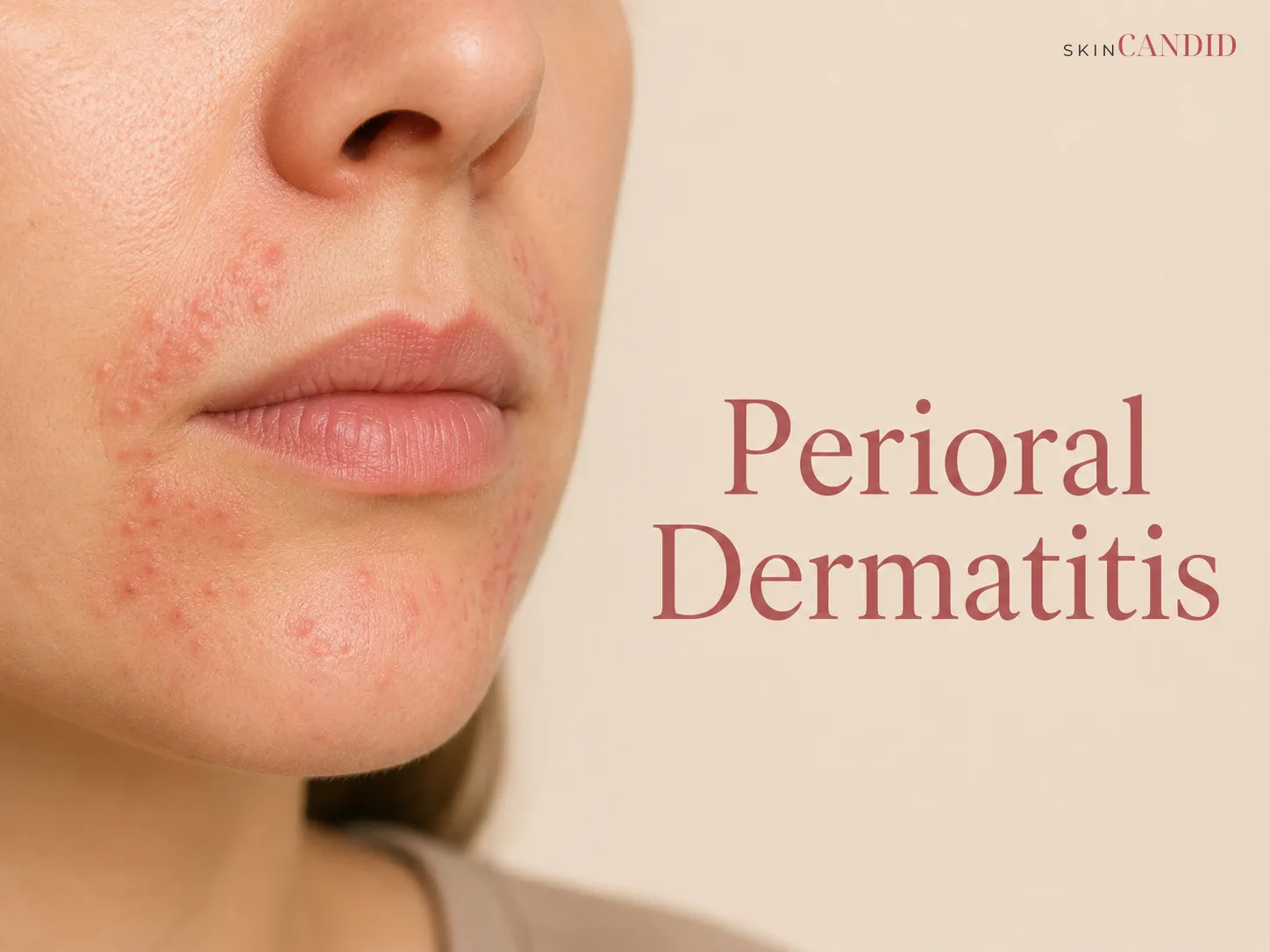
Perioral dermatitis is an inflammatory facial rash of small red bumps clustered around the mouth, nose or eyes, most often triggered by topical steroid use, that needs a different approach than acne or eczema.
Overview
What is perioral dermatitis?
Perioral dermatitis (also called periorificial dermatitis when it affects the eyes or nose as well as the mouth) is a chronic inflammatory rash of small red bumps and fine scale. Its hallmark feature is a narrow strip of normal-looking skin directly bordering the lip line.
It most often affects women in their 20s to 40s, but a related pattern can also appear in children. Topical steroid use on the face is the single most common trigger.
Common signs and patterns
What perioral dermatitis can look or feel like
These features can provide context, but they do not confirm a diagnosis on their own.
Small grouped red bumps
Clusters of tiny red papules or pustules, usually less than 2mm each, around the mouth, nostrils or eyes.
A clear zone around the lips
A narrow strip of normal-looking skin directly bordering the lip line is a hallmark feature that helps separate this from acne.
Dry, scaly or burning skin
The underlying skin can look mildly dry or scaly and may sting or feel tight rather than simply itch.
Flares after stopping steroid cream
Symptoms often temporarily worsen for days to weeks after a steroid cream is stopped, which can be mistaken for treatment failure.
Causes and contributors
Perioral dermatitis is usually triggered rather than spontaneous.
Topical corticosteroid use on the face — including nasal sprays and inhaled steroid drift — is the most frequent trigger. Heavy or occlusive moisturisers, cosmetics, and fluorinated toothpaste are also commonly implicated.
Physical factors such as UV exposure, heat and wind can make the rash worse. The exact combination of triggers varies from person to person.
What it may be confused with
Similar-looking concerns need different decisions
A rash around the mouth, nose or eyes should not automatically be treated as perioral dermatitis, especially when the distribution or triggers do not fit.
Acne
Usually includes blackheads and whiteheads, which perioral dermatitis does not typically produce, and is not confined to a band around the mouth, nose or eyes.
Rosacea
Typically affects older adults with broader cheek and nose redness rather than the tightly clustered bumps around the mouth seen in perioral dermatitis.
Seborrheic dermatitis
Produces greasy, yellowish scale concentrated at the nasolabial folds, eyebrows and scalp margin, a different distribution and texture.
Contact dermatitis
Directly follows exposure to an irritant or allergen and usually does not spare the clear zone around the lips.
Bottom line
Stop the trigger, expect a temporary flare, and let treatment work over weeks.
Most cases resolve within four to eight weeks once steroids are stopped and an evidence-based treatment is started.
Restarting a steroid cream for comfort during the flare feels like it helps but prolongs the underlying condition and delays real improvement.
Evidence-supported options
Choose the option that matches the cause and severity
This is general education, not a personal treatment plan. Product strengths, permitted uses and prescription status vary by country.
Topical metronidazole
Can reduce inflammation and bumps as part of first-line topical treatment.
Limit: Works gradually, and a steroid-withdrawal flare may still occur even while it is working.
Topical pimecrolimus
A non-steroidal option that can calm inflammation without the rebound risk that comes with steroid creams.
Limit: Mild stinging is possible when first applied.
Oral tetracycline-class antibiotics
A first-line oral option, such as doxycycline, for more widespread or persistent cases.
Limit: Requires clinician selection; not suitable in pregnancy or for young children, where erythromycin is generally preferred.
Stopping topical steroids under guidance
The essential step for steroid-triggered cases; a gradual taper of higher-potency steroids is often recommended rather than stopping abruptly.
Limit: Requires patience through a temporary flare and professional input for tapering higher-potency products.
Supportive skincare
A simple routine while perioral dermatitis is being managed
The goal is fewer products, not more. Supportive skincare should stay minimal and avoid replacing the selected treatment.
Morning
- Cleanse gentlyUse a mild, fragrance-light cleanser and lukewarm water.
- Apply treatment if directedFollow the product label or clinician’s instructions.
- Moisturise lightly and protectUse a simple, non-occlusive moisturiser and sunscreen; avoid introducing new cosmetics.
Evening
- Cleanse onceRemove sunscreen and makeup gently without scrubbing.
- Use the selected treatmentAvoid adding extra actives or trying new products during a flare.
- Moisturise lightlyAvoid heavy, occlusive creams around the mouth and nose.
Common mistakes
What can make perioral dermatitis harder to assess or manage
- Using a steroid cream for comfort during a flare, which worsens and prolongs the condition.
- Adding more skincare products or acne treatments that contain irritating actives not suited to this rash.
- Using fluorinated toothpaste or heavy, occlusive cosmetics without realising they can contribute.
- Expecting improvement within days; a steroid-withdrawal flare can look worse before it looks better.
When professional help makes sense
Seek assessment when the rash persists or steroid dependence is suspected.
- A rash that persists or spreads despite stopping steroids and simplifying the routine
- Suspected steroid dependence or repeated use of steroid creams for facial redness
- Symptoms in a young child, or during pregnancy, where treatment choices differ
- Significant discomfort, burning or impact on confidence
Related reading
Continue with the next useful question
Editorial record
What this page knows, and what remains uncertain
Evidence summary
Current dermatology references support removing the trigger (usually topical steroids), first-line topical treatment with metronidazole or pimecrolimus, and oral tetracycline-class antibiotics for more widespread or persistent cases.
Review status
Evidence reviewed 25 July 2026. Medical and practical reviewer approval remain pending and must not be implied until completed. The hero image also remains pending dermatologist-reference comparison and Medical Visual Approval.
Financial transparency
No paid product placement or affiliate ranking is included on this foundation page.
Recommendation logic
Options are organised by cause (steroid-triggered vs. other), evidence grade, tolerability and the point at which professional guidance becomes more appropriate.
Frequently asked questions
Short answers to common questions
Why did my rash get worse after I stopped my steroid cream?
A temporary flare, sometimes called steroid withdrawal or rebound, is common and expected for days to weeks after stopping. It does not mean the treatment plan has failed.
Is perioral dermatitis the same as acne?
No. It lacks the blackheads and whiteheads typical of acne, has a distinct distribution around the mouth, nose or eyes, and needs a different treatment approach.
How long does it take to clear?
Most cases improve within about four to eight weeks once the trigger is removed and treatment is started, though some cases take longer.
Can children get perioral dermatitis?
Yes. A related periorofacial form can affect children, and treatment choices differ, with erythromycin often preferred over tetracycline-class antibiotics.
Sources reviewed
Guidance behind this page
Sources support general editorial guidance. They do not replace regional product labels, prescribing information or personal medical assessment.