
Breakouts & Pores
Whiteheads
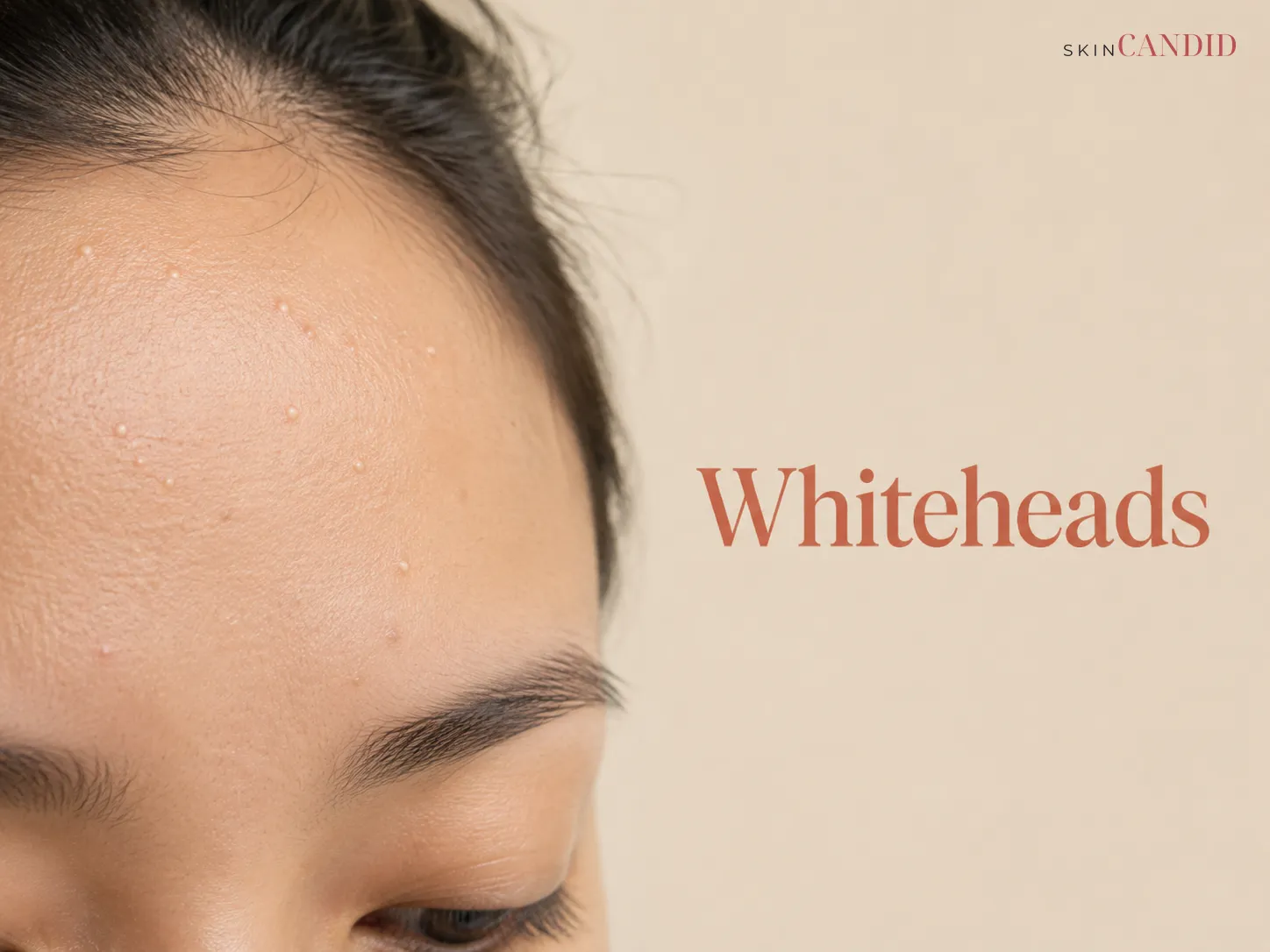
Whiteheads are closed comedones that form when a blocked follicle stays covered by a thin layer of skin, keeping the trapped oil and dead skin cells pale rather than dark.
Overview
What are whiteheads?
Whiteheads, or closed comedones, form when a hair follicle becomes blocked with sebum and dead skin cells while the surface opening narrows or closes over. Because air cannot reach the trapped material, it stays pale rather than oxidising to a dark colour.
They tend to appear in the same oil-prone areas as blackheads, including the forehead, nose and chin, and the two often occur together.
Common signs and patterns
What whiteheads can look or feel like
These features can provide context, but they do not confirm a diagnosis on their own.
Small, skin-toned or pale bumps
Whiteheads sit close to the skin’s own colour rather than appearing dark.
Slightly raised texture
They can feel like small firm bumps under the fingertips rather than lying completely flat.
No surrounding redness
Unlike inflamed acne, whiteheads are typically not tender, red or swollen.
Can coexist with blackheads
Whiteheads and blackheads often appear together as part of the same clogged-pore pattern.
Causes and contributors
Whiteheads form from oil, dead skin and a closed follicle opening.
Excess sebum production, a build-up of dead skin cells, and hormonal activity that increases oil output are the main contributors. Comedogenic cosmetic or skincare products and mechanical friction from fabric or equipment can also play a role.
Whiteheads are not a sign of poor hygiene, and they can persist even with a thorough cleansing routine.
What it may be confused with
Similar-looking concerns need different decisions
Small pale bumps should not automatically be treated as whiteheads, especially when the texture or cause does not fit.
Milia
Firmer, pearly-white cysts that form through keratin trapped under the skin rather than a blocked follicle.
Blackheads
Open comedones that darken through oxidised oil rather than staying pale under a closed surface.
Inflamed acne
Red, tender, raised lesions rather than the calm, skin-toned bumps typical of whiteheads.
Sebaceous filaments
A normal structural part of the pore that looks similar but is not a clogged follicle needing treatment.
Bottom line
Whiteheads clear with steady exfoliation, not extraction attempts.
Because whiteheads sit under intact skin, they generally resist manual extraction far more than blackheads do.
A consistent routine that encourages normal follicle shedding is the more reliable long-term approach.
Evidence-supported options
Choose the option that fits your skin’s tolerance
This is general education, not a personal treatment plan. Product strengths, permitted uses and prescription status vary by country.
Topical retinoids
Help normalise follicle shedding so trapped material can clear rather than accumulate.
Limit: Can cause dryness or irritation when introduced; visible improvement takes several weeks.
Salicylic acid
An oil-soluble exfoliant that can help clear and prevent closed comedones.
Limit: Can be drying at higher concentrations or with frequent use.
Alpha hydroxy acids
Surface exfoliation that can complement a retinoid or salicylic acid routine.
Limit: Best introduced gradually to avoid combined irritation.
Professional extraction
A trained professional can sometimes open and clear stubborn whiteheads with sterile tools.
Limit: Not always successful given the closed nature of the follicle; does not prevent new ones.
Supportive skincare
A simple routine while whiteheads are being managed
Supportive skincare should keep pores clear without over-drying the skin.
Morning
- Cleanse gentlyUse a mild cleanser without scrubbing.
- Apply treatment if directedFollow the product label or clinician’s instructions.
- Moisturise and protectUse an oil-free moisturiser and sunscreen.
Evening
- Cleanse onceRemove makeup and sunscreen without scrubbing.
- Use the selected treatmentIntroduce gradually and avoid combining several new actives at once.
- MoisturiseSupport the skin barrier rather than trying to dry every pore out.
Common mistakes
What can make whiteheads harder to manage
- Attempting to squeeze or pick, which can cause irritation, marks or infection.
- Over-washing or scrubbing, which irritates skin without clearing the closed follicle any faster.
- Switching products every few days instead of giving one routine several weeks to work.
- Using heavy, comedogenic moisturisers or makeup that can contribute to further blockage.
When professional help makes sense
Seek assessment when whiteheads are persistent or the diagnosis is unclear.
- Persistent or widespread whiteheads not responding to eight to twelve weeks of consistent treatment
- Uncertainty about whether bumps are whiteheads or another concern
- Interest in professional extraction or acid peels
- Whiteheads accompanied by inflamed, painful lesions suggesting a different acne pattern
Related reading
Continue with the next useful question
Editorial record
What this page knows, and what remains uncertain
Evidence summary
Current dermatology references support topical retinoids, salicylic acid and alpha hydroxy acids as core treatments for whiteheads, with professional extraction as a complementary rather than reliably standalone option.
Review status
Financial transparency
No paid product placement or affiliate ranking is included on this foundation page.
Recommendation logic
Options are organised by evidence grade, irritation potential, and the point at which professional extraction becomes a reasonable addition.
Frequently asked questions
Short answers to common questions
Can I pop a whitehead?
It’s best avoided. Because whiteheads are covered by intact skin, forcing them open can cause irritation, infection or a mark.
Why won’t my whiteheads go away?
Closed comedones often take longer to clear than blackheads because the follicle opening is narrower or sealed. Consistent exfoliating treatment over several weeks is usually needed.
Do whiteheads mean I have acne?
Whiteheads are a mild, non-inflamed form of clogged pore and are considered part of the acne spectrum, though they can occur without more inflamed lesions.
Should I use a physical scrub on whiteheads?
Physical scrubs are not generally recommended, since they can irritate the skin without reaching the blocked material inside a closed follicle.
Sources reviewed
Guidance behind this page
Sources support general editorial guidance. They do not replace regional product labels, prescribing information or personal medical assessment.