
Skin Type
Dry Skin
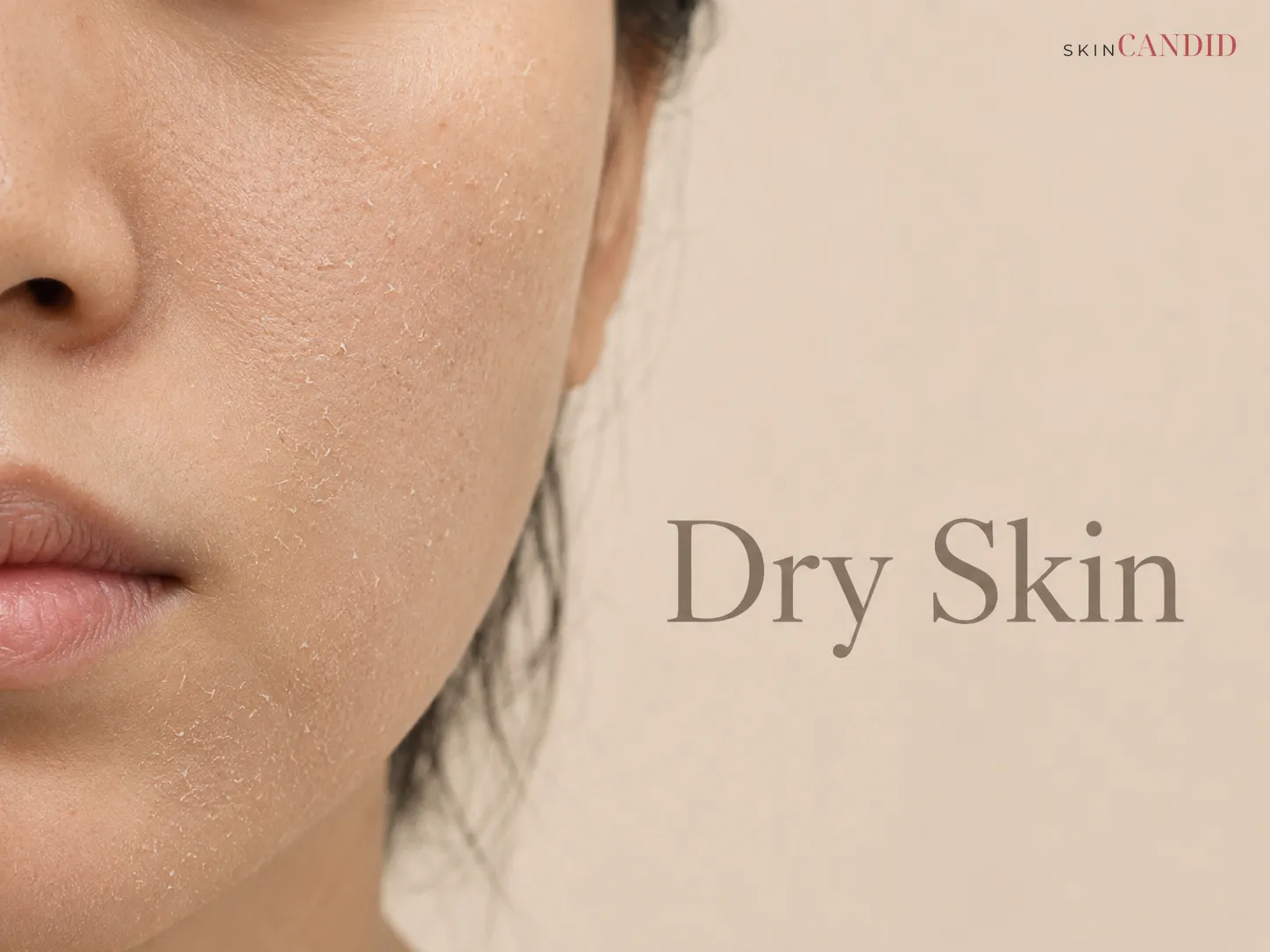
Dry skin describes a consistent, ongoing tendency toward lower oil production, not a temporary state. Understanding the difference helps you choose products that work with your skin rather than fighting it.
The direct answer
What does it mean to have dry skin?
Dry skin is a consistent tendency toward lower natural oil production, generally stable over time rather than triggered by short-term factors.
This is different from dehydration, which is a temporary lack of water that can affect any skin type. Dry skin can also become dehydrated on top of its baseline tendency, which is why the two concepts often get confused. Skin behavior can also shift with age, climate, health and product choices, so this tendency isn’t necessarily permanent or unchanging.
How dry skin commonly behaves
What to expect day to day
Consistent, not occasional
A tendency toward tightness, rough texture or flaking that shows up regularly, not just after specific triggers.
Slower to feel oily
Dry skin typically doesn’t develop a shiny T-zone by midday the way oilier skin types do.
Sensitive to harsh products
Foaming or stripping cleansers and high-percentage acids are more likely to feel uncomfortable.
Responsive to rich textures
Creams and balms tend to feel more comfortable than lightweight gels or fluids.
How it differs from temporary conditions
Dry skin, dehydration and a damaged barrier aren’t the same thing
Dry skin
An ongoing tendency toward lower oil production. Generally consistent over time and part of how your skin behaves by default.
Dehydrated skin
A short-term lack of water in the outer skin layers. Can affect any skin type, including oily skin, and typically improves within days of the right hydration.
Damaged skin barrier
Barrier stress from harsh products, over-exfoliation or environmental factors. Often comes with more redness or stinging than dryness alone.
Why the distinction matters
Dry skin needs an ongoing routine built around richer textures. Dehydration and barrier issues need a temporary, targeted response instead.
A simple routine framework
Build around hydration and richer textures
- Cleanse gentlyA cream or oil-based cleanser avoids stripping natural oils that dry skin already has less of.
- Layer a humectantHyaluronic acid or glycerin on damp skin draws in water before sealing it.
- Moisturize with a richer formulaCreams and balms with ceramides or other lipids suit dry skin better than lightweight gels.
- Protect dailyA moisturizing, broad-spectrum sunscreen completes the routine without adding dryness.
See the full Dry Skin Routine for morning and evening steps →
Ingredient and texture guidance
What tends to help, and what to use cautiously
Generally well suited
- Humectants like hyaluronic acid and glycerin
- Ceramides and other barrier-supporting lipids
- Cream or oil-based cleansers
- Richer, balm-like moisturizer textures
Use more cautiously
- Foaming or heavily sulfate-based cleansers
- High-percentage AHAs used frequently
- Alcohol-heavy toners or astringents
- Very lightweight, water-only gel moisturizers as a sole formula
Common mistakes
What can make dry skin harder to manage
- Skipping moisturizer or humectants in an attempt to avoid feeling greasy.
- Using hot water for cleansing, which can strip natural oils further.
- Assuming a single very rich product replaces the need for humectant layering.
- Over-exfoliating in response to rough texture, which can worsen dryness.
When symptoms suggest a condition, not a skin type
Some signs point beyond a simple skin-type tendency.
- Sudden or significantly worsening dryness that’s new for you
- Redness, stinging or discomfort well beyond typical tightness
- Cracking, bleeding or signs of a compromised skin barrier
- Dryness that doesn’t respond at all to consistent, appropriate care
- Suspected underlying conditions such as eczema rather than a baseline dry-skin tendency
Frequently asked questions
Short answers about dry skin
Is dry skin the same as dehydrated skin?
No. Dry skin is an ongoing tendency toward lower oil production, while dehydrated skin is a temporary lack of water that can affect any skin type, including oily skin.
Can dry skin become oily over time?
Skin behavior can shift with age, climate, hormones and product choices, so it’s possible for the balance to change, though a strong baseline tendency often persists.
Should dry skin avoid exfoliating acids entirely?
Not necessarily, but gentler options used less frequently are generally better tolerated than strong, frequent exfoliation.
Why does my rich moisturizer alone not seem like enough?
A humectant layered underneath helps draw water in first; a rich moisturizer alone seals in whatever water is already there without necessarily adding more.
Related routines and concerns
Continue building a routine that fits your skin
Sources reviewed
Guidance behind this page
- American Academy of Dermatology: Dermatologists’ top tips for relieving dry skin
- NIH NCBI Bookshelf (StatPearls): Moisturizers
Sources support general editorial guidance. They do not replace personal skincare advice from a qualified clinician.