
Redness & Irritation
Rosacea
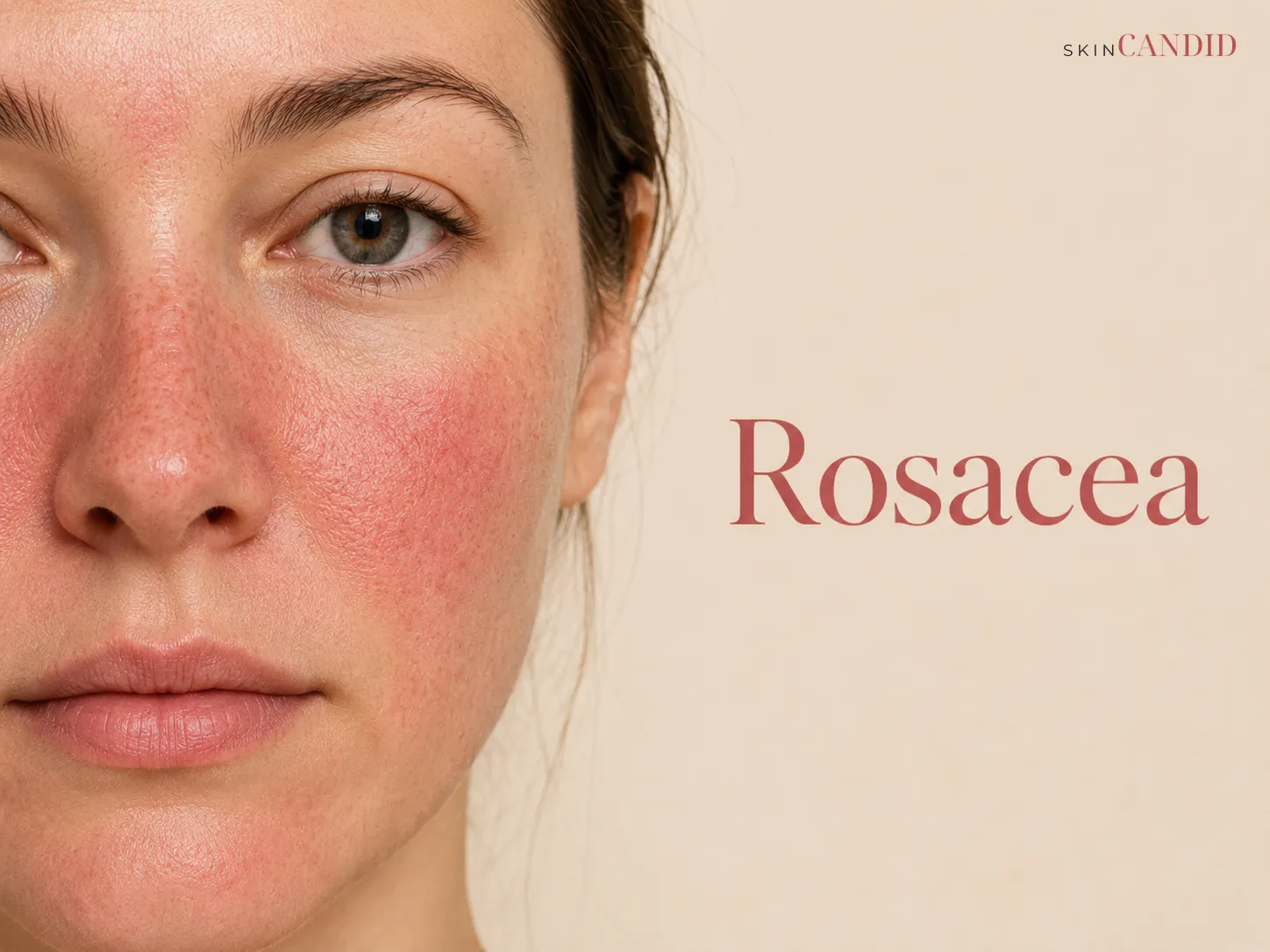
Rosacea is a chronic inflammatory condition that causes recurring facial redness, and can also bring visible blood vessels, acne-like bumps or eye irritation, most often across the cheeks, nose, chin and forehead.
Overview
What is rosacea?
Rosacea is a long-term inflammatory condition centred on the face. It is thought to involve overactive blood vessels, an oversensitive immune response, and in many cases an overgrowth of Demodex mites that live naturally on the skin.
It most often affects the cheeks, nose, chin and forehead. Rosacea typically develops between the ages of 30 and 50 and is more commonly recognised in people with fair skin, although it occurs across all skin tones and can be harder to identify on deeper skin.
Common signs and patterns
What rosacea can look or feel like
Rosacea does not look the same in everyone. These patterns can overlap, and their presence can provide context, but they do not confirm a diagnosis on their own.
Persistent redness and flushing
Background redness that may come and go at first and become more constant over time, often following heat, sun, spicy food or alcohol.
Visible blood vessels
Small, thread-like blood vessels can become visible on the cheeks and nose as persistent redness continues.
Bumps and pimple-like breakouts
Small red bumps or pus-filled pimples can appear without the blackheads and whiteheads typical of acne.
Thickened skin or visible pores
Less common; skin on the nose or cheeks can thicken and pores can enlarge over time, especially without treatment.
Causes and contributors
Rosacea develops through several overlapping processes.
Blood vessels that react more strongly than usual, immune-system overactivity, and an overgrowth of Demodex mites that live naturally on the skin are all thought to contribute. A possible link with gut bacteria is still being studied.
Common triggers include UV exposure, heat, extreme temperature changes, spicy food, alcohol, stress, exercise and certain skincare or cosmetic ingredients. Triggers vary from person to person, and evidence for some individual triggers is stronger than others.
What it may be confused with
Similar-looking concerns need different decisions
Persistent facial redness or bumps should not automatically be treated as rosacea, especially when the distribution, triggers or accompanying symptoms do not fit.
Acne
Usually includes blackheads and whiteheads, which rosacea does not typically produce, and can affect areas beyond the central face.
Seborrheic dermatitis
Tends to bring greasy, yellowish scaling around the nose folds, eyebrows and scalp margin rather than persistent redness alone.
Perioral dermatitis
Often clusters around the mouth, nose or eyes and is frequently linked to facial steroid cream use rather than the broader cheek and nose redness typical of rosacea.
Lupus-related facial redness
A malar rash typically spares the folds beside the nose and can come with joint pain or other systemic symptoms that need separate medical assessment.
Bottom line
Match treatment to the pattern that is present, and give it time to work.
Rosacea treatments generally need several weeks of consistent use before the direction of improvement becomes clear, and background redness responds more slowly than bumps or pustules.
Choose treatment according to which pattern dominates — redness, visible vessels, bumps and pustules, or eye symptoms — rather than layering multiple strong products at once.
Evidence-supported options
Choose the option that matches the phenotype and its severity
This is general education, not a personal treatment plan. Product strengths, permitted uses and prescription status vary by country.
Topical azelaic acid
Can reduce inflammatory bumps and pustules in papulopustular rosacea.
Limit: Does not reliably improve persistent background redness or visible blood vessels, and irritation is possible during introduction.
Topical metronidazole
A first-line option for persistent redness and mild-to-moderate bumps and pustules.
Limit: Improvement is gradual and is typically assessed over several weeks of consistent use.
Topical brimonidine or oxymetazoline
Can temporarily reduce visible redness by narrowing blood vessels.
Limit: The effect lasts hours, not days; rebound redness has been reported with regular use, and it does not treat underlying inflammation.
Prescription oral treatment or laser therapy
Low-dose oral doxycycline is a guideline-supported option for moderate-to-severe bumps and pustules; topical ivermectin, oral options for flushing, or laser and light therapy for visible vessels may also be considered.
Limit: These require clinician selection and monitoring, and not every option suits every phenotype, skin tone or pregnancy.
Supportive skincare
A simple routine while rosacea is being managed
Supportive skincare should reduce sensitivity and support treatment tolerance. It does not replace the selected rosacea treatment.
Morning
- Cleanse gentlyUse a mild cleanser and lukewarm water without scrubbing or hot water.
- Apply treatment if directedFollow the product label or clinician’s instructions.
- Moisturise and protectUse a comfortable, fragrance-light moisturiser and a broad-spectrum sunscreen, since UV exposure is a common trigger.
Evening
- Remove sunscreen and makeupCleanse once without rough cloths, brushes or hot water.
- Use the selected rosacea treatmentIntroduce gradually and avoid combining several new actives at once.
- MoisturiseSupport the skin barrier rather than using strong exfoliants or drying products.
Common mistakes
What can make rosacea harder to assess or manage
- Using strong exfoliants, physical scrubs or high-percentage acids that can worsen redness and sensitivity.
- Layering several new active ingredients at once, making it hard to identify what is helping or irritating.
- Using a topical steroid cream on the face for redness, which can worsen rosacea or trigger steroid-induced rosacea.
- Stopping treatment after a few days because visible improvement in redness or bumps takes several weeks.
- Skipping daily sunscreen, even though UV exposure is one of the most common flare triggers.
When professional help makes sense
Seek assessment when redness, vessels or bumps are not settling with consistent care.
- Persistent redness, visible blood vessels or bumps that do not improve with a consistent evidence-based routine
- Eye symptoms such as dryness, grittiness, redness or recurrent styes
- Thickening skin or enlarging pores on the nose or cheeks
- Pregnancy, pregnancy planning or a need for prescription-strength treatment
Related reading
Continue with the next useful question
Editorial record
What this page knows, and what remains uncertain
Evidence summary
Current clinical guidance supports phenotype-matched treatment: topical metronidazole, azelaic acid or ivermectin for bumps and pustules; topical brimonidine or oxymetazoline for visible redness; low-dose oral doxycycline for moderate-to-severe inflammatory rosacea; and laser or light therapy for persistent visible vessels.
Review status
Evidence reviewed 24 July 2026. Medical and practical reviewer approval remain pending and must not be implied until completed. The hero image also remains pending dermatologist-reference comparison and Medical Visual Approval.
Financial transparency
No paid product placement or affiliate ranking is included on this foundation page.
Recommendation logic
Options are organised by rosacea phenotype (redness, visible vessels, bumps and pustules), evidence grade, tolerability and the point at which professional or procedural care becomes more appropriate.
Frequently asked questions
Short answers to common questions
How long does rosacea treatment take to work?
Most topical treatments need several weeks of consistent use before improvement is clear, and a full response is often assessed over about 8 to 12 weeks.
Can rosacea be cured?
No. Rosacea is a chronic condition that is managed rather than cured. Treatment can control redness, bumps and visible vessels, but flares can recur, especially with personal triggers.
Does rosacea only cause redness?
No. Depending on the phenotype, rosacea can also cause visible blood vessels, acne-like bumps, eye irritation, or, less commonly, skin thickening on the nose.
Is rosacea caused by alcohol or poor hygiene?
No. Poor hygiene does not cause rosacea. Alcohol is a common flare trigger for some people, but it is not a universal cause, and rosacea occurs in people who do not drink.
Sources reviewed
Guidance behind this page
- American Academy of Dermatology: Rosacea overview
- American Academy of Family Physicians: Rosacea — Diagnosis and Treatment
- StatPearls (NCBI Bookshelf): Rosacea
- PubMed: Rosacea interventions by phenotype, GRADE-assessed
- PubMed: Systematic review of azelaic acid, including rosacea
Sources support general editorial guidance. They do not replace regional product labels, prescribing information or personal medical assessment.