
Breakouts & Pores
Blackheads
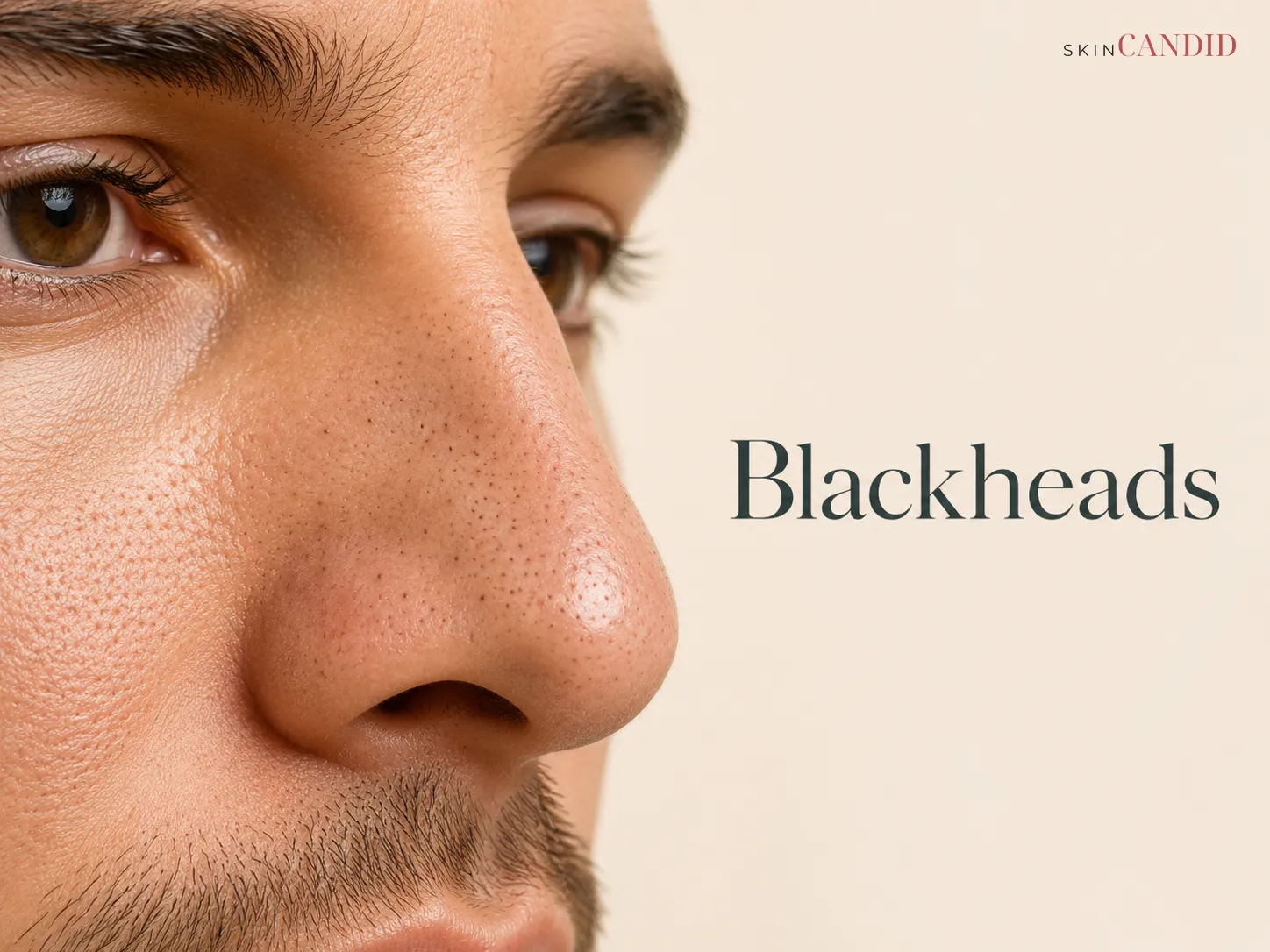
Blackheads are open comedones that form when a hair follicle becomes blocked with oil and dead skin cells, with the surface darkened by exposed pigment rather than dirt.
Overview
What are blackheads?
Blackheads, or open comedones, are one of the earliest and mildest forms of clogged follicles. The follicle opening stays open, and the trapped material darkens through oxidation and pigment exposed to air, not through dirt.
They are most common in oilier areas such as the nose, chin and forehead, though they can appear anywhere on the face.
Common signs and patterns
What blackheads can look or feel like
These features can provide context, but they do not confirm a diagnosis on their own.
Small dark dots in oily areas
Concentrated in areas with more oil glands, especially the nose and centre of the face.
Flat rather than raised
Blackheads generally sit flush with the skin surface rather than forming a raised bump.
No surrounding redness
Unlike inflamed acne, blackheads are typically not red, tender or swollen.
Can coexist with whiteheads
Blackheads and whiteheads often appear together as part of the same clogged-pore pattern.
Causes and contributors
Blackheads form from oil, dead skin and a partly open follicle.
Sebum production and dead skin cell build-up block the follicle, hormonal activity influences how much oil is produced, and certain cosmetic products or mechanical irritation can contribute.
Diet may play a role for some people, though the evidence linking specific foods to blackheads is mixed.
What it may be confused with
Similar-looking concerns need different decisions
Small dark or pale bumps should not automatically be treated as blackheads, especially when the texture or cause does not fit.
Whiteheads
Closed comedones capped by skin rather than open to air, so they stay pale rather than dark.
Sebaceous filaments
A normal structural part of the pore that looks similar but is not a clogged follicle needing treatment.
Milia
Smooth, pearly-white bumps rather than flat dark spots, and they form through a different process.
Inflamed acne
Red, raised, tender lesions rather than the flat, non-inflamed dark spots typical of blackheads.
Bottom line
Consistent gentle exfoliation clears blackheads better than any single extraction.
Blackheads respond gradually, over weeks, to ingredients that encourage normal follicle shedding.
A single extraction removes what’s visible right now but does not address the underlying tendency to form new ones.
Evidence-supported options
Choose the option that fits your skin’s tolerance
This is general education, not a personal treatment plan. Product strengths, permitted uses and prescription status vary by country.
Topical retinoids
Help normalise follicle shedding and prevent new blackheads from forming.
Limit: Can cause dryness or irritation when introduced; visible improvement takes several weeks.
Salicylic acid
A beta hydroxy acid that can penetrate oil and help clear and prevent clogged pores.
Limit: Can be drying at higher concentrations or with frequent use.
Benzoyl peroxide or azelaic acid
Can help alongside comedone-clearing ingredients, especially if some inflammation is also present.
Limit: Best introduced one at a time to manage irritation.
Professional extraction
A trained professional can safely extract stubborn blackheads with sterile tools.
Limit: Addresses existing blackheads, not the underlying tendency to form new ones.
Supportive skincare
A simple routine while blackheads are being managed
Supportive skincare should keep pores clear without over-drying the skin.
Morning
- Cleanse gentlyUse a mild cleanser without scrubbing.
- Apply treatment if directedFollow the product label or clinician’s instructions.
- Moisturise and protectUse an oil-free moisturiser and sunscreen.
Evening
- Cleanse onceRemove makeup and sunscreen without scrubbing.
- Use the selected treatmentIntroduce gradually and avoid combining several new actives at once.
- MoisturiseSupport the skin rather than trying to dry every pore out.
Common mistakes
What can make blackheads harder to manage
- Squeezing or using metal extraction tools without training, which can cause marks or scarring.
- Over-washing or scrubbing, which can irritate skin without clearing pores any faster.
- Expecting a single treatment or product to clear blackheads permanently.
- Skipping moisturiser because skin feels oily, which can encourage more oil production.
When professional help makes sense
Seek assessment when blackheads are persistent or the diagnosis is unclear.
- Persistent or widespread blackheads not responding to eight to twelve weeks of consistent treatment
- Uncertainty about whether bumps are blackheads or another concern
- Interest in professional extraction or acid peels
- Blackheads accompanied by inflamed, painful lesions suggesting a different acne pattern
Related reading
Continue with the next useful question
Editorial record
What this page knows, and what remains uncertain
Evidence summary
Current dermatology references support topical retinoids, salicylic acid, benzoyl peroxide and azelaic acid as core treatments for blackheads, with professional extraction as a complementary rather than standalone option.
Review status
Financial transparency
No paid product placement or affiliate ranking is included on this foundation page.
Recommendation logic
Options are organised by evidence grade, irritation potential, and the point at which professional extraction becomes a reasonable addition.
Frequently asked questions
Short answers to common questions
Are blackheads caused by dirt?
No. The dark colour comes from oxidised oil and pigment exposed to air, not from trapped dirt, so extra washing does not remove them.
Is it safe to squeeze out a blackhead?
It’s best avoided. Squeezing can push material deeper, cause inflammation, or leave a mark, especially without proper training or tools.
How long does it take to see improvement?
Most people notice fewer blackheads after several weeks of consistent use of a retinoid or salicylic acid treatment.
Do blackheads mean I have acne?
Blackheads are a mild form of clogged pore and are considered part of the acne spectrum, though they can occur without more inflamed acne lesions.
Sources reviewed
Guidance behind this page
Sources support general editorial guidance. They do not replace regional product labels, prescribing information or personal medical assessment.