
Breakouts & Pores
Large Pores
Large pores reflect a combination of oil production, follicle size, sun damage and skin elasticity, and while they can be minimised, no product permanently shrinks a pore’s physical size.
Overview
What causes large pores?
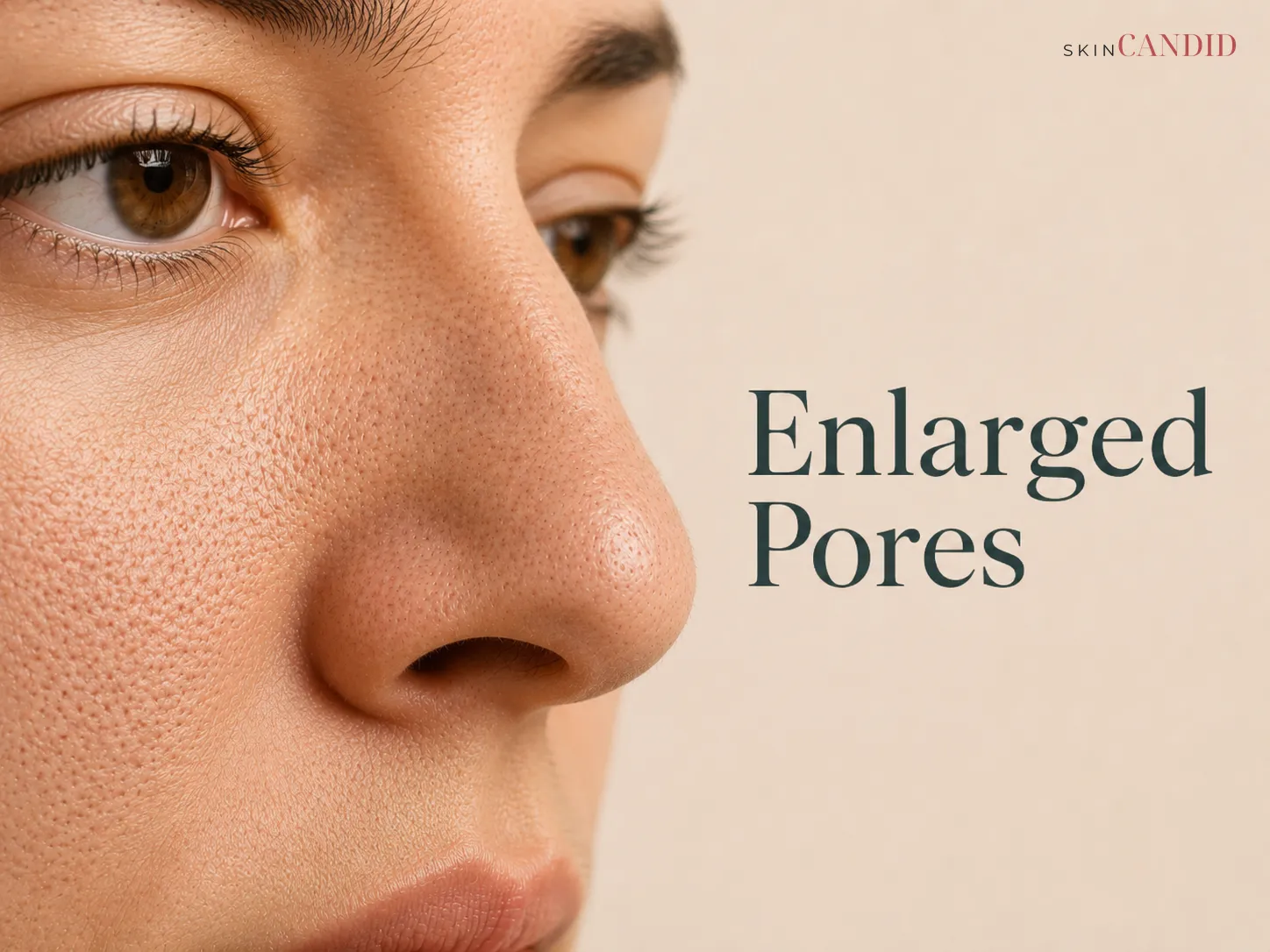
Pore size is determined by the size of the hair follicle opening, which varies from person to person based on genetics. Pores can look larger when they contain more oil, are stretched by trapped debris, or sit on skin that has lost some elasticity with age or sun exposure.
They tend to be most visible in oilier areas of the face, particularly the nose, and centre of the cheeks.
Common signs and patterns
What large pores can look or feel like
These features can provide context, but they do not confirm a diagnosis on their own.
Most visible in oilier areas
Pores often appear larger on the nose, forehead and centre of the cheeks.
More noticeable with age
Reduced skin elasticity can make surrounding skin sag slightly, making pores appear more stretched or visible.
Often paired with blackheads
Clogged pores can appear more stretched and visible where blackheads are also present.
Can be worsened by past acne
Inflammation from acne can weaken the follicle opening’s structure, making the pore appear more enlarged afterward.
Causes and contributors
Pore size is influenced by genetics, oil, and skin structure.
Increased sebum production, follicle size, use of comedogenic products, loss of skin elasticity with age, and cumulative sun damage all contribute to how visible pores appear. Past acne can also enlarge pores by weakening the structural integrity of the follicle opening.
Because genetics play a significant role, pore size varies naturally between people regardless of skincare routine.
What it may be confused with
Similar-looking concerns need different decisions
Visible pores are not always the main issue, and related concerns need their own approach.
Blackheads
A clogged, oxidised follicle that can make a pore look darker and more prominent, distinct from pore size alone.
Whiteheads
A closed, blocked follicle rather than a naturally larger pore opening.
Sebaceous filaments
A normal structural part of the pore, often mistaken for enlarged pores or blackheads.
Acne scars
Textured indentations that are distinct from, though sometimes confused with, naturally larger pores.
Bottom line
Manage oil and skin structure for realistic, modest improvement.
Consistent use of retinoids or niacinamide can make pores appear less prominent over time.
Setting realistic expectations helps avoid frustration with treatments that promise more than they can deliver.
Evidence-supported options
Choose the option that fits your skin’s tolerance
This is general education, not a personal treatment plan. Product strengths, permitted uses and prescription status vary by country.
Topical retinoids
Support skin turnover and structure around the follicle, which can make pores appear less prominent.
Limit: Can cause dryness or irritation when introduced.
Niacinamide
Can help regulate oil production and support the appearance of pores with regular use.
Limit: Effects are gradual and modest rather than dramatic.
Daily broad-spectrum sunscreen
Protects skin elasticity, which can otherwise make pores look more stretched over time.
Limit: Preventive rather than a treatment for existing pore appearance.
Laser treatment or radiofrequency microneedling
Can offer more visible improvement by targeting the sebaceous glands and supporting skin structure.
Limit: Results and recommendations vary by individual; realistic expectations matter.
Supportive skincare
A simple routine to minimise pore appearance
Supportive skincare should manage oil without stripping the skin.
Morning
- Cleanse gentlyUse a mild cleanser suited to your skin type.
- Apply niacinamide if directedFollow the product label or clinician’s instructions.
- Moisturise and protectUse an oil-free moisturiser and daily sunscreen.
Evening
- Cleanse onceRemove makeup and sunscreen without scrubbing.
- Use a retinoid if directedIntroduce gradually to manage irritation.
- MoisturiseSupport the skin barrier overnight.
Common mistakes
What can make large pores harder to manage
- Expecting a product to permanently shrink pore size.
- Over-cleansing or using harsh astringents that irritate skin without changing pore appearance.
- Using heavy, comedogenic products that can stretch pores further with trapped debris.
- Skipping sunscreen, which can accelerate the elasticity loss that makes pores look larger.
When professional help makes sense
Seek assessment when pore appearance is a significant concern.
- Interest in laser treatment or radiofrequency microneedling
- Enlarged pores accompanied by ongoing acne or scarring
- Uncertainty about whether the concern is pore size, blackheads, or another issue
- No improvement after a consistent routine over several months
Related reading
Continue with the next useful question
Editorial record
What this page knows, and what remains uncertain
Evidence summary
Current dermatology references support topical retinoids and niacinamide for minimising the appearance of large pores, while noting that treatments claiming to shrink pores are not highly effective.
Review status
Financial transparency
No paid product placement or affiliate ranking is included on this foundation page.
Recommendation logic
Options are organised by evidence grade and the point at which professional procedures become a reasonable addition.
Frequently asked questions
Short answers to common questions
Can I permanently shrink my pores?
No. Pore size is largely determined by genetics and skin structure, so treatments can only minimise the appearance rather than permanently change the size.
Do pores get bigger with age?
Pores can appear larger with age as skin loses elasticity and surrounding tissue sags slightly, making the pore look more stretched.
Does niacinamide really help with large pores?
Niacinamide can help regulate oil production and support the appearance of pores, though the effect is gradual rather than dramatic.
Are blackheads the reason my pores look large?
Clogged pores can appear more visible, but pore size itself is a separate, genetically influenced trait from blackhead formation.
Sources reviewed
Guidance behind this page
Sources support general editorial guidance. They do not replace regional product labels, prescribing information or personal medical assessment.