
Dryness & Barrier
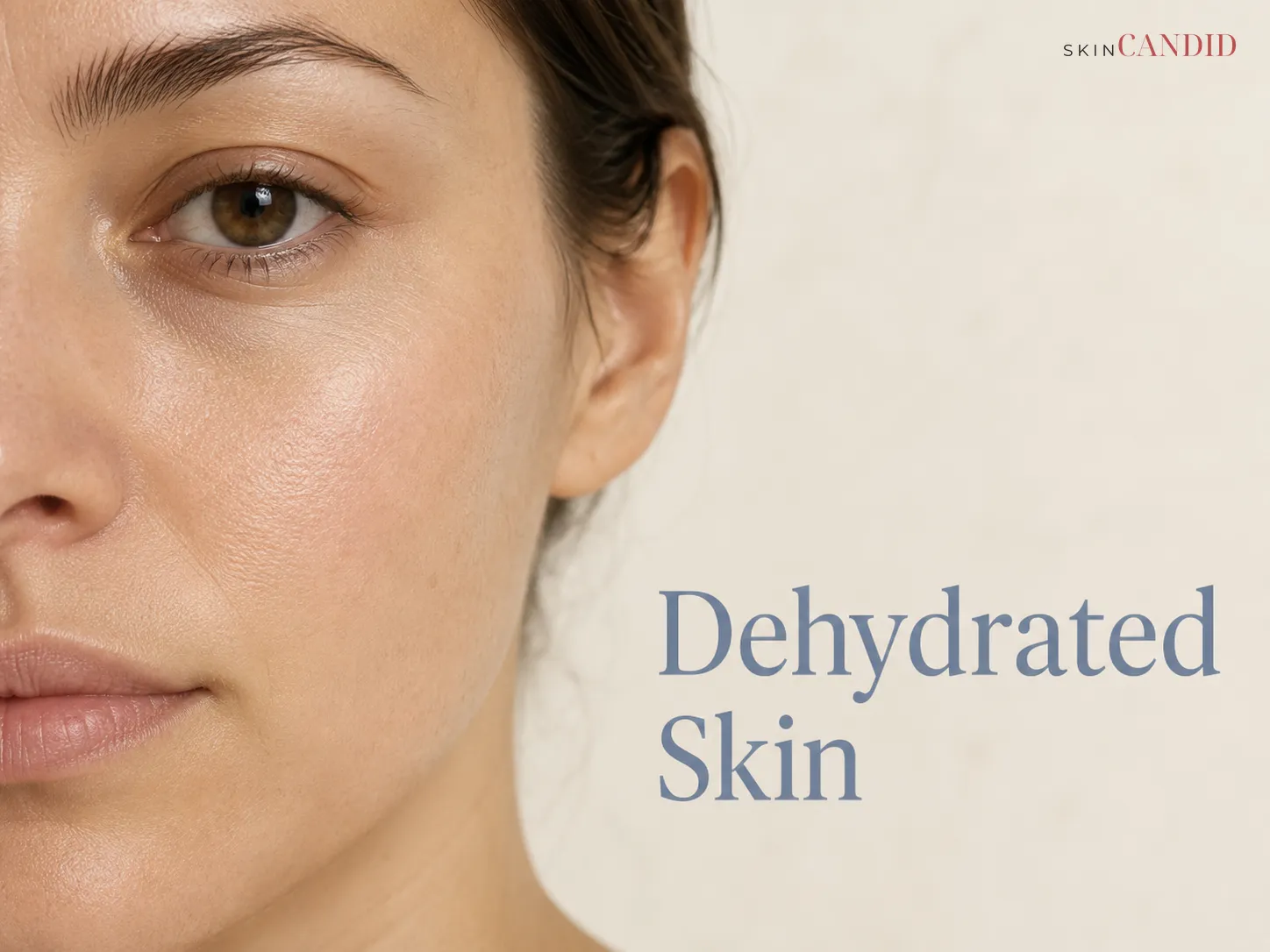
Dehydrated Skin
Dehydrated skin means the outer layers are short on water, not oil. It can happen to any skin type and often responds quickly once the right ingredients are back in the routine.
Overview
What is dehydrated skin?
Dehydrated skin describes a temporary lack of water in the outer skin layers, mainly the stratum corneum. It is not a skin type. Unlike naturally dry skin, dehydration can affect oily, combination or normal skin just as easily as skin that runs dry.
It commonly shows up on the face, especially the cheeks and around the eyes, and can appear alongside other concerns such as a stressed skin barrier or a dull-looking complexion.
Common signs and patterns
What dehydrated skin can look or feel like
These features can provide context, but they do not confirm a diagnosis on their own.
Tightness and mild discomfort
Skin can feel tight shortly after cleansing or through the day, even without visible flaking.
Fine dehydration lines
Small superficial lines can look more noticeable, especially around the eyes, and usually soften once hydration improves.
A dull-looking surface
Skin can look flat or lack radiance when the outer layers are short on water, even without dryness elsewhere.
Skin that responds quickly to change
Comfort and texture can improve within days once humectant-based hydration is introduced, unlike a longer-term dry skin type.
Causes and contributors
Dehydrated skin usually comes from water leaving faster than it is replaced.
Cold or dry air, wind, indoor heating and air conditioning, and long or hot showers can all increase water loss from the skin surface. Over-exfoliating, harsh cleansers and skipping moisturizer after cleansing can strip away the surface lipids that normally help hold water in.
Some lifestyle factors, including high alcohol or caffeine intake, poor sleep and certain medications, may contribute for some people, though the evidence linking any single lifestyle factor to skin hydration is mixed.
What it may be confused with
Similar-looking concerns need different decisions
Several concerns can feel or look like dehydration without being the same underlying issue.
Dry skin (skin type)
A skin type defined by lower oil production. It tends to be consistent over time rather than triggered by short-term environmental factors.
Damaged skin barrier
Barrier stress can cause water loss too, but usually comes with more redness, stinging or sensitivity to products that were previously well tolerated.
Dull skin
Dullness can accompany dehydration, but can also result from product buildup, sun exposure or slower cell turnover without a hydration component.
Fine lines from ageing
Structural fine lines from collagen loss can look similar to temporary dehydration lines but do not soften as quickly with hydration alone.
Bottom line
Hydrate first, then seal it in.
Most people see improvement within a few days of adding a humectant-based product followed by a moisturizer, when the routine is used consistently.
Avoid adding several new strong actives at once while the skin is already water-depleted, since this can make irritation harder to identify.
Evidence-supported options
Choose the option that matches what the skin actually needs
This is general education, not a personal treatment plan. Product strengths and formulations vary.
Humectant ingredients
Hyaluronic acid, glycerin and similar ingredients draw water into the surface layers and are a core part of managing dehydration.
Limit: Applying a humectant in very low-humidity air without sealing it in can occasionally pull water from deeper skin layers instead.
Moisturizers with emollients or occlusives
Following a humectant with a moisturizer containing emollient or occlusive ingredients helps lock the added water in and reduce ongoing water loss.
Limit: Texture and richness should match skin type and climate; too heavy a product can feel uncomfortable on oilier skin.
Simplifying the routine
Reducing over-exfoliation and harsh cleansing gives the surface layers a chance to hold onto water again.
Limit: Improvement can take one to two weeks if the barrier was significantly stripped beforehand.
Clinical assessment for persistent cases
A dermatologist can check for an underlying barrier condition or another cause if dehydration does not improve with consistent care.
Limit: Most useful when discomfort, redness or flaking continue despite several weeks of appropriate routine changes.
Supportive skincare
A simple routine for rebuilding hydration
Supportive skincare should improve comfort and restore surface water levels. It does not replace professional care if a barrier condition is suspected.
Morning
- Cleanse gentlyUse a mild, non-stripping cleanser and lukewarm rather than hot water.
- Apply a humectant on damp skinA hyaluronic acid or glycerin-based product works best while skin is still slightly damp.
- Seal with moisturizer and sunscreenFollow with a moisturizer suited to your skin type, then a broad-spectrum sunscreen.
Evening
- Remove sunscreen and makeupCleanse once, gently, without scrubbing or rough cloths.
- Reapply a humectantPat onto damp skin before moving to the next step.
- MoisturizeA slightly richer formula at night can help reduce overnight water loss.
Common mistakes
What can make dehydration harder to resolve
- Relying on a rich cream alone without a humectant to actually add water first.
- Over-exfoliating in an attempt to fix dullness that is actually dehydration.
- Applying humectant products to completely dry skin in a low-humidity room without sealing them in.
- Assuming more water intake alone will resolve visible surface dehydration.
When professional help makes sense
Seek assessment when consistent care isn’t enough.
- Tightness, flaking or discomfort that does not improve after a few weeks of consistent care
- Redness, stinging or sensitivity alongside the dryness
- Skin that reacts to products it previously tolerated well
- Signs that could suggest an underlying condition such as eczema or a damaged barrier
- Persistent, unexplained changes in skin texture or comfort
Related reading
Continue with the next useful question
Editorial record
What this page knows, and what remains uncertain
Evidence summary
Current dermatology sources support distinguishing dehydration, a temporary water deficiency, from dry skin, an oil-related skin type, and support humectant-plus-moisturizer routines as the primary management approach.
Review status
Evidence reviewed 4 August 2026. Medical and practical reviewer approval remain pending and must not be implied until completed.
Financial transparency
No paid product placement or affiliate ranking is included on this foundation page.
Recommendation logic
Options are organised by how directly they address water loss, ease of use, and the point at which professional assessment becomes more appropriate.
Frequently asked questions
Short answers to common questions
Can dehydrated skin happen even if I have oily skin?
Yes. Dehydration is about water content, not oil production, so oily and combination skin can still lack water in the outer layers.
Will drinking more water fix dehydrated skin?
General hydration supports overall health, but topical humectants and a barrier-supporting moisturizer have a more direct and consistent effect on visible surface hydration.
How long does it take to see improvement?
Many people notice softer texture and reduced tightness within a few days to about two weeks of consistent humectant and moisturizer use.
Is dehydrated skin the same as having a damaged skin barrier?
They can overlap, but a damaged barrier usually involves more redness, stinging or product sensitivity, while dehydration is primarily about reduced water content.
Sources reviewed
Guidance behind this page
- American Academy of Dermatology: Dermatologists’ top tips for relieving dry skin
- American Academy of Dermatology: Dry skin diagnosis and treatment
- NIH NCBI Bookshelf (StatPearls): Moisturizers
- Journal of the American Academy of Dermatology: Guidelines of care for atopic dermatitis (moisturizer evidence)
Sources support general editorial guidance. They do not replace regional product labels, prescribing information or personal medical assessment.