
Eye & Lip
Chapped Lips
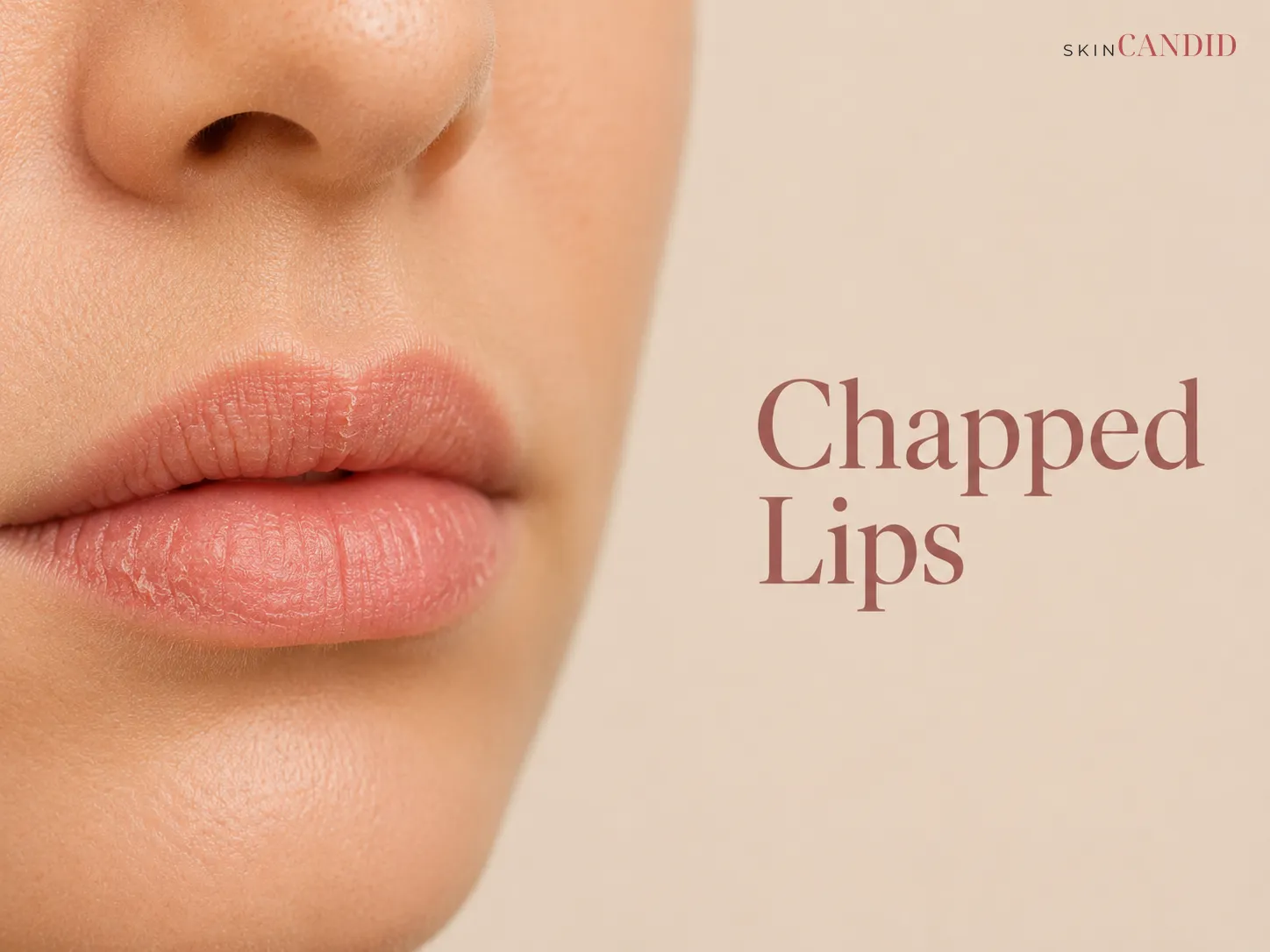
Chapped lips are dry, flaking or cracked lips caused by a thin, oil-gland-free barrier that loses moisture more easily than the rest of the face.
Overview
What causes chapped lips?
The skin on the lips is thinner and more sensitive than facial skin, and lips lack sebaceous, or oil, glands entirely. Without this natural oil layer, lips cannot retain moisture the way the rest of the face can, making them prone to dryness, flaking and cracking.
Cold or dry weather, sun exposure, dehydration and habitually licking the lips can all worsen chapping, and some people notice a seasonal pattern, particularly in winter.
Common signs and patterns
What chapped lips can look or feel like
These features can provide context, but they do not confirm a diagnosis on their own.
Dryness and fine flaking
The surface can look rough or shed small flakes of skin, especially after exposure to cold or wind.
Tightness or mild cracking
Lips can feel tight when smiling or talking, and small surface cracks may appear in more severe cases.
Worse in cold or dry weather
Symptoms often flare with low humidity, wind or prolonged indoor heating.
Linked to a compromised barrier
Persistent chapping can overlap with wider skin barrier disruption, especially if surrounding skin is also affected.
Causes and contributors
Lips lose moisture faster because they lack oil glands.
Because lips have no sebaceous glands, they cannot produce their own protective oil, which leaves them more dependent on outside protection than facial skin. Cold, dry or windy weather and sun exposure can all speed up moisture loss.
Habitual licking, dehydration, certain medications and some lip product ingredients, such as menthol, camphor or strong fragrance, can prolong or worsen chapping.
What it may be confused with
Similar-looking concerns need different decisions
Not every dry or cracked lip is simple weather-related chapping.
General facial dryness
Facial skin has sebaceous glands and responds differently to hydrating routines than the lips do.
Angular cheilitis
Cracking specifically at the corners of the mouth, often linked to irritation, saliva build-up or a fungal or bacterial component.
Allergic or irritant lip reactions
Caused by a specific product or ingredient rather than weather or dehydration, and usually improves once the trigger is removed.
Eczema on the lips
A specific inflammatory condition that needs tailored treatment rather than lip balm alone.
Bottom line
Protect and occlude, rather than treating lips like the rest of your face.
Consistent use of an occlusive balm, daily SPF protection and avoiding licking address the specific way lips lose moisture.
Because lip skin is thin and heals slowly, noticeable improvement can take longer than facial dryness does to settle.
Evidence-supported options
Choose the option that fits your daily exposure
This is general education, not a personal treatment plan. Product strengths, permitted uses and prescription status vary by country.
Occlusive lip balm or ointment
Fragrance-free formulas with glycerin, ceramides or petroleum jelly form a protective layer over the thin lip barrier.
Limit: Needs reapplying regularly through the day to stay effective.
SPF lip balm
An SPF 30 or higher lip product helps protect against sun-related dryness and damage during outdoor exposure.
Limit: Requires reapplication roughly every two hours outdoors to stay protective.
Humidifier
Adding moisture to dry indoor air can reduce how much lips dry out overnight or during heated seasons.
Limit: Supports lip care but does not replace direct balm application.
Medical assessment for persistent cases
A clinician can check for an underlying condition, such as dermatitis or an allergic reaction, when chapping does not resolve.
Limit: Needed only when lip care alone has not helped after a reasonable trial.
Supportive skincare
A simple routine to protect lips day and night
Lip care should stay simple, occlusive and separate from stronger facial actives.
Morning
- Apply an SPF lip balmUse before sun exposure and reapply through the day outdoors.
- Avoid lickingReach for balm instead of moistening lips with saliva.
- Keep water intake steadyGeneral hydration supports overall skin comfort.
Evening
- Remove any lip productsGently clean lips before applying overnight care.
- Apply an occlusive balm or ointmentChoose a fragrance-free formula to protect overnight.
- Avoid flavoured or menthol productsThese can irritate already-dry lips further.
Common mistakes
What can make chapped lips harder to manage
- Frequently licking the lips, which increases moisture loss as saliva evaporates.
- Using flavoured or fragranced lip products that can irritate already-dry lips.
- Skipping SPF on the lips, leaving them prone to sun-related dryness and damage.
- Using facial moisturisers or serums that are not designed for the thinner lip barrier.
When professional help makes sense
Seek assessment when chapping persists or looks unusual.
- Chapped lips persisting for several weeks despite consistent lip care
- Cracking, bleeding or pain that interferes with eating or speaking
- Signs of infection, such as swelling, pus or spreading redness
- Suspected allergic reaction to a lip product or ingredient
Related reading
Continue with the next useful question
Editorial record
What this page knows, and what remains uncertain
Evidence summary
Clinical sources describe lips as lacking sebaceous glands and having thinner skin than the face, supporting occlusive balm use, SPF lip protection and avoiding licking as the main management steps.
Review status
Financial transparency
No paid product placement or affiliate ranking is included on this foundation page.
Recommendation logic
Options are organised by how directly they protect the lip barrier and the point at which a persistent case should be assessed professionally.
Frequently asked questions
Short answers to common questions
Why are my lips more prone to dryness than the rest of my face?
Lips have thinner skin and no sebaceous, or oil, glands, so they cannot produce their own protective oil and lose moisture more easily than facial skin.
Does licking my lips help when they feel dry?
No. Licking your lips can worsen dryness because saliva evaporates quickly and can take moisture from the lips with it.
Do I need a separate SPF for my lips?
Yes. An SPF lip balm applied regularly is recommended, since sun exposure can worsen dryness and chapping over time.
When should chapped lips be checked by a doctor?
If dryness persists for more than a few weeks despite consistent lip care, or there is cracking, bleeding or signs of infection, it is worth having a healthcare provider take a look.
Sources reviewed
Guidance behind this page
Sources support general editorial guidance. They do not replace regional product labels, prescribing information or personal medical assessment.