
Breakouts & Pores
Comedonal Acne
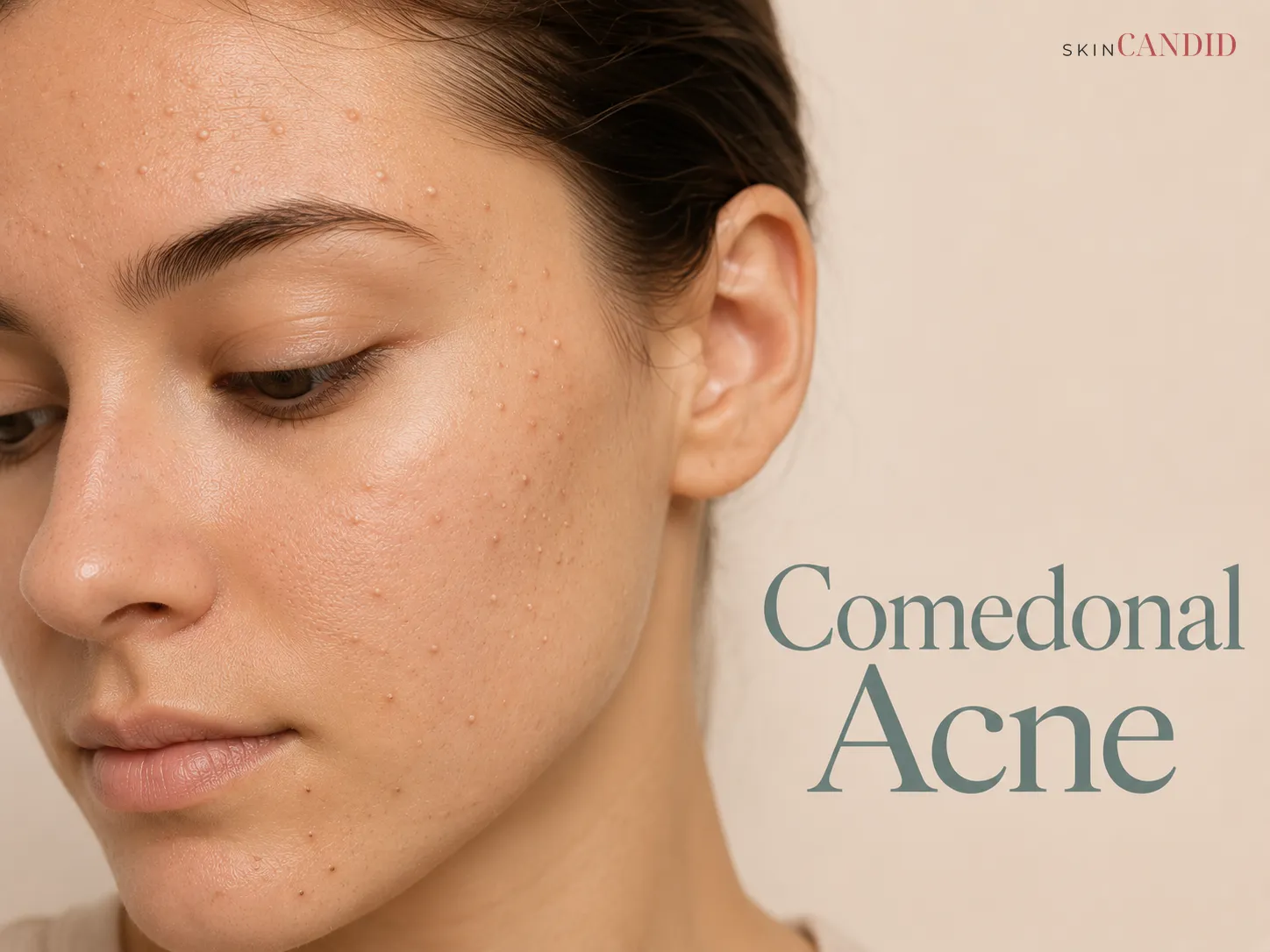
Comedonal acne is a non-inflammatory pattern of acne made up mainly of blackheads and whiteheads, without the redness or tenderness typical of inflamed breakouts.
Overview
What is comedonal acne?
Comedonal acne is a pattern of acne in which most lesions are comedones rather than inflamed spots. Comedones form when sebum and dead skin cells clog a hair follicle, producing small bumps that are typically the same colour as the surrounding skin, without pus, redness or tenderness.
It most often affects the forehead, temples and chin, and can occur on its own or alongside inflammatory acne elsewhere on the face.
Common signs and patterns
What comedonal acne can look or feel like
These features can provide context, but they do not confirm a diagnosis on their own.
Blackheads
Open comedones where the follicle opening widens; the dark tip comes from oxidised material, not dirt.
Whiteheads
Closed comedones where the follicle is blocked beneath the surface and stays skin-coloured.
Non-tender bumps
Unlike inflamed spots, comedones are not usually painful, swollen or filled with visible pus.
Linked to clogged pores
Comedonal acne is essentially the visible result of pores becoming blocked with sebum and dead skin cells.
Causes and contributors
Comedonal acne comes from blocked follicles, not primarily bacteria.
Excess sebum production and a build-up of dead skin cells inside the follicle are the main drivers, often influenced by hormonal changes. Comedogenic skincare or makeup products, and friction from clothing or equipment, can also contribute to new comedones forming.
Acne-associated bacteria play a smaller role here than in inflammatory acne, though untreated comedones can still progress into inflamed papules or pustules over time.
What it may be confused with
Similar-looking concerns need different decisions
Several other concerns can look like comedonal acne at a glance but need a different approach.
Milia
Small, firm white bumps trapped in tiny pockets beneath the skin, which cannot be extracted the way comedones can.
Sebaceous filaments
Natural, functional pore structures rather than blocked follicles, though they can look similar on the nose.
Large pores
A structural pore-size concern rather than a build-up of trapped sebum and dead skin cells.
Inflammatory acne
Involves redness, tenderness and sometimes pus, unlike the flatter, non-inflamed comedonal pattern.
Bottom line
Retinoids, used consistently, are the foundation of comedonal acne treatment.
Because comedonal acne involves minimal inflammation, treatment focuses on normalising follicle shedding rather than targeting bacteria.
Most people need eight to twelve weeks of steady use before deciding whether a routine is working, and stopping early is a common reason for disappointing results.
Evidence-supported options
Choose the option that fits consistent, long-term use
This is general education, not a personal treatment plan. Product strengths, permitted uses and prescription status vary by country.
Topical retinoids
Considered first-line for comedonal acne, helping normalise cell turnover inside the follicle and prevent new comedones.
Limit: Dryness and irritation are common when starting, and pregnancy-related restrictions require professional guidance.
Salicylic acid
A beta hydroxy acid that can help loosen material within clogged pores as a supporting treatment.
Limit: Usually milder than a retinoid and often used alongside one rather than instead of it.
Azelaic acid
Can help comedones and any accompanying discolouration with a generally gentler irritation profile.
Limit: Results tend to build gradually over consistent use.
Professional extraction or chemical peels
A clinician can manually clear stubborn comedones or use peels to support a topical routine.
Limit: Best used alongside, not instead of, an ongoing retinoid routine.
Supportive skincare
A simple routine to support consistent retinoid use
Supportive skincare should improve comfort and tolerance so a retinoid routine can be maintained long enough to work.
Morning
- Cleanse gentlyUse a mild cleanser and lukewarm water without scrubbing.
- Apply treatment if directedFollow the product label or clinician’s instructions.
- Moisturise and protectUse a non-comedogenic moisturiser and daily sunscreen.
Evening
- Cleanse onceRemove makeup and sunscreen gently.
- Apply the retinoidIntroduce gradually, alternating nights at first if needed.
- MoisturiseSupport the skin barrier while the retinoid takes effect.
Common mistakes
What can make comedonal acne harder to manage
- Expecting fast results and stopping a retinoid within days or weeks of starting.
- Over-cleansing or scrubbing in an attempt to unclog pores, which can irritate skin without addressing the underlying build-up.
- Squeezing blackheads and whiteheads at home, risking irritation and lingering marks.
- Relying on antibacterial or antibiotic treatments for a pattern that is not primarily inflammatory.
When professional help makes sense
Seek assessment when comedones persist or start to inflame.
- No meaningful improvement after eight to twelve weeks of consistent retinoid use
- Comedones progressing into inflamed, painful lesions
- Interest in professional extraction or chemical peels
- Pregnancy, or difficulty tolerating topical retinoids
Related reading
Continue with the next useful question
Editorial record
What this page knows, and what remains uncertain
Evidence summary
Dermatology sources describe comedonal acne as a distinct, largely non-inflammatory pattern best addressed with topical retinoids and comedolytic ingredients rather than antibacterial treatment.
Review status
Financial transparency
No paid product placement or affiliate ranking is included on this foundation page.
Recommendation logic
Options are organised by evidence grade, role in normalising follicle turnover, and the point at which professional procedures become a reasonable addition.
Frequently asked questions
Short answers to common questions
What’s the difference between comedonal acne and inflammatory acne?
Comedonal acne is made up of blackheads and whiteheads without redness or tenderness, while inflammatory acne involves papules, pustules, redness and swelling.
Why do dermatologists recommend retinoids first for comedonal acne?
Retinoids help normalise how skin cells shed inside the follicle, which addresses the underlying process rather than the surface bacteria that inflammatory treatments target.
How long does comedonal acne take to improve?
Most people need around eight to twelve weeks of consistent retinoid use before seeing meaningful improvement.
Can I extract blackheads and whiteheads myself?
Home extraction can irritate the skin and increase the risk of marks; a professional extraction or chemical peel is a safer option if needed.
Sources reviewed
Guidance behind this page
Sources support general editorial guidance. They do not replace regional product labels, prescribing information or personal medical assessment.