
Eye & Lip
Puffy Eyes
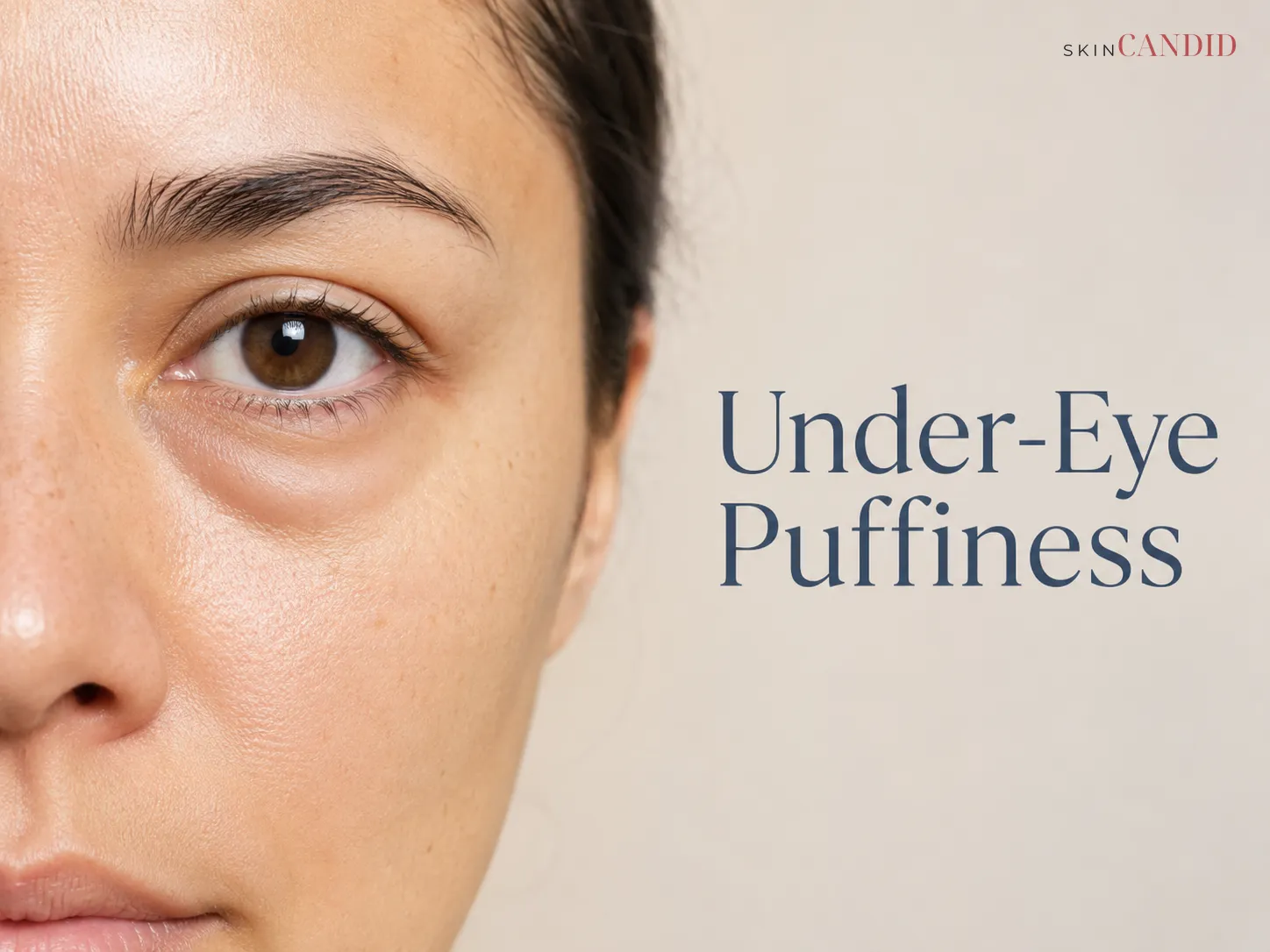
Puffy eyes, or under-eye bags, most often reflect natural aging changes in the skin and supporting tissue, though fluid retention, allergies and genetics can all contribute.
Overview
What causes puffy eyes?
The under-eye area is supported by thin skin, delicate muscle and small fat pads that keep the eye cushioned. As this tissue naturally weakens and skin loses firmness with age, the fat pads can shift forward and create a visible bulge, commonly known as under-eye bags.
Separately, temporary puffiness can come from fluid retention overnight, especially after a high-salt meal, poor sleep, or an allergic reaction affecting the eye area.
Common signs and patterns
What puffy eyes can look or feel like
These features can provide context, but they do not confirm a diagnosis on their own.
Temporary morning puffiness
Swelling most visible after waking that gradually reduces through the day.
Persistent bulge or bag
A visible, consistent bulge that does not change much between morning and evening, more typical of age-related changes.
Puffiness with itching or congestion
Swelling accompanied by itchy or watery eyes, which often points to an allergic cause.
Can coexist with dark circles
Puffiness can cast a shadow that makes nearby dark circles appear more pronounced.
Causes and contributors
Puffy eyes can be temporary or age-related.
Natural aging is the most common cause of persistent under-eye bags, as weakened tissue allows fat to shift forward. High sodium intake, allergies, poor sleep, genetics and certain medical conditions such as thyroid problems can all contribute to or worsen puffiness.
Because more than one factor can be at play at once, puffiness that persists despite lifestyle changes is more likely to be structural.
What it may be confused with
Similar-looking concerns need different decisions
Swelling around the eyes is not always the same underlying issue.
Dark circles
Discolouration under the eyes rather than a visible swelling or bulge.
Allergic swelling
Puffiness tied to a specific allergen or seasonal pattern, usually with itching or watering.
Sudden or one-sided swelling
Rapid onset or asymmetric swelling that warrants medical evaluation rather than at-home care.
Damaged skin barrier
Redness and dryness from irritation rather than fat-related bulging.
Bottom line
Match the fix to whether puffiness is temporary or structural.
Cold compresses, sleep and reduced sodium intake help with temporary, fluid-related puffiness.
Persistent age-related bags typically need a professional procedure to see meaningful change.
Evidence-supported options
Choose the option that fits your skin’s tolerance
This is general education, not a personal treatment plan. Product strengths, permitted uses and prescription status vary by country.
Cold compresses
Constrict blood vessels and reduce swelling from temporary, fluid-related puffiness.
Limit: Offers short-term relief rather than a lasting structural change.
Caffeine-containing eye products
Can act as a vasoconstrictor to temporarily reduce the appearance of puffiness.
Limit: Temporary effect; does not address structural or age-related bags.
Sleep and sodium adjustments
Consistent sleep and reduced high-sodium foods can lessen fluid-related puffiness.
Limit: Will not resolve puffiness caused by structural fat shifting.
Fillers, laser treatment or eyelid surgery
Nonsurgical options can soften mild bags, while a lower eyelid lift addresses more pronounced, persistent bags with longer-lasting results.
Limit: Should be performed by a board-certified surgeon experienced with the eye area.
Supportive skincare
A simple routine for the eye area
Supportive skincare should reduce temporary puffiness without irritating delicate skin.
Morning
- Cleanse gentlyUse a mild cleanser, avoiding tugging at the eye area.
- Apply a cold or caffeine-based eye productHelps reduce morning puffiness.
- Apply sunscreenInclude the under-eye area with a formula suited to that skin.
Evening
- Cleanse onceRemove makeup gently.
- Elevate while sleeping if helpfulCan reduce overnight fluid accumulation for some people.
- MoisturiseSupport the thinner skin around the eyes.
Common mistakes
What can make puffy eyes harder to manage
- Expecting eye creams to resolve age-related structural bags.
- Rubbing the eyes, which can worsen swelling and irritation.
- Overlooking high sodium intake or poor sleep as contributing factors.
- Trying unproven home remedies with strong active ingredients on delicate eye skin.
When professional help makes sense
Seek assessment for persistent or sudden puffiness.
- Persistent bags not improving with sleep, hydration or sodium adjustments
- Interest in fillers, laser treatment or eyelid surgery
- Sudden, one-sided or painful swelling
- Puffiness alongside symptoms suggesting an allergy or medical condition
Related reading
Continue with the next useful question
Editorial record
What this page knows, and what remains uncertain
Evidence summary
Authoritative sources identify natural aging as the most common cause of persistent under-eye bags, with fluid retention, allergies and genetics contributing to temporary or additional puffiness.
Review status
Financial transparency
No paid product placement or affiliate ranking is included on this foundation page.
Recommendation logic
Options are organised from temporary at-home relief through to professional procedures for structural, age-related bags.
Frequently asked questions
Short answers to common questions
Can eye creams get rid of under-eye bags?
Eye creams can reduce temporary, fluid-related puffiness, but persistent bags from natural aging generally do not resolve with topical products alone.
Does sleep position affect puffy eyes?
Sleeping with the head slightly elevated can help reduce fluid accumulation overnight for some people.
Is under-eye puffiness linked to allergies?
Yes, allergies can cause or worsen puffiness, often alongside itching or watery eyes.
What professional options treat persistent eye bags?
Options can include dermal fillers, laser resurfacing, chemical peels or, for more pronounced bags, a lower eyelid lift performed by a board-certified surgeon.
Sources reviewed
Guidance behind this page
Sources support general editorial guidance. They do not replace regional product labels, prescribing information or personal medical assessment.