
Pigmentation & Tone
Hyperpigmentation
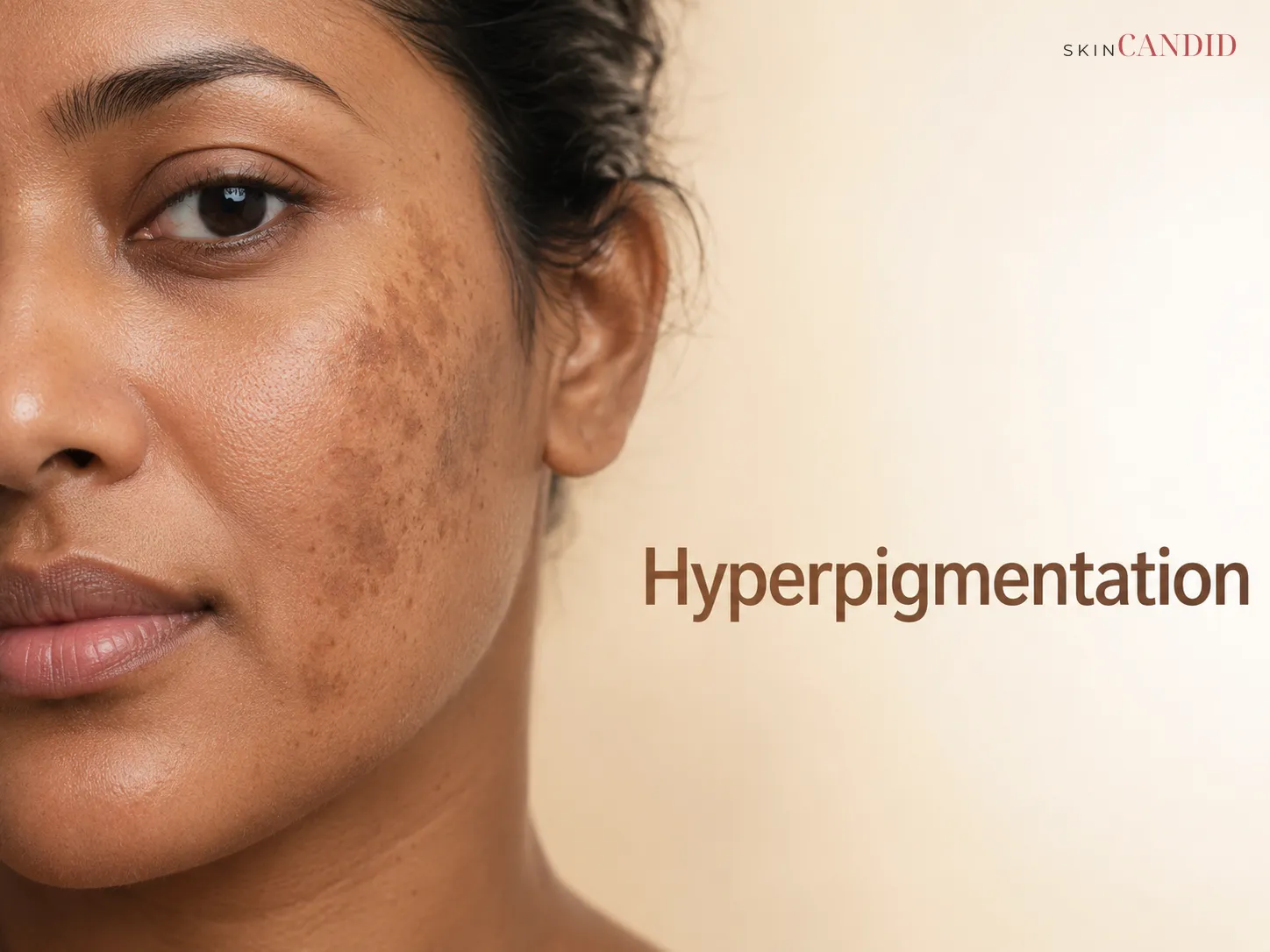
Hyperpigmentation describes patches of skin that appear darker than the surrounding area, most often caused by sun exposure, past inflammation or hormonal changes, and it covers several distinct patterns that each respond to slightly different care.
Overview
What is hyperpigmentation?
Hyperpigmentation is a broad term for any area of skin that appears darker than the surrounding skin due to excess melanin. Common patterns include melasma, post-inflammatory hyperpigmentation left after a blemish or injury heals, and sun-induced spots.
It is more common, and often more persistent, in medium-to-deep skin tones, where inflammation and injury can trigger more noticeable pigment changes.
Common signs and patterns
What hyperpigmentation can look or feel like
These features can provide context, but they do not confirm a diagnosis on their own.
Flat brown or grey-brown patches
Marks are flat rather than raised, ranging in colour depending on skin tone and the depth of the pigment.
Marks that follow a healed blemish or injury
Patches often trace the exact shape and location of a previous spot, cut or irritation.
Darkening with sun exposure
Existing marks commonly become more visible or darker after time in the sun.
Gradual fading over time
Left alone, many marks slowly lighten over months, though some can persist for a long time without treatment.
Causes and contributors
Hyperpigmentation comes from several different triggers.
Excess melanin production is triggered by sun and visible-light exposure, inflammation from acne or other skin conditions, hormonal changes, certain medications, and skin injury.
Deeper pigment tends to fade more slowly than pigment closer to the surface, and the tendency toward more visible pigment changes after inflammation is more pronounced in medium-to-deep skin tones.
What it may be confused with
Similar-looking concerns need different decisions
Not every dark patch is the same type of hyperpigmentation, and some marks need a closer look rather than routine treatment.
Melasma
A specific, usually symmetrical and hormonally linked pattern of facial hyperpigmentation, rather than the broader umbrella term.
Post-inflammatory hyperpigmentation
Traces the exact site of a healed blemish or injury, rather than appearing as a broader, more diffuse pattern.
Sun damage
Tends to show as smaller, scattered spots in sun-exposed areas rather than larger connected patches.
A new or changing mole
A pigmented spot that is new, changing or irregularly shaped needs prompt dermatology assessment rather than being treated as routine hyperpigmentation.
Bottom line
Sunscreen prevents new darkening; targeted treatment fades marks slowly, over weeks to months.
Because most types of hyperpigmentation get worse with unprotected sun exposure, consistent daily sunscreen is the single most important step regardless of which topical treatment is used.
Expecting rapid results often leads to over-treating and irritating the skin, which can make pigmentation worse rather than better.
Evidence-supported options
Choose the option that matches the type and depth of pigment
This is general education, not a personal treatment plan. Product strengths, permitted uses and prescription status vary by country.
Broad-spectrum sunscreen
Prevents existing marks from darkening further and reduces the risk of new pigmentation; tinted formulas can help block visible light as well as UV.
Limit: Does not fade existing marks on its own.
Topical vitamin C, azelaic acid or niacinamide
Can gradually improve the appearance of uneven pigmentation with consistent use over several weeks.
Limit: Effects are generally modest and gradual rather than a full, rapid fade.
Topical hydroquinone or combination creams
A well-studied option for more stubborn pigmentation, often used for a defined period under guidance.
Limit: Needs consistent use over months and clinician input on how long to use it safely.
Chemical peels, laser or light-based treatment
May help fade certain types of hyperpigmentation that don’t respond well to topical care alone.
Limit: Requires clinician selection matched to skin tone and pigment depth, since some procedures can worsen pigmentation if used incorrectly.
Supportive skincare
A simple routine while hyperpigmentation is being managed
Supportive skincare should protect and support tolerance. It does not replace daily sun protection or the selected treatment.
Morning
- Cleanse gentlyUse a mild cleanser without scrubbing.
- Apply treatment if directedFollow the product label or clinician’s instructions.
- Apply and reapply sunscreenUse a broad-spectrum sunscreen and reapply through the day.
Evening
- Cleanse gentlyRemove sunscreen and makeup without scrubbing.
- Use the selected brightening or treatment productApply consistently rather than layering several strong actives at once.
- MoisturiseSupport tolerance of the active treatment.
Common mistakes
What can make hyperpigmentation harder to manage
- Skipping daily sunscreen, which allows existing marks to stay darker for longer and new ones to form.
- Using multiple strong lightening or exfoliating actives at once, which can irritate skin and sometimes worsen pigmentation.
- Expecting visible fading within days rather than the weeks to months most treatments realistically take.
- Picking or over-treating acne or irritated skin, which can create new marks even while trying to fade old ones.
When professional help makes sense
Seek assessment when a mark looks different from typical hyperpigmentation.
- A mark that is new, rapidly changing, irregularly shaped, or different in colour from typical hyperpigmentation
- Extensive or treatment-resistant pigmentation affecting confidence or wellbeing
- Uncertainty about which type of hyperpigmentation is present
- Interest in prescription-strength lightening treatment or procedural options
Related reading
Continue with the next useful question
Editorial record
What this page knows, and what remains uncertain
Evidence summary
Current dermatology references support daily sun protection as foundational, with topical vitamin C, azelaic acid, niacinamide or hydroquinone-based regimens for gradual fading, and procedural options for stubborn cases.
Review status
Evidence reviewed 25 July 2026. Medical and practical reviewer approval remain pending and must not be implied until completed. The hero image has passed technical and editorial review; Medical Visual Approval is marked not required for this general concern image.
Financial transparency
No paid product placement or affiliate ranking is included on this foundation page.
Recommendation logic
Options are organised by evidence grade, irritation potential, and the point at which procedural or prescription-strength care becomes more appropriate.
Frequently asked questions
Short answers to common questions
What’s the difference between hyperpigmentation and melasma?
Melasma is one specific, usually symmetrical and hormonally linked pattern; hyperpigmentation is the broader term covering several different causes and patterns.
How long does it take to fade hyperpigmentation?
Most treatments take several weeks to a few months of consistent use, and deeper pigment can take even longer.
Does hyperpigmentation go away on its own?
Many marks fade gradually over months, especially with consistent sun protection, but some persist for a long time without active treatment.
Is hyperpigmentation more common in darker skin tones?
Yes. Medium-to-deep skin tones tend to show more noticeable and longer-lasting pigment changes after inflammation or injury.
Sources reviewed
Guidance behind this page
- DermNet NZ: Postinflammatory hyperpigmentation
- American Academy of Dermatology: How to fade dark spots in darker skin tones
- Journal of the American Academy of Dermatology: Treatment recommendations for acne-associated hyperpigmentation (Delphi consensus)
Sources support general editorial guidance. They do not replace regional product labels, prescribing information or personal medical assessment.