
Eye & Lip
Milia
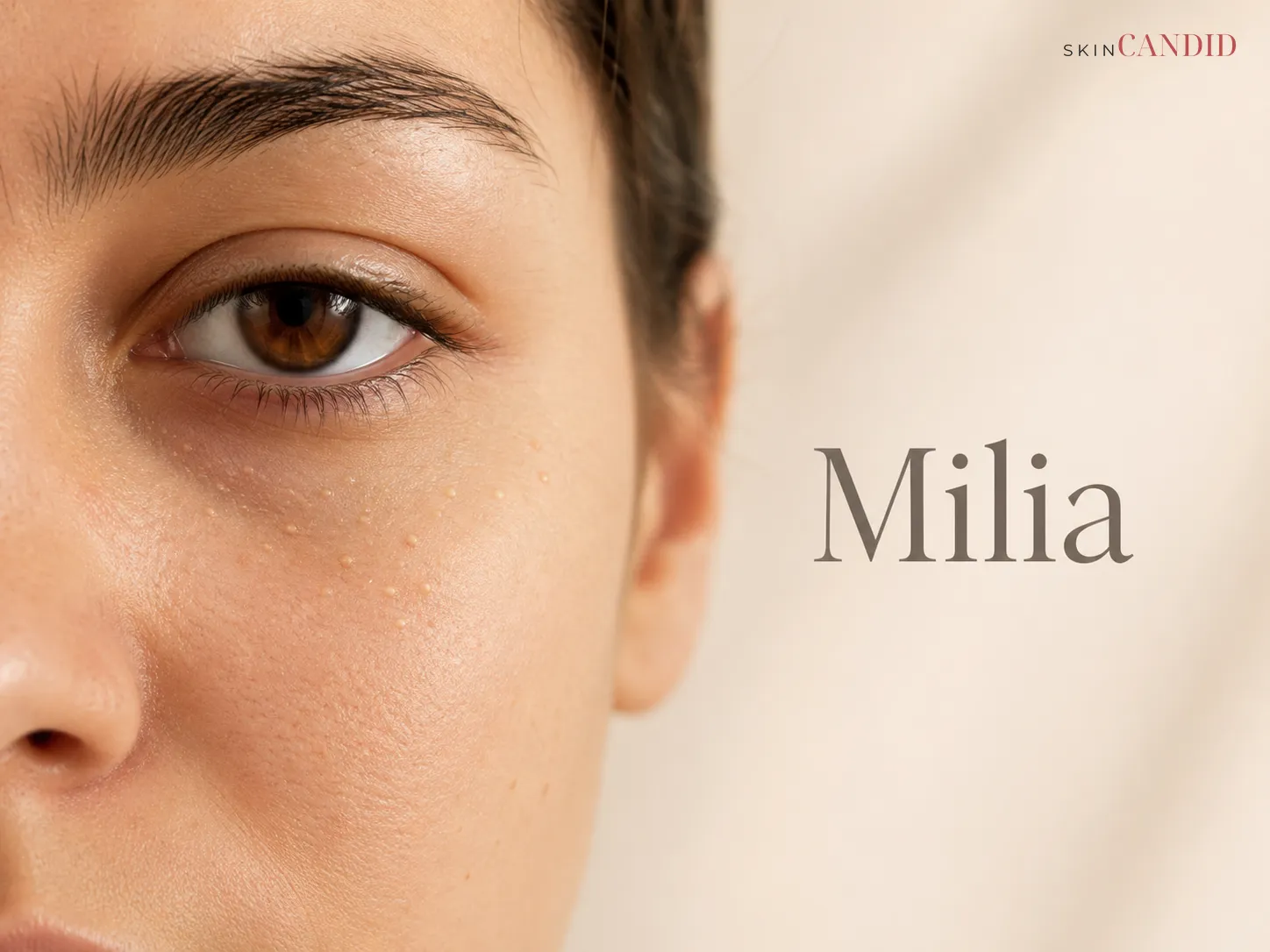
Milia are small, harmless, pearly-white bumps that form just under the skin’s surface, most often around the eyes and cheeks, when keratin becomes trapped rather than shedding normally.
Overview
What are milia?
Milia are tiny keratin-filled cysts that sit just beneath the surface of the skin, appearing as small, firm, pearly-white or yellowish bumps. They are most common around the eyes, cheeks and eyelids, though they can appear elsewhere.
They are extremely common in newborns, affecting roughly 40 to 50%, where they usually resolve within weeks. They also occur in children and adults.
Common signs and patterns
What milia can look or feel like
These features can provide context, but they do not confirm a diagnosis on their own.
Tiny pearly-white bumps
Firm, dome-shaped bumps typically 1 to 2mm across, often clustered around the eyes or cheeks.
No redness or pain
Milia are typically not inflamed, itchy or tender, unlike many acne lesions.
Common in newborns
Small white bumps on a baby’s nose or face are usually milia and typically clear up within the first few weeks of life.
Can follow skin injury
In older children and adults, milia can appear after burns, blistering or prolonged sun damage as skin heals.
Causes and contributors
Milia form from trapped keratin, not from clogged oil glands.
Milia form when dead skin cells (keratin) become trapped just under the skin’s surface instead of shedding normally, often in a tiny pocket near a hair follicle or sweat duct.
Triggers can include skin trauma such as burns or blistering, some heavy or occlusive skincare, and sun damage. A few rare genetic conditions are linked to more extensive milia, though this is uncommon.
What it may be confused with
Similar-looking concerns need different decisions
Small white bumps should not automatically be treated as milia, especially when the texture or history doesn’t fit.
Whiteheads
Both look like small white-to-skin-coloured bumps, but whiteheads are clogged pores linked to acne and can respond to acne treatment, while milia usually don’t.
Keratosis pilaris
Presents as multiple small rough bumps, typically on the arms or thighs, rather than the smooth pearly bumps of milia around the eyes and cheeks.
Syringomas or other benign cysts
Other small benign bumps around the eyes can look similar and may need a dermatologist to tell apart from milia.
Xanthelasma
Yellowish, flatter deposits near the eyelids linked to cholesterol rather than trapped keratin, worth distinguishing since it can have different health implications.
Bottom line
Leave removal to a professional; most milia are harmless and many resolve without treatment.
Milia are cosmetic and typically harmless, so removal is a matter of preference rather than medical necessity.
When removal is wanted, a dermatologist can de-roof and extract them safely with far less risk of scarring than an at-home attempt.
Evidence-supported options
Choose the option that matches how persistent the milia are
This is general education, not a personal treatment plan. Product strengths, permitted uses and prescription status vary by country.
Watchful waiting
Especially in babies and after minor skin injury, many milia resolve on their own within weeks to months without any treatment.
Limit: Persistent milia in older children or adults may not clear without intervention.
Professional extraction
A dermatologist can safely open and extract an individual milium with minimal marking, using a sterile needle to de-roof it.
Limit: Best done by a trained professional; at-home attempts risk scarring or infection.
Topical retinoids
Can help for widespread or recurring milia by encouraging normal skin cell turnover.
Limit: Can cause irritation and takes time to show an effect.
Chemical peels, laser or light-based treatment
May be considered for extensive or recurrent milia that don’t respond to simpler approaches.
Limit: Requires clinician selection and is typically reserved for more stubborn or widespread cases.
Supportive skincare
A simple routine while milia are being managed
Supportive skincare should keep the eye area comfortable and reduce recurrence. It does not replace professional extraction if removal is wanted.
Morning
- Cleanse gentlyUse a mild cleanser around the eyes and cheeks.
- Moisturise lightlyUse a lightweight, non-comedogenic moisturiser.
- ProtectApply sunscreen, avoiding very heavy or occlusive formulas around the eyes.
Evening
- Cleanse gentlyRemove makeup and sunscreen without rubbing the eye area.
- Use a gentle exfoliating step if directedFollow the product label or clinician’s instructions.
- Moisturise lightlyAvoid very rich eye creams if milia are a recurring issue.
Common mistakes
What can make milia harder to manage
- Squeezing or trying to pop milia with fingers or a pin, which risks scarring, infection or pushing the keratin deeper.
- Using very heavy, occlusive eye creams or facial oils that may contribute to recurring milia in some people.
- Assuming a cluster of bumps is acne and applying acne treatments that aren’t suited to milia.
- Waiting on a large, longstanding cluster instead of getting a simple in-office extraction.
When professional help makes sense
Seek assessment when milia are extensive, persistent, or uncertain.
- Milia that are extensive, longstanding or bothersome and removal is wanted
- Uncertainty about whether bumps are milia or a different type of cyst or growth
- Milia appearing repeatedly in the same area despite simplifying skincare
- Milia in a baby that haven’t resolved after a few months, for reassurance and a check
Related reading
Continue with the next useful question
Editorial record
What this page knows, and what remains uncertain
Evidence summary
Current dermatology references describe milia as harmless keratin-filled cysts that often resolve on their own, with professional de-roofing and extraction as the standard removal method when treatment is wanted.
Review status
Evidence reviewed 25 July 2026. Medical and practical reviewer approval remain pending and must not be implied until completed. The hero image also remains pending dermatologist-reference comparison and Medical Visual Approval.
Financial transparency
No paid product placement or affiliate ranking is included on this foundation page.
Recommendation logic
Options are organised by how persistent the milia are, evidence grade, and the point at which professional extraction or procedural care becomes more appropriate.
Frequently asked questions
Short answers to common questions
Can I pop milia myself?
This isn’t recommended. Squeezing or piercing milia at home risks scarring, infection or pushing the trapped keratin deeper rather than removing it.
Do milia go away on their own?
Often, yes, especially in babies, where they usually clear within weeks. In older children and adults they can persist longer without treatment.
Are milia a type of acne?
No. Milia form from trapped keratin rather than clogged oil glands, so standard acne treatments aren’t designed for them.
How are milia removed professionally?
A dermatologist typically de-roofs the bump with a sterile needle and extracts the trapped keratin, which carries far less risk of scarring than a self-attempt.
Sources reviewed
Guidance behind this page
Sources support general editorial guidance. They do not replace regional product labels, prescribing information or personal medical assessment.