
Breakouts & Pores
Acne Scars
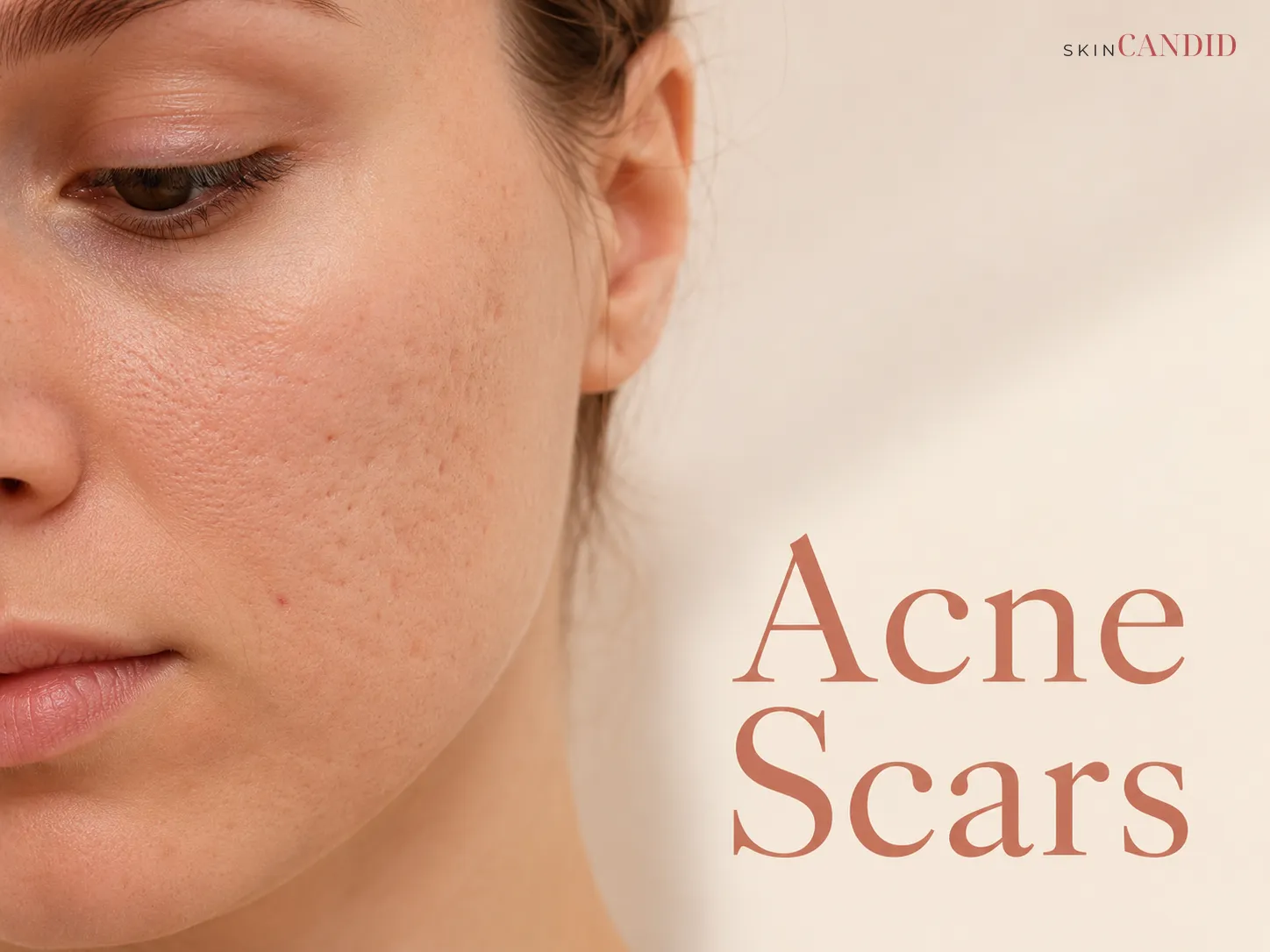
Acne scars are lasting changes in skin texture, either indented or raised, that remain after the inflammation of a breakout damages the skin’s deeper structure.
Overview
What are acne scars?
Acne scars form when inflammation from a breakout damages the collagen structure beneath the skin. Depending on how the skin repairs itself, this can create an indentation, known as an atrophic scar, or a raised area, known as a hypertrophic or keloid scar.
They most often develop from deeper, more inflamed acne lesions such as cysts and nodules, though any inflamed breakout can leave a scar.
Common signs and patterns
What acne scars can look or feel like
These features can provide context, but they do not confirm a diagnosis on their own.
Ice pick scars
Narrow, deep indentations often on the forehead and upper cheeks.
Boxcar scars
Sharp-edged, broader indentations typically found on the lower cheeks and jaw.
Rolling scars
Shallow indentations with sloping edges that create a wavy texture, often on the lower face.
Raised hypertrophic or keloid scars
Firm, raised tissue from excess collagen, more common on the jaw, chest and back.
Causes and contributors
Acne scars form when the skin’s repair process over- or under-produces collagen.
Deeper, more inflamed acne lesions are more likely to scar because the inflammation reaches further into the skin’s structure. Picking, squeezing or delaying treatment of inflamed acne increases the risk and severity of scarring.
Genetics also influence how a person’s skin tends to heal, which is why scarring severity varies widely between people with similar acne.
What it may be confused with
Similar-looking concerns need different decisions
Not every mark left by acne is a true scar, and the distinction changes what treatment can help.
Post-acne marks
Flat red or brown discolouration that typically fades over time without a lasting texture change.
Large pores
A textural feature related to follicle size rather than scarring from healed acne.
Hyperpigmentation
Discolouration without an indentation or raised texture, distinct from true scarring.
Active acne
Current inflamed breakouts rather than the lasting texture change left after healing.
Bottom line
Matching the treatment to the specific scar type matters more than any single product.
Ice pick, boxcar, rolling and raised scars respond differently to different professional procedures.
A dermatologist can identify which scar types are present and recommend a realistic treatment plan.
Evidence-supported options
Choose the option that fits your skin’s tolerance
This is general education, not a personal treatment plan. Product strengths, permitted uses and prescription status vary by country.
Topical retinoids and AHAs
Can offer modest improvement in mild scarring and support overall skin texture and turnover.
Limit: Unlikely to meaningfully improve deeper indented or raised scars on their own.
Microneedling
Stimulates collagen production and can improve the appearance of atrophic scars over a series of sessions.
Limit: Requires multiple sessions; results build gradually.
Laser resurfacing or chemical peels
Can improve texture in atrophic scarring, with strength and depth chosen based on scar type and skin tone.
Limit: Carries downtime and, in some skin tones, a risk of pigment changes if not performed appropriately.
Subcision, fillers or steroid injections
Targeted procedures for specific scar types: subcision and fillers for rolling or boxcar scars, steroid injections for raised hypertrophic or keloid scars.
Limit: Selection depends on an in-person assessment of the specific scar type.
Supportive skincare
A simple routine while pursuing scar treatment
Supportive skincare protects the skin and prevents new scars while professional treatment is planned.
Morning
- Cleanse gentlyUse a mild cleanser without scrubbing at scarred areas.
- Apply treatment if directedFollow the product label or clinician’s instructions.
- Apply sunscreenDaily sun protection helps prevent scars from becoming more noticeable.
Evening
- Cleanse onceRemove makeup and sunscreen gently.
- Treat active acne promptlyPreventing new inflamed breakouts reduces the risk of further scarring.
- MoisturiseSupport the skin barrier throughout any professional treatment course.
Common mistakes
What can make acne scars harder to manage
- Waiting to treat active inflamed acne, which increases the risk of new scars forming.
- Picking or squeezing blemishes, which raises the chance of a lasting scar.
- Expecting over-the-counter creams to resolve indented or raised scars alone.
- Skipping sunscreen, which can make scars more visible against surrounding skin.
When professional help makes sense
Acne scars generally benefit from a professional assessment.
- Any indented or raised scarring that concerns you
- Uncertainty about which scar type is present
- Interest in microneedling, laser resurfacing, fillers or steroid injections
- Ongoing active inflamed acne that continues to create new scars
Related reading
Continue with the next useful question
Editorial record
What this page knows, and what remains uncertain
Evidence summary
Current dermatology references classify acne scars as atrophic (ice pick, boxcar, rolling) or hypertrophic/keloid, and support microneedling, resurfacing procedures and targeted injections as core professional treatments.
Review status
Financial transparency
No paid product placement or affiliate ranking is included on this foundation page.
Recommendation logic
Options are organised from supportive at-home care through to the professional procedures matched to specific scar types.
Frequently asked questions
Short answers to common questions
Can acne scars go away on their own?
True acne scars generally do not resolve fully on their own, since they involve a lasting change in skin texture rather than temporary discolouration.
What is the difference between acne scars and post-acne marks?
Scars involve a change in texture, such as an indentation or raised area, while marks are flat discolouration that usually fades over time.
Which treatment works best for acne scars?
It depends on the scar type. Rolling and boxcar scars often respond to subcision, fillers or resurfacing, while raised scars are typically treated with steroid injections.
Can I prevent acne scars?
Treating inflamed acne promptly, avoiding picking, and using sunscreen consistently are the most effective ways to reduce the risk of scarring.
Sources reviewed
Guidance behind this page
Sources support general editorial guidance. They do not replace regional product labels, prescribing information or personal medical assessment.