
Pigmentation & Tone
Sun Damage
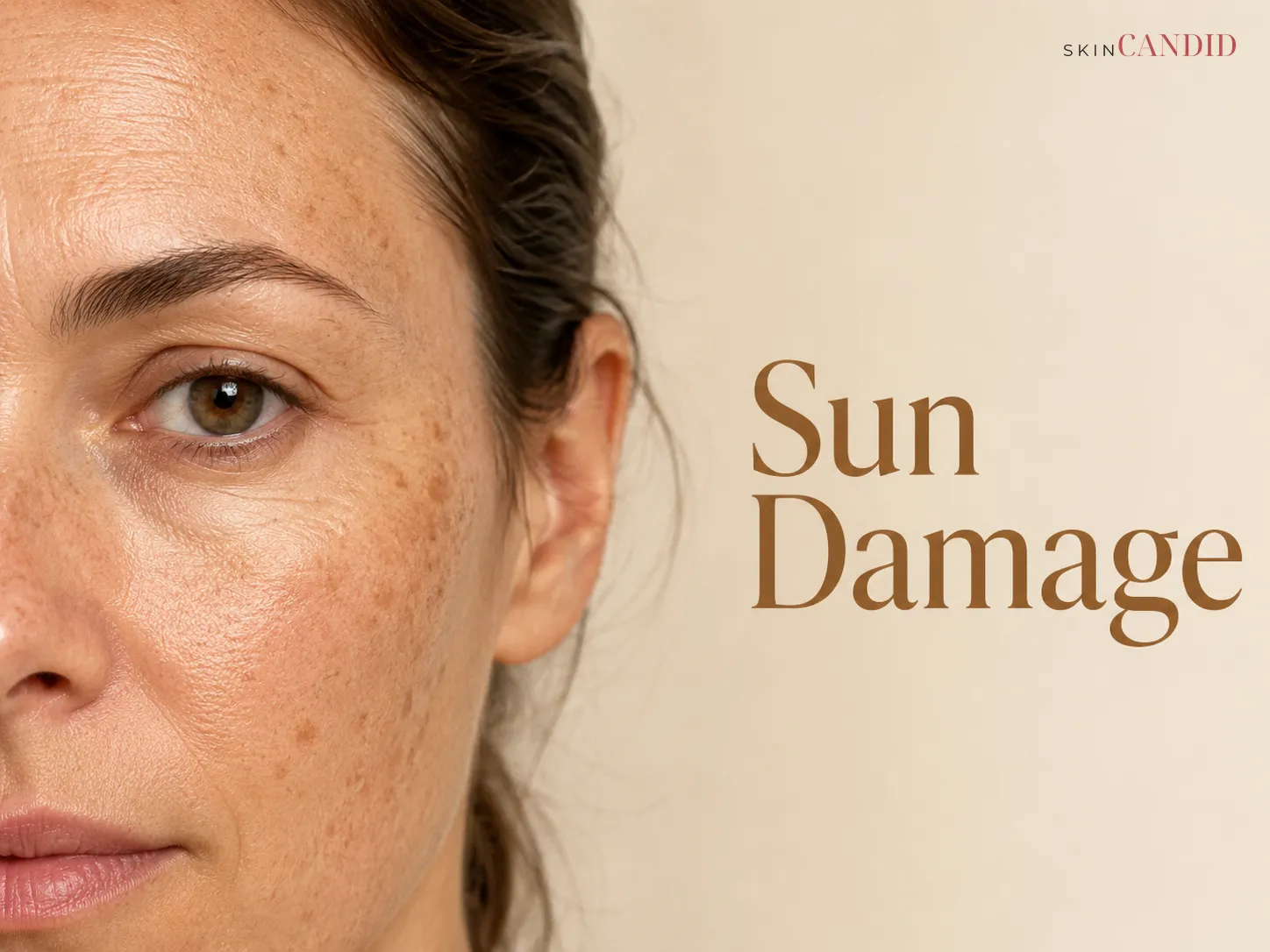
Sun damage, or photoaging, is the cumulative effect of UV exposure on the skin, showing up as sun spots, uneven tone, fine lines and rough texture that build gradually over years.
Overview
What is sun damage?
Sun damage refers to the changes UV radiation causes in the skin over time. UVA light penetrates deeply and contributes to wrinkles and loss of elasticity, while UVB light affects the outer skin layer and contributes to pigment changes and, over time, precancerous cell changes.
Because this damage builds gradually, signs of sun damage can appear even in people who rarely intentionally tan, particularly with repeated everyday sun exposure.
Common signs and patterns
What sun damage can look or feel like
These features can provide context, but they do not confirm a diagnosis on their own.
Sun spots and freckling
Flat brown spots that develop in areas with repeated sun exposure, such as the cheeks, temples and forehead.
Fine lines and loss of elasticity
Wrinkles and looser-feeling skin, particularly around the eyes and mouth.
Visible small blood vessels
Spider veins or broken capillaries, most often on the face and neck.
Rough or scaly patches
Textured patches that feel different from surrounding skin and should be assessed rather than assumed to be ordinary sun damage.
Causes and contributors
Sun damage builds from cumulative UV exposure over time.
Repeated exposure to UVA and UVB radiation, whether from direct sun, tanning beds, or unprotected daily exposure such as driving, gradually damages skin cell DNA and breaks down collagen. Signs of photoaging can begin appearing as early as the teens or twenties and increase with age.
Lighter skin tones tend to show visible signs of sun damage earlier, though everyone’s skin is affected by unprotected UV exposure over time.
What it may be confused with
Similar-looking concerns need different decisions
Not every mark or texture change on sun-exposed skin is the same, and some need medical evaluation.
Melasma
Larger, symmetrical patches driven more by hormones and sun together, rather than isolated sun spots.
Hyperpigmentation
A broader category of dark spots that can stem from sun exposure, acne or other skin injury.
Actinic keratosis
Rough, scaly precancerous patches that require clinical evaluation rather than at-home treatment.
Damaged skin barrier
Dryness, redness and sensitivity from a compromised barrier rather than cumulative UV exposure.
Bottom line
Prevention is more powerful than any treatment for reversing sun damage.
Consistent daily sunscreen prevents new damage from accumulating and supports the results of any treatment used.
Topical retinoids, vitamin C and professional procedures can improve the appearance of existing damage, but none of them replace sun protection.
Evidence-supported options
Choose the option that fits your skin’s tolerance
This is general education, not a personal treatment plan. Product strengths, permitted uses and prescription status vary by country.
Daily broad-spectrum SPF 30+ sunscreen
The single most important step for preventing further sun damage and supporting other treatments.
Limit: Prevents new damage rather than reversing existing changes on its own.
Topical retinoids
Encourage cell turnover and stimulate collagen production, improving fine lines and texture over time.
Limit: Can cause dryness or increased sun sensitivity when introduced.
Vitamin C and antioxidants
Can help protect against ongoing free-radical damage from UV exposure.
Limit: A supportive addition rather than a replacement for sunscreen.
Laser resurfacing or chemical peels
Can improve texture, tone and fine lines by removing damaged outer layers and stimulating collagen.
Limit: Carries downtime and should be matched to skin tone and damage severity by a professional.
Supportive skincare
A simple routine to prevent and support repair
Supportive skincare should protect against further UV exposure while supporting gradual repair.
Morning
- Cleanse gentlyUse a mild cleanser suited to your skin type.
- Apply an antioxidant serumVitamin C or another antioxidant can offer added protection.
- Apply sunscreenUse a broad-spectrum SPF 30 or higher every day, reapplying as needed.
Evening
- Cleanse onceRemove sunscreen and makeup thoroughly.
- Use the selected treatmentIntroduce a retinoid gradually if directed.
- MoisturiseSupport the skin barrier overnight.
Common mistakes
What can make sun damage harder to manage
- Only applying sunscreen on obviously sunny days, missing daily incidental exposure.
- Skipping reapplication during long periods outdoors or after sweating and swimming.
- Ignoring a rough, scaly patch instead of having it checked.
- Expecting topical products alone to reverse deep wrinkles or significant volume loss.
When professional help makes sense
Seek assessment for new or changing skin texture, not just cosmetic concerns.
- Any rough, scaly or persistent patch that does not resolve with moisturiser
- A new or changing spot, especially one that bleeds, itches or grows
- Interest in laser resurfacing, chemical peels or other professional procedures
- Uncertainty about whether a mark is sun damage or something requiring medical evaluation
Related reading
Continue with the next useful question
Editorial record
What this page knows, and what remains uncertain
Evidence summary
Current dermatology references identify daily broad-spectrum sunscreen as the single most effective prevention step, with topical retinoids, antioxidants and professional resurfacing procedures supporting existing damage.
Review status
Financial transparency
No paid product placement or affiliate ranking is included on this foundation page.
Recommendation logic
Options are organised from daily prevention through to professional procedures for existing damage.
Frequently asked questions
Short answers to common questions
Can sun damage be reversed?
Existing sun damage can often be improved with consistent use of retinoids, antioxidants or professional procedures, though prevention with daily sunscreen remains the most effective long-term step.
Do I need sunscreen on cloudy days?
Yes. UV rays pass through clouds, so daily sunscreen is recommended regardless of visible sunshine.
At what age does sun damage start showing?
Signs of photoaging can begin appearing as early as the teens or twenties, though visibility varies by skin tone and sun exposure history.
Is a rough patch on my skin always sun damage?
Not always. Persistent rough or scaly patches can represent actinic keratosis, a precancerous change that should be evaluated by a clinician.
Sources reviewed
Guidance behind this page
Sources support general editorial guidance. They do not replace regional product labels, prescribing information or personal medical assessment.