
Pigmentation & Tone
Melasma
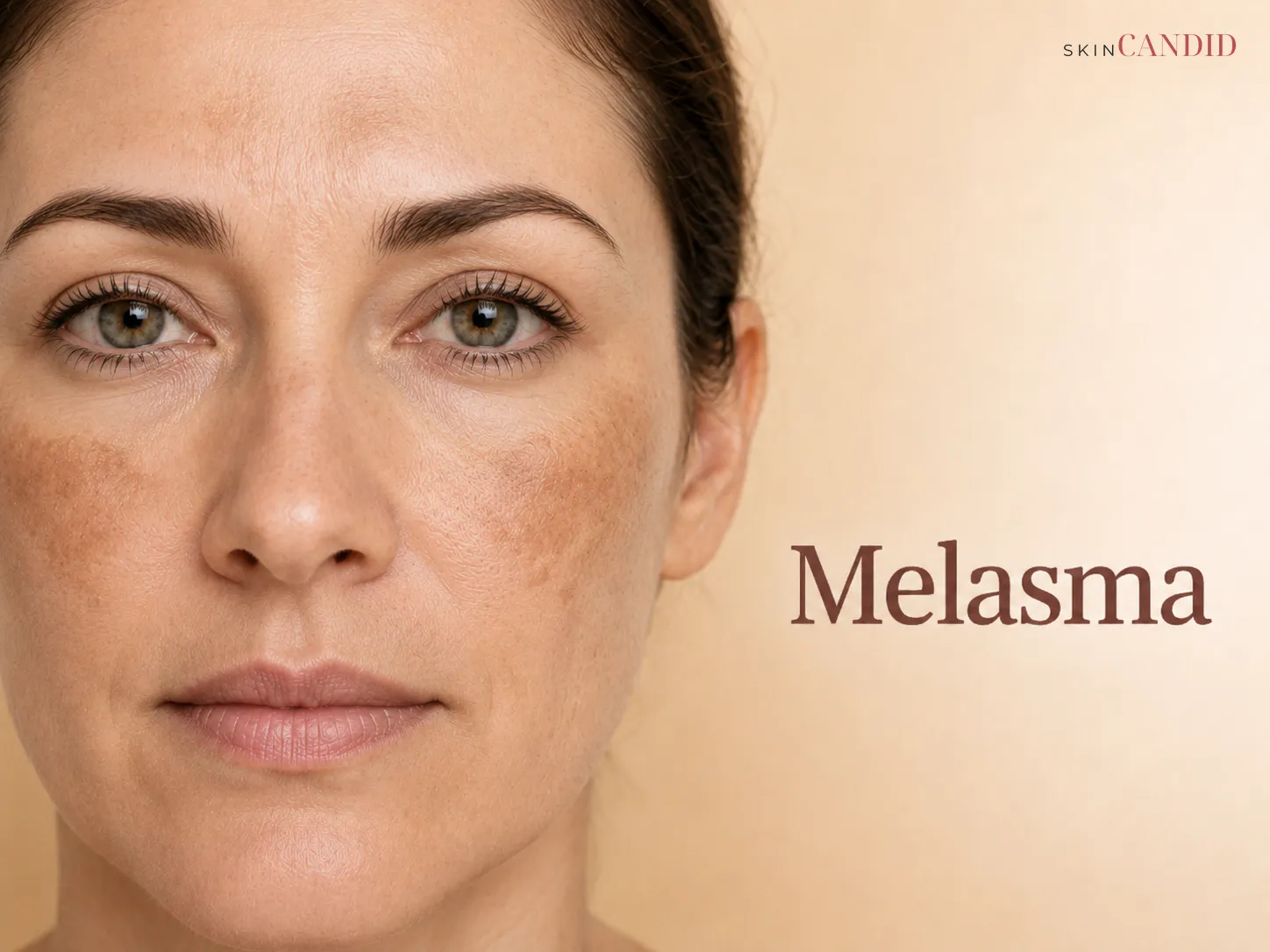
Melasma is a common pigmentary condition that causes symmetrical brown or grey-brown patches, usually on the face, driven by pigment-producing cells that become overactive with sun exposure and hormonal changes.
Overview
What is melasma?
Melasma is an acquired pigmentary condition causing symmetrical brown or grey-brown patches, typically on the cheeks, forehead, nose bridge, upper lip and chin.
It is much more common in women and in people with medium-to-deep skin tones, and it is strongly linked to sun exposure and hormonal factors such as pregnancy or hormonal contraception.
Common signs and patterns
What melasma can look or feel like
These features can provide context, but they do not confirm a diagnosis on their own.
Symmetrical facial patches
Flat brown or grey-brown patches usually appear in matching areas on both sides of the face.
Darkening with sun exposure
Patches often become more visible or darker after time in the sun, even brief exposure.
Patches along the jaw or cheeks
Less commonly, melasma can appear lower on the face rather than the classic central pattern.
Gradual onset
Melasma usually develops slowly over months rather than appearing suddenly.
Causes and contributors
Melasma is driven by sun exposure and hormonal signals together.
UV and visible-light exposure is a major driver, stimulating pigment-producing cells to make more melanin. Hormonal factors, including pregnancy and oestrogen-containing contraception, are strongly linked.
Genetics and a family history of melasma increase likelihood. Stress is a suspected but less clearly established contributor.
What it may be confused with
Similar-looking concerns need different decisions
Facial pigmentation should not automatically be treated as melasma, especially when the pattern, onset or history do not fit.
Post-inflammatory hyperpigmentation
Follows a specific injury or blemish and appears at that exact site, rather than the broader symmetrical pattern typical of melasma.
Sun damage
Tends to include isolated brown spots in sun-exposed areas rather than the larger, symmetrical patches of melasma.
Hyperpigmentation, general
A broader umbrella term; melasma is one specific, hormonally linked pattern within it.
Birthmarks or café-au-lait patches
Present from childhood rather than developing in adulthood, and they do not fluctuate with sun exposure or hormones.
Bottom line
Protect first, treat consistently, and expect months rather than weeks.
Melasma treatment is a marathon: most visible improvement takes three to twelve months of consistent sun protection and topical treatment.
Stopping sun protection can bring patches back even after they have faded, so protection needs to continue alongside and after active treatment.
Evidence-supported options
Choose the option that matches severity and tolerance
This is general education, not a personal treatment plan. Product strengths, permitted uses and prescription status vary by country.
Broad-spectrum sunscreen
The essential foundation of any melasma treatment; tinted formulas with iron oxide can help block visible light, not just UV.
Limit: Sunscreen alone does not reliably fade existing patches; it mainly prevents new darkening.
Topical hydroquinone
A well-studied first-line lightening treatment, often combined with tretinoin and a mild corticosteroid in a triple-combination cream.
Limit: Requires consistent use over months and clinician guidance on duration to avoid irritation or paradoxical darkening with unsupervised long-term use.
Azelaic acid, kojic acid or vitamin C
Gentler topical alternatives that can gradually improve tone with a lower irritation profile.
Limit: Effects are generally slower and milder than hydroquinone-based regimens.
Procedures or oral tranexamic acid
Chemical peels, microneedling, laser or light therapy, or oral tranexamic acid may be considered for melasma that doesn’t respond well to topicals and sun protection.
Limit: Requires specialist selection; some procedures can worsen melasma if not matched carefully to skin tone and disease pattern.
Supportive skincare
A simple routine while melasma is being managed
Supportive skincare should protect and support tolerance. It does not replace daily sun protection or the selected treatment.
Morning
- Cleanse gentlyUse a mild cleanser without scrubbing.
- Apply treatment if directedFollow the product label or clinician’s instructions.
- Apply and reapply sunscreenUse a broad-spectrum, ideally tinted, SPF 30+ sunscreen and reapply through the day.
Evening
- Cleanse gentlyRemove sunscreen and makeup without scrubbing.
- Use the selected treatmentApply consistently as directed, even when patches look stable.
- MoisturiseSupport tolerance of the active treatment.
Common mistakes
What can make melasma harder to assess or manage
- Skipping daily sunscreen once patches start to fade, which allows melasma to return.
- Expecting visible results within days or weeks rather than months.
- Using strong exfoliants or unproven lightening remedies that irritate skin and can worsen pigmentation.
- Using hydroquinone for long, unsupervised stretches without a break, which can occasionally cause a separate darkening condition.
When professional help makes sense
Seek assessment when melasma is extensive, resistant, or distressing.
- Melasma that is extensive, resistant to consistent topical treatment and sun protection, or a source of significant distress
- Uncertainty about whether patches are melasma or another cause of pigmentation
- Interest in procedural treatment such as peels, laser or microneedling
- Melasma appearing or worsening during pregnancy or with hormonal contraception, where treatment choices need adjusting
Related reading
Continue with the next useful question
Editorial record
What this page knows, and what remains uncertain
Evidence summary
Current AAD guidance supports daily broad-spectrum sun protection as the foundation of treatment, with hydroquinone-based regimens, gentler alternatives like azelaic acid or vitamin C, and procedural options for resistant cases.
Review status
Evidence reviewed 25 July 2026. Medical and practical reviewer approval remain pending and must not be implied until completed. The hero image also remains pending dermatologist-reference comparison and Medical Visual Approval.
Financial transparency
No paid product placement or affiliate ranking is included on this foundation page.
Recommendation logic
Options are organised by evidence grade, irritation potential, and the point at which procedural or prescription-strength care becomes more appropriate.
Frequently asked questions
Short answers to common questions
How long does melasma treatment take to work?
Most visible improvement takes three to twelve months of consistent sun protection and treatment. It is not a quick fix.
Does melasma go away on its own?
It can fade somewhat, especially if linked to pregnancy or contraception, once the hormonal trigger resolves and with strict sun protection, but it often persists without active management.
Is melasma the same as normal sun spots?
No. Melasma tends to appear as larger, symmetrical patches driven partly by hormones, while typical sun spots are usually smaller and isolated.
Can melasma come back after it fades?
Yes. Without ongoing sun protection, melasma commonly returns, especially with further sun exposure or hormonal changes.
Sources reviewed
Guidance behind this page
- American Academy of Dermatology: Melasma — diagnosis and treatment
- Journal of the American Academy of Dermatology: Best practices in the treatment of melasma with a focus on patients with skin of color
- Journal of Clinical and Aesthetic Dermatology: Topical treatments for melasma and their mechanism of action
Sources support general editorial guidance. They do not replace regional product labels, prescribing information or personal medical assessment.