
Pigmentation & Tone
Dull Skin
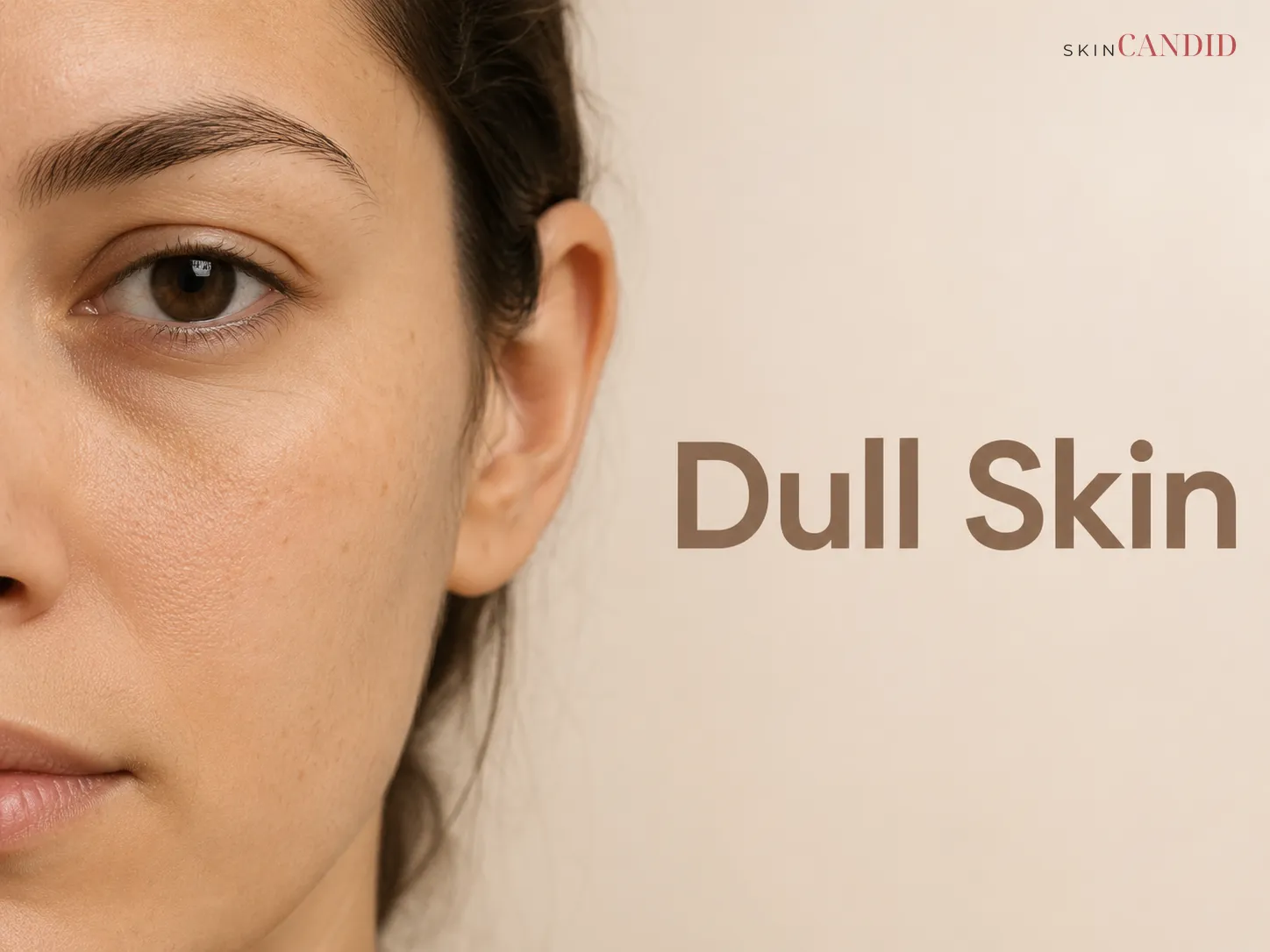
Dull skin describes a lack of surface radiance rather than a colour or pigment problem, usually from a build-up of dead skin cells, dehydration, or reduced sleep and circulation.
Overview
What is dull skin?
Dull skin refers to a reduced amount of light the skin’s surface reflects, giving a flat or tired appearance. It is distinct from uneven skin tone, which describes patches of different colour rather than an overall lack of surface radiance.
A build-up of dead skin cells, dehydration, disrupted sleep and reduced circulation are the most common contributors, and more than one is often present at once.
Common signs and patterns
What dull skin can look or feel like
These features can provide context, but they do not confirm a diagnosis on their own.
A flat, rough surface that reflects less light
A build-up of dead skin cells can scatter light unevenly instead of reflecting it, reducing overall radiance. Related to uneven skin texture.
Tightness or mild flaking from dehydration
Skin low in water content often looks less plump and reflects light less evenly.
An overall tired appearance without distinct patches
Unlike localised pigment marks, general dullness tends to affect the whole complexion evenly.
Skin that looks flatter after poor sleep or high stress
Reduced circulation from lack of rest can make the complexion look temporarily less lively.
Causes and contributors
Dullness usually reflects surface build-up, water content or lifestyle factors.
A slower rate of dead skin cell shedding can leave a duller-looking surface, while low water content in the skin reduces its natural plumpness and reflectivity. Disrupted sleep, high stress and reduced circulation can further affect how radiant skin appears.
Environmental factors such as dry air and unprotected sun exposure can also contribute to a duller complexion over time.
What it may be confused with
Similar-looking concerns need different decisions
A tired-looking complexion can point to several different underlying issues.
Uneven skin tone
Patches of different colour reflect a pigment-related cause, distinct from an overall lack of radiance.
Dehydrated skin
A specific lack of water content that often contributes to dullness but can also cause tightness and fine surface lines on its own.
Dry and flaky skin
Visible flaking and rough texture is a distinct, more specific concern than general dullness.
Fine lines
Early texture changes linked to ageing are a separate concern from a temporarily flat-looking complexion.
Bottom line
Support cell turnover, hydration and rest rather than reaching for a single brightening product.
Most dullness responds to a combination of gentle exfoliation, consistent hydration and basic lifestyle factors like sleep.
Persistent dullness that does not improve with these steps, or that appears alongside pigment or texture changes, is worth a closer look.
Evidence-supported options
Choose the option that fits your skin’s tolerance
This is general education, not a personal treatment plan. Product strengths, permitted uses and prescription status vary by country.
Gentle chemical exfoliation
AHAs or PHAs used a few times a week help remove built-up dead skin cells that reduce radiance.
Limit: Overuse can irritate skin and worsen dullness rather than improve it.
Hydrating serums with humectants
Ingredients such as hyaluronic acid help support water content, adding plumpness and reflectivity.
Limit: Works best when sealed in with a moisturiser, especially in dry climates.
Vitamin C or antioxidant serums
May support a brighter-looking complexion alongside sunscreen and exfoliation.
Limit: Evidence for dramatic change is modest; effects are typically gradual.
Facials, peels or microdermabrasion
Can offer a more visible short-term improvement in surface radiance.
Limit: Results are temporary and do not replace a consistent daily routine.
Supportive skincare
A simple routine to support radiance
Supportive skincare should combine gentle exfoliation with consistent hydration and daily protection.
Morning
- Cleanse gentlyUse a mild cleanser suited to your skin.
- Apply a hydrating serumSupport water content before moisturiser.
- Moisturise and protectFinish with a moisturiser and daily broad-spectrum sunscreen.
Evening
- Cleanse onceRemove makeup and sunscreen gently.
- Use a gentle exfoliating acidIntroduce a few nights a week rather than daily.
- MoisturiseSupport the skin barrier overnight.
Common mistakes
What can make dull skin harder to manage
- Over-exfoliating in an attempt to remove dullness quickly, which can irritate skin instead.
- Relying on a brightening serum alone while skipping hydration and sunscreen.
- Assuming dullness is a pigment problem rather than a surface texture or hydration issue.
- Ignoring basic factors such as sleep and water intake, which can meaningfully affect radiance.
When professional help makes sense
Seek assessment when dullness persists or comes with other changes.
- Persistent dullness not improving with a consistent gentle routine
- Dullness accompanied by new pigment patches, texture change, or itching
- Interest in professional exfoliating treatments such as peels or microdermabrasion
- Uncertainty about whether the main driver is hydration, cell turnover or an underlying condition
Related reading
Continue with the next useful question
Editorial record
What this page knows, and what remains uncertain
Evidence summary
Current dermatology-aligned guidance links dullness to dead skin cell build-up and reduced hydration, supporting gentle exfoliation and consistent moisturising as first-line steps.
Review status
Financial transparency
No paid product placement or affiliate ranking is included on this foundation page.
Recommendation logic
Options are organised by evidence grade and the point at which professional exfoliating treatment becomes a reasonable addition.
Frequently asked questions
Short answers to common questions
What causes skin to look dull?
Dullness is usually caused by a build-up of dead skin cells, dehydration, or reduced sleep and circulation, rather than by a single specific product need.
Is dull skin the same as uneven skin tone?
No. Dull skin describes an overall lack of surface radiance, while uneven skin tone describes patches of different colour; the two can occur together but are not the same concern.
Does exfoliating every day help dull skin?
Daily strong exfoliation is not usually recommended, since it can irritate the skin and worsen dullness; most routines work best with gentle exfoliating acids used a few times a week.
Can lack of sleep really make skin look duller?
Yes. Reduced sleep and higher stress can affect circulation and skin appearance, contributing to a temporarily flatter or more tired-looking complexion.
Sources reviewed
Guidance behind this page
- Cleveland Clinic: 5 ways to exfoliate your skin without irritation
- Cleveland Clinic: Dry skin (xeroderma) — symptoms, causes and treatment
Sources support general editorial guidance. They do not replace regional product labels, prescribing information or personal medical assessment.