
Pigmentation & Tone
Uneven Skin Tone
Uneven skin tone describes patchy variation in colour across the face rather than one single diagnosis, and it can stem from sun damage, past breakouts, melasma or other specific causes that each call for a different approach.
Overview
What is uneven skin tone?
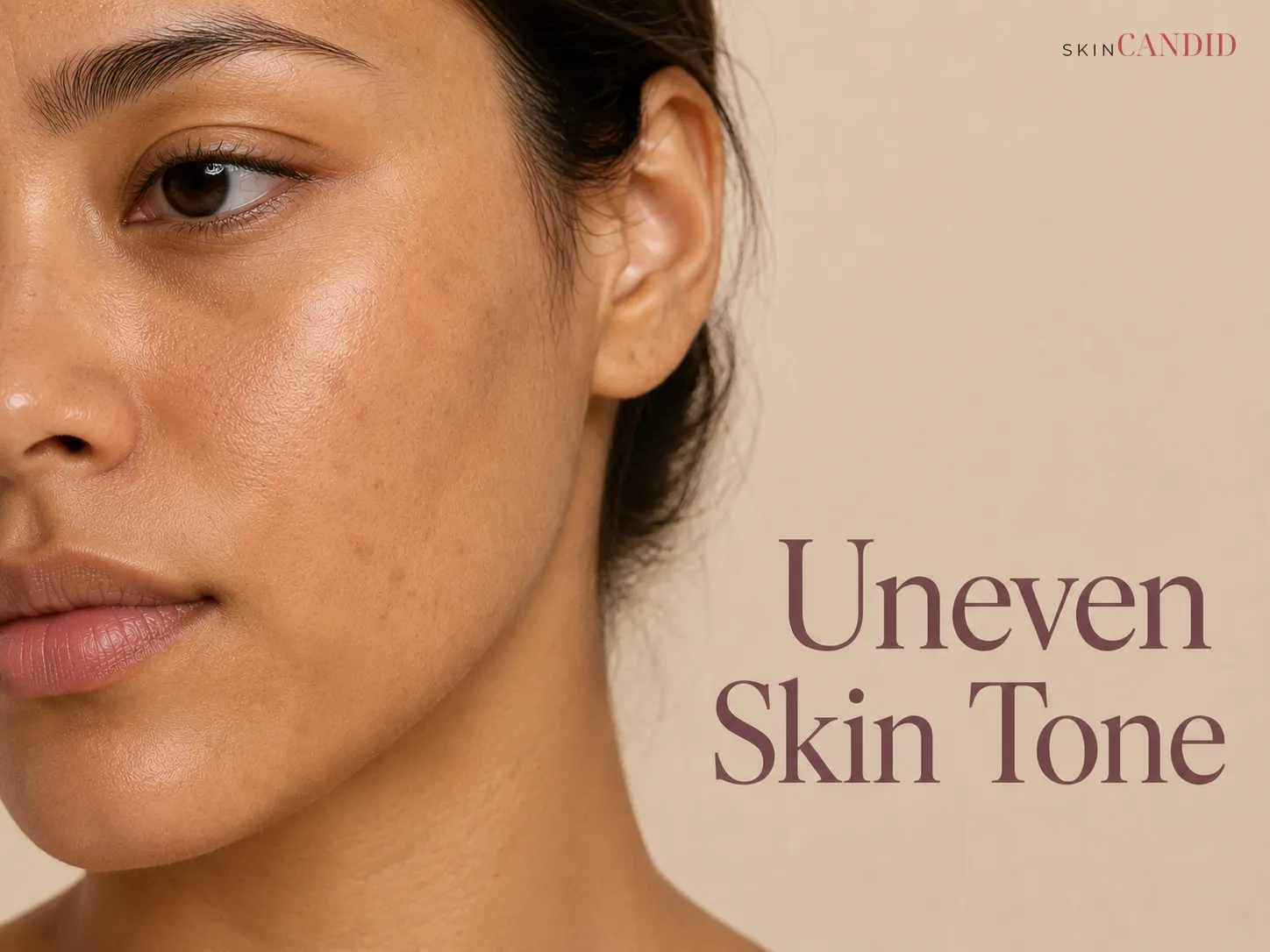
Uneven skin tone is a broad, descriptive term for patchy variation in colour across the skin, rather than a single diagnosable condition. It refers specifically to colour, distinct from uneven skin texture, which describes roughness rather than colour.
Patches can come from several different sources, including healed breakouts, cumulative sun exposure, or a specific pigment condition, and identifying which one applies helps determine the most useful next step.
Common signs and patterns
What uneven skin tone can look like, and what it may point to
These patterns can provide context, but they do not confirm a diagnosis on their own.
Localised brown marks after breakouts
Flat brown spots that match the exact site of a previously healed blemish often point to post-inflammatory pigment change.
Pink-to-red marks after breakouts
Flat pink or red spots in the same pattern suggest a vascular cause rather than extra pigment.
Symmetrical patches on the cheeks or forehead
Larger, mirrored brown patches in these areas can suggest melasma rather than post-inflammatory change.
Diffuse patches on sun-exposed areas
Gradual darkening across areas that receive the most sun points toward sun damage.
Causes and contributors
Patchy tone usually comes from one or more overlapping processes.
Uneven tone can result from post-inflammatory colour change after breakouts, cumulative ultraviolet exposure, hormonally-influenced pigment such as melasma, or a more general tendency toward hyperpigmentation. More than one cause is often present at the same time.
Because the underlying process differs so much between causes, a single all-purpose brightening routine rarely resolves every type of patch equally well.
What it may be confused with
Similar-looking concerns need different decisions
Several distinct concerns can present as a patchy or uneven complexion.
Dull skin
A general lack of surface radiance, which is about reflectivity and texture rather than distinct colour patches.
Uneven skin texture
A rough or bumpy surface feel, which is a separate concern from colour variation.
Hyperpigmentation
A broader umbrella term for darker patches from any cause; uneven tone can describe several types of hyperpigmentation together.
Facial redness
A persistent flush or visible vessels reflect a different process from patchy pigment change.
Bottom line
Match the routine to the cause rather than treating every patch the same way.
Daily sunscreen supports essentially every cause of uneven tone and should not be skipped regardless of what else is used.
Beyond that, the most useful next step depends on whether patches relate to past breakouts, sun exposure, or a specific pigment condition.
Evidence-supported options
Choose the option that fits the likely cause
This is general education, not a personal treatment plan. Product strengths, permitted uses and prescription status vary by country.
Daily broad-spectrum sunscreen
Helps prevent existing patches from darkening and reduces the risk of new ones forming.
Limit: Protective rather than a treatment for marks that are already present.
Vitamin C or niacinamide
Support a brighter, more even-looking complexion over consistent use.
Limit: Improvement is gradual and works best alongside sun protection.
Topical retinoids
Support cell turnover, which can help even tone over time.
Limit: Can cause irritation during introduction, which may itself trigger further pigment change.
Assessment and cause-matched procedures
Chemical peels, lasers or prescription treatment can be selected once the underlying cause is identified.
Limit: Choosing a procedure without identifying the cause can worsen pigment, particularly in medium-to-deep skin tones.
Supportive skincare
A simple routine that supports more even tone
Supportive skincare should remain gentle enough not to trigger further pigment change while consistently protecting against sun exposure.
Morning
- Cleanse gentlyUse a mild cleanser suited to your skin.
- Apply a brightening serumVitamin C or niacinamide can support a more even complexion.
- Moisturise and protectFinish with a moisturiser and daily broad-spectrum sunscreen.
Evening
- Cleanse onceRemove makeup and sunscreen gently.
- Use a retinoid if toleratedIntroduce gradually to support turnover without irritation.
- MoisturiseSupport the skin barrier overnight.
Common mistakes
What can make uneven tone harder to manage
- Treating every patch the same way without identifying whether the cause is post-inflammatory, hormonal or sun-related.
- Skipping daily sunscreen while using brightening ingredients.
- Using aggressive peels or exfoliation without knowing the cause, which can worsen pigment in some skin tones.
- Switching products frequently instead of giving a consistent routine enough time to work.
When professional help makes sense
Seek assessment when the cause is unclear or patches are extensive.
- Uncertainty about whether patches relate to past breakouts, sun exposure, melasma or another cause
- Widespread or persistent patches not improving with a consistent routine
- Interest in chemical peels, laser or prescription-strength treatment
- Patches accompanied by other symptoms such as itching or texture change
Related reading
Continue with the next useful question
Editorial record
What this page knows, and what remains uncertain
Evidence summary
Current dermatology sources describe uneven skin tone as a descriptive term covering several distinct causes of skin discoloration, each supported by sunscreen and cause-specific topical or professional treatment.
Review status
Financial transparency
No paid product placement or affiliate ranking is included on this foundation page.
Recommendation logic
Options are organised by evidence grade and the point at which identifying a specific underlying cause becomes necessary before choosing treatment.
Frequently asked questions
Short answers to common questions
Is uneven skin tone a medical condition?
No. Uneven skin tone is a general descriptive term for patchy colour variation, which can stem from several distinct causes rather than being a single diagnosis on its own.
What is the difference between uneven skin tone and dull skin?
Uneven skin tone refers to patches of different colour, while dull skin refers to an overall lack of surface radiance and reflectivity; the two can occur together but come from different underlying processes.
Will sunscreen alone fix uneven skin tone?
Sunscreen helps prevent patches from worsening and supports fading over time, but it usually needs to be paired with cause-specific ingredients or treatment for more complete improvement.
How do I know if my uneven tone is melasma or post-inflammatory marks?
Melasma tends to appear as larger, symmetrical patches on areas such as the cheeks, forehead or upper lip, while post-inflammatory marks usually match the exact location of a previously healed blemish; a professional assessment can confirm the cause.
Sources reviewed
Guidance behind this page
- Cleveland Clinic: Hyperpigmentation — causes and treatment
- Cleveland Clinic: Skin discoloration — causes, conditions and treatments
Sources support general editorial guidance. They do not replace regional product labels, prescribing information or personal medical assessment.