
Breakouts & Pores
Clogged Pores
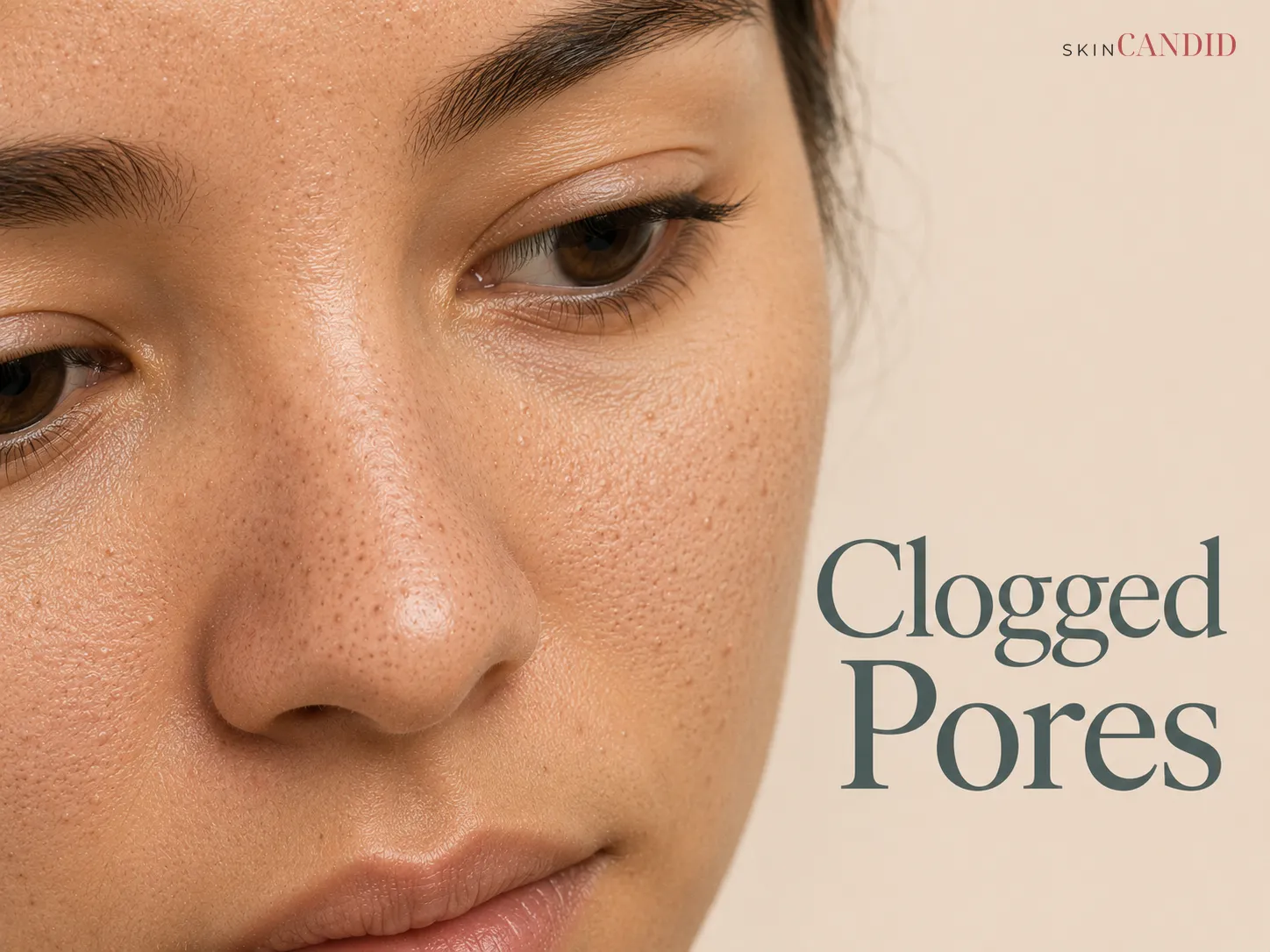
Clogged pores develop when excess sebum and dead skin cells build up inside a hair follicle, forming the earliest stage behind blackheads, whiteheads and comedonal acne.
Overview
What are clogged pores?
A clogged pore forms when sebum, dead skin cells or other debris become trapped inside a hair follicle. Pores normally release oil and sweat to the surface, but a build-up inside the opening can block that process.
Clogged pores can occur anywhere on the body, though the face, particularly the nose, chin and forehead, is the most common area. This is the general mechanism behind blackheads, whiteheads and comedonal acne rather than a diagnosis in itself.
Common signs and patterns
What clogged pores can look or feel like
These features can provide context, but they do not confirm a diagnosis on their own.
Rough or bumpy texture
Skin can feel uneven where pores are blocked, particularly across the forehead, nose and chin.
Early blackheads
When a clog widens the pore opening, exposure to air can darken the visible tip.
Early whiteheads
When a clog stays covered beneath the surface, it can appear as a small, skin-coloured bump.
Pores that look more noticeable
Trapped material can stretch the pore opening, making it appear larger than usual until the blockage clears.
Causes and contributors
Excess oil and dead skin cells are the main drivers.
Increased sebum production, whether from hormonal changes or naturally oilier skin, gives pores more material to trap. A slower rate of dead skin cell shedding, or dry skin overproducing cells in response to irritation, can add to the build-up. Comedogenic skincare or makeup products can contribute as well.
Sweat and friction from headwear, masks or sports equipment, and certain medications that alter oil production, can also play a role.
What it may be confused with
Similar-looking concerns need different decisions
Not every bump or textured pore reflects an active clog.
Comedonal acne
A diagnosable acne pattern that can develop when clogged pores become widespread and persistent.
Sebaceous filaments
Natural pore structures rather than a blockage, though they can look similar on the nose.
Large pores
A structural pore size influenced largely by genetics, distinct from a temporary blockage.
Milia
Firm white bumps trapped in a different structure beneath the skin, not inside a follicle opening.
Bottom line
Gentle, consistent exfoliation clears clogged pores better than physical extraction.
Ingredients that work inside the follicle, used consistently over several weeks, tend to outperform squeezing or pore strips.
Keeping the rest of the routine non-comedogenic helps prevent pores from clogging again once they clear.
Evidence-supported options
Choose the option that fits your skin’s tolerance
This is general education, not a personal treatment plan. Product strengths, permitted uses and prescription status vary by country.
Salicylic acid
An oil-soluble acid that can help loosen and clear material trapped within clogged pores.
Limit: Can dry or irritate skin if used too frequently or combined with other strong actives.
Topical retinoids
Support skin cell turnover, helping reduce existing build-up and prevent new clogs over time.
Limit: Irritation is common when starting, and pregnancy-related restrictions require professional guidance.
Non-comedogenic moisturiser and sunscreen
Protects the skin without adding to the blockage, supporting the overall routine.
Limit: Will not clear existing clogged pores on its own.
Professional extraction or chemical peels
A clinician can help clear stubborn clogged pores that are not responding to a home routine.
Limit: Works best as a supplement to, not a replacement for, ongoing home care.
Supportive skincare
A simple routine to keep pores clear
Supportive skincare should reduce build-up gradually while protecting the skin barrier.
Morning
- Cleanse gentlyUse a mild cleanser suited to your skin type.
- Apply a lightweight, non-comedogenic moisturiserKeep the skin barrier comfortable without adding to pore congestion.
- ProtectUse a non-comedogenic daily sunscreen.
Evening
- Cleanse onceRemove makeup and sunscreen fully before bed.
- Use salicylic acid or a retinoidIntroduce gradually, alternating nights if needed.
- MoisturiseSupport the skin barrier overnight.
Common mistakes
What can make clogged pores harder to manage
- Using pore strips or aggressive squeezing to force material out, which can irritate skin and stretch the pore opening.
- Skipping moisturiser because oily skin seems like it doesn’t need it, which can encourage more oil production in some people.
- Using heavy, comedogenic products that add to the existing blockage.
- Over-exfoliating in an attempt to deep clean pores, which can damage the skin barrier.
When professional help makes sense
Seek assessment when clogged pores persist or worsen.
- Persistent clogged pores not improving with a consistent routine
- Clogs progressing into widespread comedonal acne or inflamed breakouts
- Interest in professional extraction or chemical peels
- Uncertainty about whether the concern is clogged pores, sebaceous filaments or large pores
Related reading
Continue with the next useful question
Editorial record
What this page knows, and what remains uncertain
Evidence summary
Dermatology sources describe clogged pores as a build-up of sebum and dead skin cells within a follicle, best managed with gentle, consistent exfoliation rather than physical extraction.
Review status
Financial transparency
No paid product placement or affiliate ranking is included on this foundation page.
Recommendation logic
Options are organised by evidence grade and the point at which professional procedures become a reasonable addition.
Frequently asked questions
Short answers to common questions
Are clogged pores the same as blackheads?
A clogged pore is the underlying blockage, while a blackhead is what happens when that blockage widens the pore opening and darkens through oxidation. Not every clogged pore becomes a visible blackhead.
Do pore strips actually unclog pores?
Pore strips can remove some surface material temporarily, but they don’t address the ongoing oil and dead skin build-up inside the follicle, so pores usually refill.
Can moisturiser make clogged pores worse?
A non-comedogenic moisturiser is unlikely to worsen clogged pores; skipping moisturiser can actually encourage more oil production in some people.
How long does it take to clear clogged pores?
Most people need several weeks of consistent use of an exfoliating ingredient such as salicylic acid or a retinoid before pores look clearer.
Sources reviewed
Guidance behind this page
Sources support general editorial guidance. They do not replace regional product labels, prescribing information or personal medical assessment.