
Breakouts & Pores
Cystic Acne
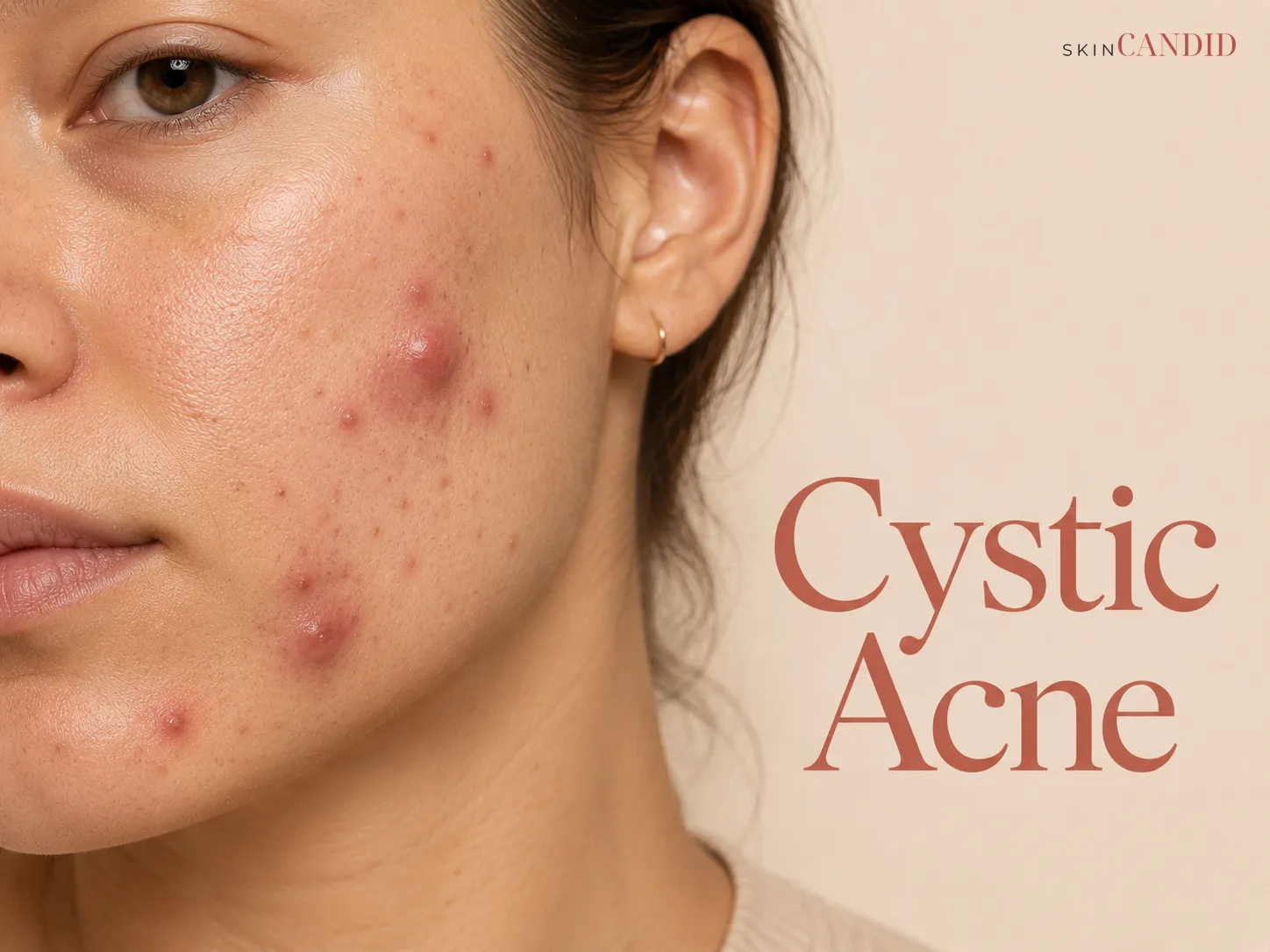
Cystic acne is a severe, deep form of acne in which painful nodules and pus-filled cysts form beneath the skin’s surface, carrying a higher risk of scarring than milder breakouts.
Overview
What is cystic acne?
Cystic acne is the most severe presentation of acne, in which oil, dead skin cells and acne-associated bacteria become trapped deep within a follicle, producing large, tender, pus-filled lesions beneath the skin’s surface rather than surface-level bumps.
It most often affects the face, back, chest, neck, shoulders and upper arms. Cystic acne can occur at any age, though hormonal changes during the teenage years, and later hormonal shifts in adulthood, make some people more prone to it.
Common signs and patterns
What cystic acne can look or feel like
These features can provide context, but they do not confirm a diagnosis on their own.
Deep, painful nodules and cysts
Lesions form beneath the skin’s surface and can feel tender, firm or fluctuant, sometimes ranging from pea- to dime-sized.
Redness and swelling
The overlying skin is often red, warm and swollen because inflammation sits deep in the tissue rather than at the surface.
Scarring risk
Because cystic lesions damage deeper tissue, they carry a higher chance of leaving indented or raised acne scars.
Lingering marks
Flat red, brown or purple marks can remain after a cyst settles, separate from structural scarring.
Causes and contributors
Cystic acne develops when blocked follicles become deeply inflamed.
Oil, dead skin cells and acne-associated bacteria build up well below the surface, triggering a stronger inflammatory response than in milder acne. Hormonal changes, including those during adolescence, the menstrual cycle, pregnancy or perimenopause, can increase oil production and make follicles more likely to become blocked.
A family history of cystic or severe acne also raises the likelihood of developing it, and stress-related hormone changes may worsen existing breakouts.
What it may be confused with
Similar-looking concerns need different decisions
Persistent or unusual bumps should not automatically be treated as cystic acne, especially when the distribution, pain pattern or triggers do not fit.
Ordinary inflammatory acne
Papules and pustules sit closer to the surface and are generally less painful and less likely to scar than deep cysts.
Hormonal acne
Often overlaps with cystic acne along the jawline and lower face, though not every hormonal flare produces deep cystic lesions.
Rosacea
Centres on facial redness and flushing with inflammatory bumps; blackheads, whiteheads and true cysts are not typical.
Boils or skin abscesses
Can look similar but stem from a different underlying infection and may need urgent medical attention rather than acne treatment.
Bottom line
Treat early and consistently to protect against scarring.
Cystic acne responds best to a treatment plan matched to its severity, chosen and monitored by a clinician rather than escalating over-the-counter products alone.
Most prescription options need several weeks of consistent use before their effect becomes clear, and some, such as isotretinoin, require ongoing monitoring throughout a full course.
Evidence-supported options
Choose the option that matches severity and scarring risk
This is general education, not a personal treatment plan. Product strengths, permitted uses and prescription status vary by country.
Topical retinoids
Often used alongside other treatments to help keep follicles clear and support longer-term improvement.
Limit: Alone, they are usually not enough for deep cystic lesions.
Oral antibiotics
Can reduce inflammation and acne-associated bacteria during flares, usually prescribed for a limited course.
Limit: Resistance-aware prescribing means they are typically combined with other treatments rather than used alone long-term.
Intralesional corticosteroid injections
A clinician can inject a single large, painful cyst to reduce swelling and discomfort more quickly.
Limit: This treats individual lesions and does not prevent new ones from forming.
Isotretinoin
An oral retinoid reserved for severe, scarring or treatment-resistant cystic acne, prescribed and monitored by a clinician.
Limit: Requires medical supervision, pregnancy-prevention measures where relevant, and monitoring for side effects.
Supportive skincare
A simple routine while cystic acne is being managed
Supportive skincare should improve comfort and treatment tolerance. It does not replace the selected medical treatment.
Morning
- Cleanse gentlyUse a mild cleanser and lukewarm water without scrubbing.
- Apply treatment if directedFollow the product label or clinician’s instructions.
- Moisturise and protectUse a comfortable non-comedogenic moisturiser and broad-spectrum sunscreen.
Evening
- Remove sunscreen and makeupCleanse once without rough cloths or brushes.
- Use the prescribed treatmentFollow the clinician-guided plan rather than adding extra actives.
- MoisturiseSupport the skin barrier rather than trying to dry every lesion out.
Common mistakes
What can make cystic acne harder to manage
- Squeezing or attempting to pop cysts, which raises the risk of scarring and infection.
- Relying only on over-the-counter spot treatments for deep, recurring cysts.
- Stopping oral antibiotics or isotretinoin early once the skin starts to improve.
- Adding multiple strong actives at once instead of following a clinician-guided plan.
When professional help makes sense
Seek assessment when lesions are deep, painful or leaving marks.
- Deep, painful nodules or cysts that keep recurring
- Any sign of scarring or persistent dark or discoloured marks
- No meaningful improvement after a consistent over-the-counter routine
- Pregnancy, pregnancy planning, or interest in isotretinoin or hormonal treatment
Related reading
Continue with the next useful question
Editorial record
What this page knows, and what remains uncertain
Evidence summary
Current dermatology guidance supports oral antibiotics, hormonal treatment, corticosteroid injections and isotretinoin as options for severe or scarring cystic acne, with topical retinoids often used alongside these approaches.
Review status
Financial transparency
No paid product placement or affiliate ranking is included on this foundation page.
Recommendation logic
Options are organised by severity, scarring risk, tolerability and the point at which professional or prescription care becomes appropriate.
Frequently asked questions
Short answers to common questions
Can cystic acne go away without treatment?
Cystic acne can settle on its own over time, but because it carries a higher risk of scarring, most dermatologists recommend starting treatment rather than waiting it out.
Does popping a cyst make it heal faster?
No. Popping usually pushes inflammation deeper into the skin and increases the risk of scarring and infection rather than speeding up healing.
Is isotretinoin the only treatment for cystic acne?
No. Depending on severity, oral antibiotics, hormonal treatment or corticosteroid injections may be tried first, with isotretinoin reserved for severe, scarring or treatment-resistant cases.
Why doesn’t over-the-counter treatment work for cystic acne?
Cystic lesions form deep beneath the skin’s surface, which most topical over-the-counter products cannot reach effectively enough on their own.
Sources reviewed
Guidance behind this page
- Cleveland Clinic: Cystic acne — symptoms, causes and treatment
- NIAMS: Acne diagnosis, treatment and self-care
Sources support general editorial guidance. They do not replace regional product labels, prescribing information or personal medical assessment.