
Pigmentation & Tone
Post-Inflammatory Hyperpigmentation
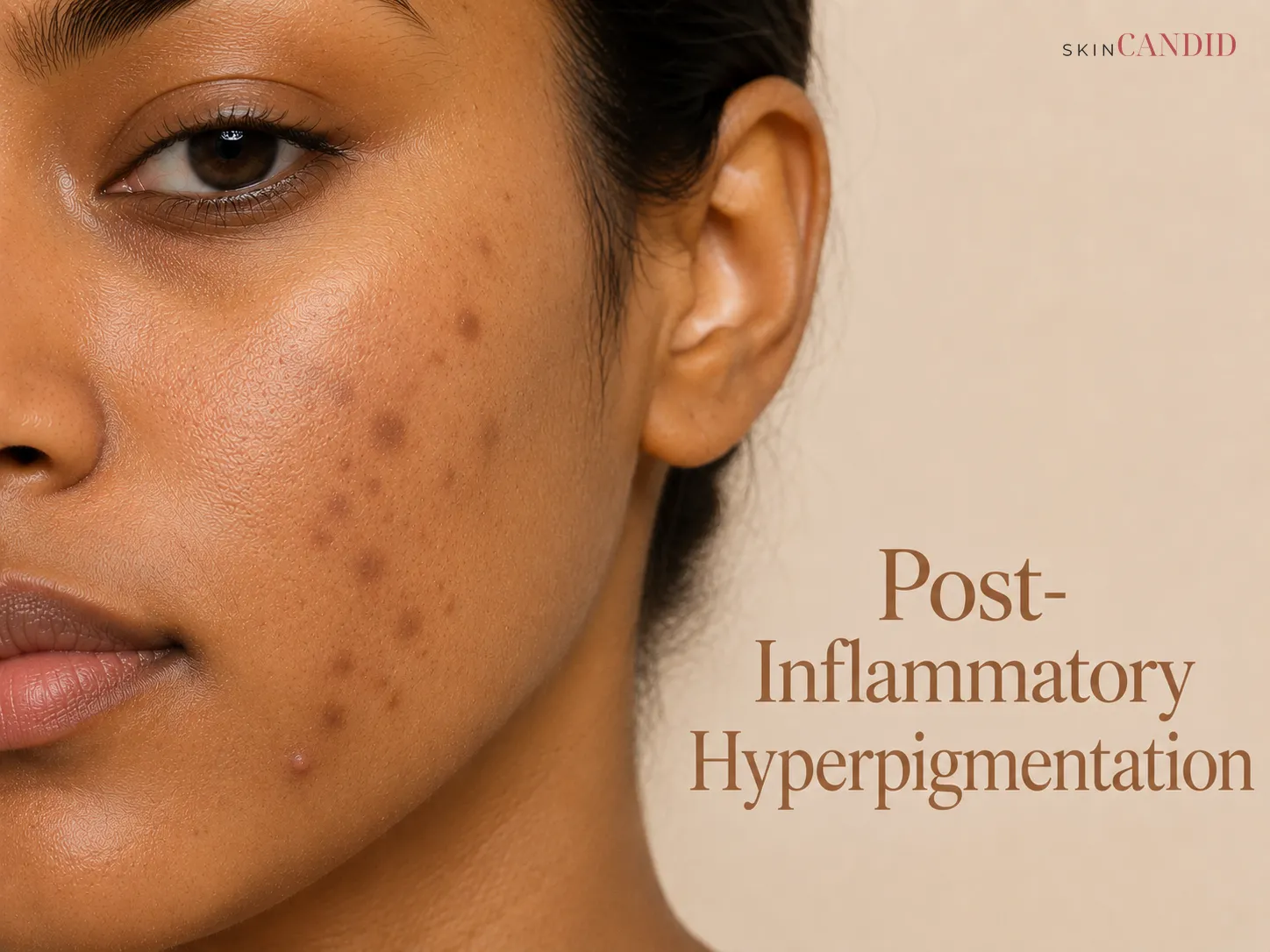
Post-inflammatory hyperpigmentation describes flat brown or grey-brown marks that remain after acne or another inflamed spot has healed, caused by extra melanin the skin produces while repairing itself.
Overview
What is post-inflammatory hyperpigmentation?
Post-inflammatory hyperpigmentation, sometimes shortened to PIH, is a flat brown or grey-brown mark that develops after inflammation or injury to the skin, most often from acne but also from conditions such as eczema or psoriasis, cuts or burns. Inflammation stimulates melanocytes to release excess pigment, which becomes visible in the healed area.
It is one of several possible post-acne marks, and tends to be more common and more persistent in medium-to-deep skin tones.
Common signs and patterns
What post-inflammatory hyperpigmentation can look or feel like
These features can provide context, but they do not confirm a diagnosis on their own.
Flat brown or grey-brown marks
The area is flush with the surrounding skin, matching the exact site of a previously inflamed lesion.
Marks that persist for months
Unlike a fading tan, these marks often remain visible for a long period without treatment, especially in deeper skin tones.
A deeper, blue-grey tone in some cases
When pigment sits deeper in the skin it can appear more blue-grey and typically takes longer to fade.
Marks that darken further with sun exposure
Unprotected UV exposure can stimulate additional pigment, making marks darker or slower to resolve.
Causes and contributors
Extra melanin production after inflammation is the underlying driver.
When skin is inflamed or injured, melanocytes can be stimulated to produce more melanin than usual, which is then deposited in the upper or deeper layers of skin. This pattern is more common and often more pronounced in medium-to-deep skin tones.
Unprotected sun exposure, picking at healing lesions, and continuing to irritate the same area can all prolong or darken the resulting marks.
What it may be confused with
Similar-looking marks need different decisions
Brown discoloration after a breakout is not always the same underlying process, and mixing them up can lead to the wrong treatment.
Post-inflammatory erythema
Pink-to-red marks caused by small blood vessels, rather than the brown tone produced by extra melanin.
Melasma
Usually appears as larger, more symmetrical patches driven by hormones and sun exposure, rather than marks tied to a specific healed lesion.
Sun damage
Reflects cumulative UV exposure over time rather than a single inflammatory event.
General hyperpigmentation
A broader umbrella term for skin darkening from any cause; post-inflammatory hyperpigmentation is one specific type.
Bottom line
Protect skin from the sun and be patient with melanin-targeted treatment.
Most post-inflammatory hyperpigmentation fades gradually over several months to a year or more with consistent care.
Sunscreen, gentle brightening ingredients and avoiding further irritation matter more than any single fast-acting product.
Evidence-supported options
Choose the option that matches severity and skin tone
This is general education, not a personal treatment plan. Product strengths, permitted uses and prescription status vary by country.
Daily broad-spectrum sunscreen
Essential for preventing new marks from darkening and for supporting fading of existing ones.
Limit: Prevents worsening but will not fade established marks quickly on its own.
Niacinamide or azelaic acid
Help reduce the transfer of melanin and are generally well tolerated across skin tones.
Limit: Improvement is gradual and builds over weeks to months.
Topical retinoids
Support skin cell turnover, which can help fade pigment over consistent use.
Limit: Can cause irritation during introduction, which may itself trigger further pigment change if not managed gently.
Hydroquinone, chemical peels or laser
Prescription-strength lightening agents, peels or lasers can offer faster fading for persistent marks under professional guidance.
Limit: Requires clinician selection, as aggressive or poorly matched procedures can trigger further pigmentation, particularly in medium-to-deep skin tones.
Supportive skincare
A simple routine while marks fade
Supportive skincare should protect skin from further pigment triggers while remaining gentle enough to avoid new irritation.
Morning
- Cleanse gentlyUse a mild cleanser suited to your skin.
- Apply a brightening serumNiacinamide, vitamin C or azelaic acid can be layered under moisturiser.
- Moisturise and protectFinish with a moisturiser and daily broad-spectrum sunscreen.
Evening
- Cleanse onceRemove makeup and sunscreen gently.
- Use a retinoid or azelaic acidIntroduce gradually to avoid irritation that could prolong pigment change.
- MoisturiseSupport the skin barrier overnight.
Common mistakes
What can make post-inflammatory hyperpigmentation harder to manage
- Skipping daily sunscreen while marks are still visible, which can darken or prolong them.
- Picking or squeezing healing lesions rather than letting them settle on their own.
- Using aggressive exfoliation or high-strength peels without professional guidance, which can trigger further pigment in medium-to-deep skin tones.
- Expecting visible fading within days rather than the realistic timeline of months.
When professional help makes sense
Seek assessment when marks are extensive, deep, or slow to change.
- Marks that remain unchanged after a year or more of consistent sun protection and topical care
- Deep, blue-grey pigment that is more resistant to standard topical treatment
- Interest in prescription-strength hydroquinone, chemical peels or laser treatment
- Uncertainty about whether marks reflect post-inflammatory hyperpigmentation or a condition such as melasma
Related reading
Continue with the next useful question
Editorial record
What this page knows, and what remains uncertain
Evidence summary
Current dermatology sources describe post-inflammatory hyperpigmentation as a melanin-driven process that is more common and persistent in medium-to-deep skin tones, supported by sunscreen, topical brightening agents and, where appropriate, professional treatment.
Review status
Financial transparency
No paid product placement or affiliate ranking is included on this foundation page.
Recommendation logic
Options are organised by evidence grade and the point at which professional pigment-targeted treatment becomes a reasonable addition.
Frequently asked questions
Short answers to common questions
What is the difference between post-inflammatory hyperpigmentation and post-inflammatory erythema?
Post-inflammatory hyperpigmentation is a brown or grey-brown mark caused by extra melanin, while post-inflammatory erythema is a pink-to-red mark caused by small blood vessels; the two can occur separately or together after the same healed lesion.
How long does post-inflammatory hyperpigmentation take to fade?
Marks often take several months to a year or longer to fade, and deeper pigment can take even longer, especially without consistent sun protection.
Is post-inflammatory hyperpigmentation the same as melasma?
No. Post-inflammatory hyperpigmentation follows a specific healed injury or inflamed lesion, while melasma is a distinct, usually larger and more symmetrical pattern linked to hormones and sun exposure.
Can I use hydroquinone at home for post-inflammatory hyperpigmentation?
Hydroquinone is generally considered a prescription-strength or professionally guided option in many countries, and it is best used under clinician supervision to reduce the risk of irritation-related pigment changes.
Sources reviewed
Guidance behind this page
- DermNet NZ: Postinflammatory hyperpigmentation
- StatPearls (NCBI Bookshelf): Postinflammatory hyperpigmentation
- American Academy of Dermatology: How to fade dark spots in darker skin tones
Sources support general editorial guidance. They do not replace regional product labels, prescribing information or personal medical assessment.