
Body Concerns
Ingrown Hairs
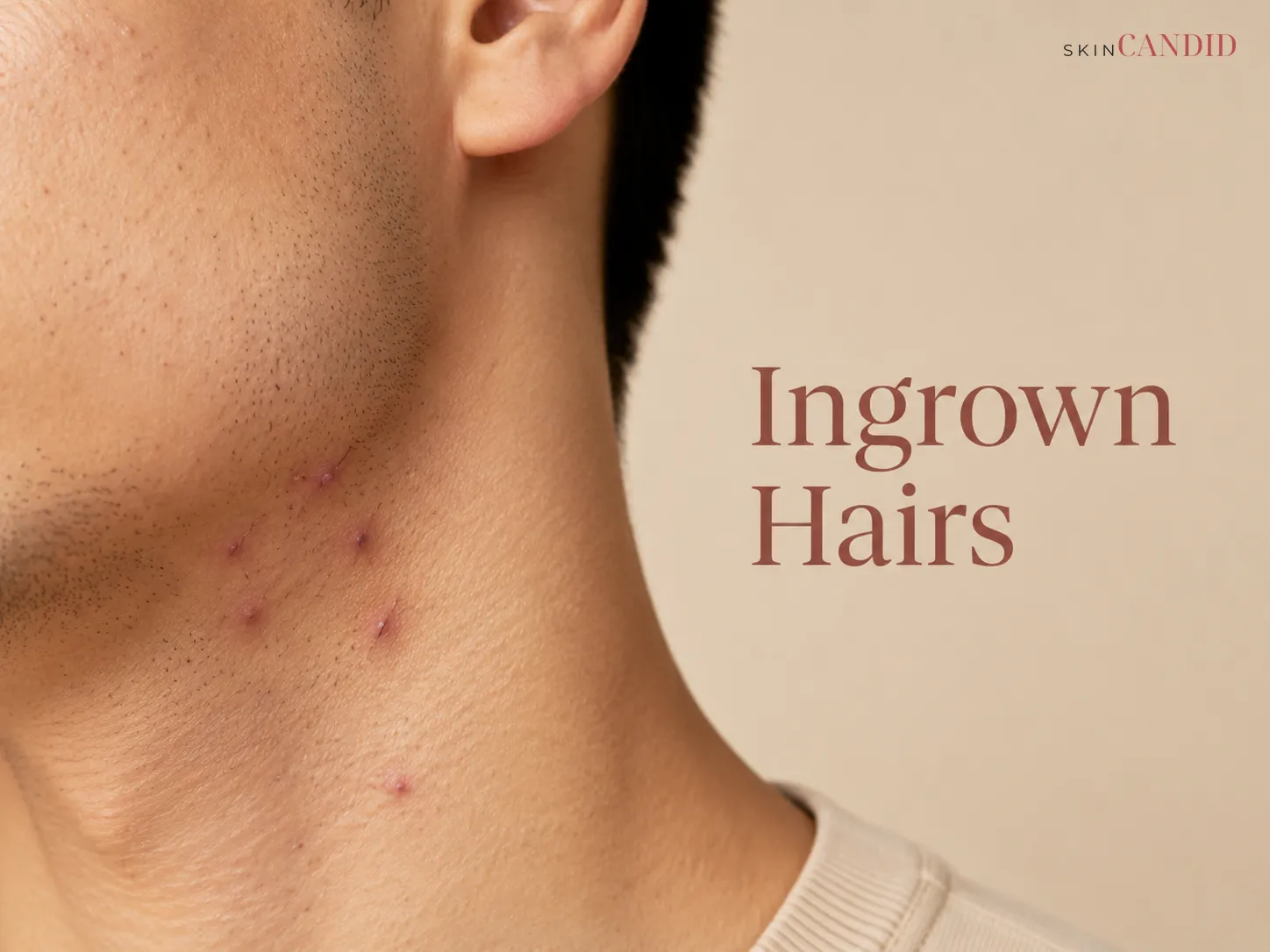
Ingrown hairs develop when a cut or removed hair curves back into the skin, causing a raised bump, irritation and sometimes inflammation, discoloration or infection.
Overview
What are ingrown hairs?
An ingrown hair forms when a hair grows sideways or curves back into the skin instead of emerging normally through the follicle opening. The skin may react to the trapped hair as it would to a foreign body, producing inflammation around the follicle.
They are common after shaving, waxing, threading, tweezing or other methods that cut or remove hair. Frequently affected areas include the beard and neck, legs, underarms, chest, back and pubic area.
A recurring inflammatory pattern caused by shaved hairs re-entering the skin is called pseudofolliculitis. In the beard area, it is often called pseudofolliculitis barbae or razor bumps.
Common signs and patterns
What ingrown hairs can look or feel like
These signs can provide context, but similar-looking follicular conditions may need different treatment.
Raised follicular bumps
Small skin-coloured, red, pink, brown or purple bumps may appear in an area where hair has recently been removed.
A visible trapped hair
A short hair may be visible beneath the skin, or it may form a small loop where the tip has curved back into the surface.
Itch, tenderness or stinging
The area may feel itchy, sore or irritated, particularly when clothing rubs against it or the skin is shaved again.
Marks, pus or scarring
Inflamed bumps can leave flat dark marks. Picking, repeated trauma or secondary infection can increase the risk of persistent discoloration and raised scars.
Causes and contributors
Hair shape and hair-removal technique both affect the risk.
Close shaving can leave a short hair with a sharp edge that re-enters the skin. Pulling the skin tight while shaving may allow the cut hair to retract beneath the surface. Shaving against the direction of growth, repeated razor strokes, blunt blades, waxing and tweezing can also contribute.
Coarse or tightly curled hair is more likely to curve back towards the skin, although anyone can develop an ingrown hair. Friction, tight clothing, scar tissue and repeated hair removal can make the problem harder to control.
What it may be confused with
Not every bump after shaving is an ingrown hair
Uniform, spreading, deeply painful or persistent bumps should not automatically be treated as trapped hairs.
Folliculitis
Folliculitis is inflammation of a hair follicle and may be caused by infection, irritation or other triggers. It can coexist with ingrown hairs.
Acne
Acne can include blackheads, whiteheads and inflamed spots outside recently shaved or waxed areas. A trapped hair is not usually visible.
Keratosis pilaris
This usually produces many small, rough follicular bumps on areas such as the upper arms or thighs rather than isolated hairs growing beneath the skin.
Hidradenitis suppurativa
Recurring deep lumps, tunnels, drainage or scarring in the underarms, groin or other skin folds need medical assessment and should not be treated as ordinary ingrown hairs.
Bottom line
Preventing the next ingrown hair matters more than repeatedly extracting the current one.
The most reliable approach is to reduce close hair removal and let existing inflammation settle. When shaving continues, technique, blade condition and hair-growth direction become central.
Add topical treatments cautiously. More exfoliation is not automatically better, particularly on recently shaved, sensitive or already inflamed skin.
Evidence-supported options
Choose the option according to frequency, inflammation and scarring risk
This is general education, not a personal treatment plan. Prescription status, permitted uses and product strengths vary by country.
Pause close hair removal
Allowing the hair to grow can remove the immediate cause and give trapped hairs time to emerge as the inflammation settles.
Limit: This may not suit every work, cultural or personal preference, and recurrent bumps can take several weeks to settle.
Change shaving technique
Softening the hair first, using lubricating shaving cream, shaving in the direction of growth and avoiding skin stretching or repeated close passes can reduce new bumps.
Limit: Hair can grow in several directions, especially under the jawline. Technique needs to follow the actual growth pattern rather than one universal direction.
Careful keratolytic or retinoid use
Salicylic acid, glycolic acid or a clinician-selected retinoid may help reduce follicular blockage and improve recurring razor bumps in some people.
Limit: These can sting or irritate freshly shaved skin. Retinoids have important pregnancy-related restrictions, and stronger treatment should be professionally selected.
Prescription care or laser hair reduction
A clinician may consider anti-inflammatory treatment, infection treatment or laser-assisted hair reduction when recurrent bumps continue despite technique changes.
Limit: Antibiotics are appropriate only when infection is present. Laser suitability, settings and pigmentation risks depend on hair colour, skin tone, device and operator experience.
Supportive skincare
A simple routine while ingrown hairs are settling
Supportive skincare should reduce friction and irritation. It should not become an aggressive attempt to scrub the hair out.
Morning
- Cleanse gently Use lukewarm water and a mild cleanser without rough brushes, grainy scrubs or forceful rubbing.
- Apply treatment only when appropriate Keep strong acids away from broken, freshly shaved or significantly inflamed skin.
- Moisturise and protect Use a comfortable moisturiser and broad-spectrum sunscreen on exposed areas, especially when dark marks are developing.
Evening
- Reduce friction Remove tight, sweaty clothing and cleanse the area after exercise without scrubbing.
- Use a warm compress if comfortable A clean warm compress may soften the surface and help a visible trapped hair release naturally.
- Keep the skin calm Apply a simple moisturiser and avoid combining several exfoliating or anti-acne treatments at once.
Common mistakes
What can make ingrown hairs worse
- Squeezing, scratching or digging into the skin with fingernails, tweezers or an unsterile needle.
- Trying to pull out a hair that is not clearly visible at the surface.
- Dry shaving, shaving against the direction of growth or repeatedly passing over the same area.
- Pulling the skin tight to achieve a closer shave.
- Using a blunt, dirty or wet-stored razor.
- Applying strong exfoliating acids immediately before or after hair removal.
- Assuming every pus-filled bump needs an antibiotic or every inflamed bump needs a topical steroid.
When professional help makes sense
Seek assessment when pain, infection, scarring or recurrence is increasing.
- The area is increasingly painful, hot, swollen, spreading or producing significant pus
- You develop a fever, chills or feel generally unwell
- Bumps repeatedly return despite changing shaving or hair-removal technique
- Raised scars, deep grooves or persistent dark marks are developing
- There are recurring deep lumps, drainage or tunnels in the underarms, groin or other folds
- The diagnosis is uncertain or the bumps are occurring without recent hair removal
Related reading
Continue with the next useful question
Editorial record
What this page knows, and what remains uncertain
Evidence summary
Authoritative dermatology guidance consistently supports reducing close hair removal, shaving in the direction of growth, avoiding skin stretching and seeking professional care when inflammation, infection or scarring persists.
Review status
Financial transparency
No paid product placement, sponsored ranking or affiliate recommendation is included on this foundation page.
Recommendation logic
Options are organised by the cause of the ingrown hair, frequency of recurrence, degree of inflammation, pigmentation or scarring risk and whether professional treatment is needed.
Frequently asked questions
Short answers to common questions
Do ingrown hairs go away on their own?
Many occasional ingrown hairs settle when hair removal is paused and the hair grows through the skin naturally. Recurrent, infected or scarring bumps may need professional treatment.
Should you pull out an ingrown hair?
Do not dig into the skin or pull out a hair that is not clearly visible at the surface. Picking can cause infection, discoloration and scarring. A clinician can safely release or remove a persistent hair when necessary.
Why do ingrown hairs keep returning after shaving?
Close shaving, stretching the skin, shaving against hair growth and tightly curled or coarse hair can repeatedly direct cut hairs back into the skin. Changing technique or leaving short stubble may reduce recurrence.
Can exfoliation prevent ingrown hairs?
Careful use of a suitable exfoliating product may help some people, but scrubbing or using strong acids on freshly shaved or inflamed skin can worsen irritation. Exfoliation does not correct every cause of recurring ingrown hairs.
Sources reviewed
Guidance behind this page
- American Academy of Dermatology: Razor bump remedies
- American Academy of Dermatology: Hair removal and shaving guidance
- NHS: Ingrown hairs
- DermNet: Pseudofolliculitis barbae
- Mayo Clinic: Ingrown hair symptoms and causes
Sources support general editorial guidance. They do not replace regional product labels, prescribing information or personal medical assessment.