
Breakouts & Pores
Cheek Acne
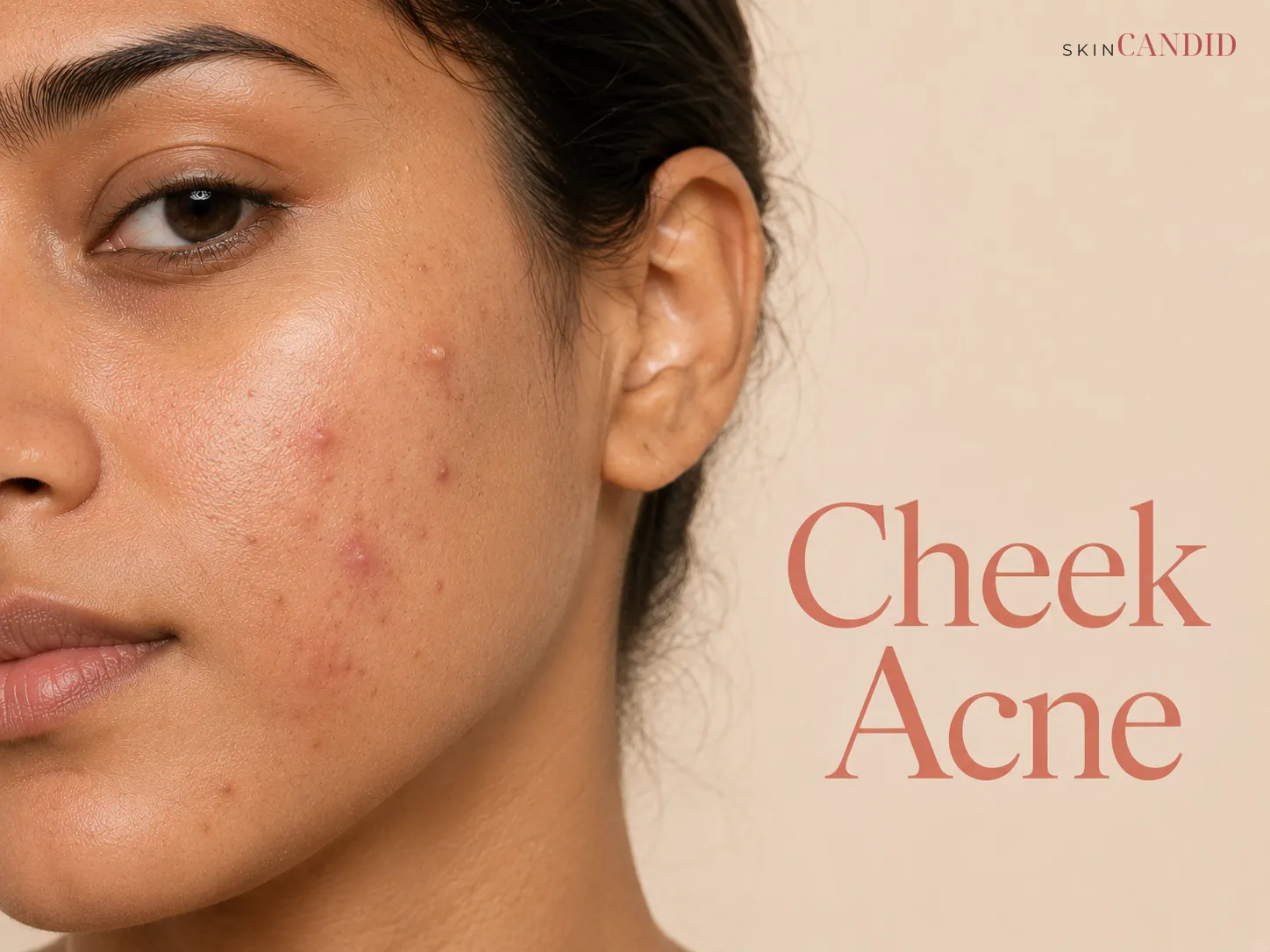
Cheek acne describes breakouts concentrated on the cheeks, an area that is frequently affected by contact and friction from phones, masks, pillowcases and helmet straps in addition to the usual acne process.
Overview
What is cheek acne?
Cheek acne is ordinary acne that appears mainly on the cheeks rather than the forehead, chin or jawline. It develops through the same process as acne elsewhere: oil, dead skin cells and bacteria collect inside hair follicles, and inflammation follows.
The cheeks cover a large surface area and are in frequent contact with phone screens, face masks, pillowcases, cycling or sports helmets and hands, which can add friction and occlusion on top of an existing tendency toward breakouts.
Common signs and patterns
What cheek acne can look or feel like
These features can provide context, but they do not confirm a diagnosis on their own.
Closed comedones
Small, skin-coloured bumps form when follicles become blocked without deep inflammation.
Inflammatory papules
Red or tender bumps often appear where skin is repeatedly touched or covered.
One-sided or patchy distribution
Breakouts can cluster on the side of the face that regularly rests against a phone, pillow or hand.
Flat healing marks
Red or brown marks may remain on the cheeks after lesions settle.
Causes and contributors
Cheek acne combines the general acne process with added friction and contact.
Sebum, dead skin cells and acne-related bacteria block follicles on the cheeks the same way they do elsewhere. Because the cheeks make frequent contact with phone screens, face masks, pillowcases and helmet straps, pressure, heat and rubbing against the skin can roughen the surface and encourage breakouts in that specific pattern, a mechanism dermatologists describe as acne mechanica.
Unwashed phone screens and pillowcases can also carry oil and product residue back onto the skin between washes.
What it may be confused with
Similar-looking concerns need different decisions
Persistent redness or bumps on the cheeks are not automatically acne.
Rosacea
Centres on facial redness, flushing and visible vessels on the cheeks; blackheads are not typical.
Perioral dermatitis
Can extend onto the lower cheeks and usually lacks the comedones typical of acne.
Folliculitis
Inflammation around hair follicles can look similar, sometimes with itch or a more uniform, repetitive pattern.
Sebaceous filaments
Small, greyish specs around the nose and cheeks are a normal pore structure, not active acne.
Bottom line
Address the acne process and the contact pattern together.
Evidence-supported acne treatment remains the foundation, applied consistently for several weeks.
Alongside it, reducing repeated pressure, rubbing and residue on the cheeks removes an added contributor without requiring extra products.
Evidence-supported options
Choose the option that matches severity and tolerance
This is general education, not a personal treatment plan. Product strengths, permitted uses and prescription status vary by country.
Topical retinoids
Help prevent blocked follicles and can improve both comedonal and inflammatory cheek breakouts.
Limit: Irritation is common during introduction, particularly where skin is already rubbed by contact.
Benzoyl peroxide
Helps reduce inflammatory acne and is often combined with other treatments.
Limit: Can dry or irritate skin and bleach fabrics, including pillowcases.
Reducing friction and contact
Cleaning phone screens, changing pillowcases regularly and loosening mask or helmet contact can reduce a specific added trigger.
Limit: Helps prevent new friction-related breakouts but does not treat acne that is already present.
Prescription combinations
Topical combinations or oral treatment may be appropriate for persistent or deeper inflammatory acne.
Limit: Requires clinician selection and monitoring.
Supportive skincare
A simple routine while cheek acne is being managed
Supportive skincare should reduce irritation and contact residue without replacing the selected acne treatment.
Morning
- Cleanse gentlyUse a mild cleanser and lukewarm water without scrubbing.
- Apply treatment if directedFollow the product label or clinician’s instructions.
- Moisturise and protectUse a non-comedogenic moisturiser and daily sunscreen.
Evening
- Wipe down daily-contact surfacesClean the phone screen and change pillowcases regularly.
- Cleanse onceRemove makeup and sunscreen without rough cloths.
- Use the selected acne treatmentIntroduce gradually and avoid combining several new actives at once.
Common mistakes
What can make cheek acne harder to manage
- Ignoring repeated contact from phones, masks or pillowcases as a possible added trigger.
- Scrubbing the cheeks harder in response to breakouts, which increases irritation.
- Resting a phone against the same cheek for long calls without noticing a one-sided pattern.
- Skipping moisturiser or sunscreen while using drying acne treatments.
When professional help makes sense
Seek assessment when breakouts are deep, persistent or leaving marks.
- Deep, painful lesions or breakouts that keep recurring in the same spot
- Persistent marks, scarring or a major effect on confidence and wellbeing
- No meaningful improvement after a consistent evidence-based treatment period
- Uncertainty about whether the pattern is acne, rosacea or another condition
Related reading
Continue with the next useful question
Editorial record
What this page knows, and what remains uncertain
Evidence summary
Current dermatology guidance supports standard acne treatment for cheek breakouts, alongside recognised friction and occlusion mechanisms (acne mechanica) that can add to the pattern seen on the cheeks.
Review status
Financial transparency
No paid product placement or affiliate ranking is included on this foundation page.
Recommendation logic
Options are organised by evidence grade, with friction-reduction steps presented as supportive rather than a substitute for treatment.
Frequently asked questions
Short answers to common questions
Why do I only get acne on one cheek?
A one-sided pattern can point to repeated contact on that side, such as resting a phone against the cheek during calls or consistently sleeping on the same side of a pillowcase.
Does my phone really cause cheek acne?
A phone screen can carry oil and residue, and the pressure and heat of holding it against the cheek can add friction on top of an existing tendency toward breakouts, though it is rarely the only cause.
Should I switch skincare products for cheek acne specifically?
Cheek acne generally responds to the same evidence-supported treatments used for acne elsewhere; the more useful change is often reducing contact and friction rather than switching products repeatedly.
How often should I change my pillowcase for acne-prone cheeks?
Washing or changing pillowcases every few days can reduce the build-up of oil and product residue that contacts the cheeks overnight.
Sources reviewed
Guidance behind this page
- Cleveland Clinic: Daily mask wearing and skin — maskne and facial pressure injury
- Cleveland Clinic: Acne — types, causes, treatment and prevention
Sources support general editorial guidance. They do not replace regional product labels, prescribing information or personal medical assessment.