
Breakouts & Pores
Jawline Acne
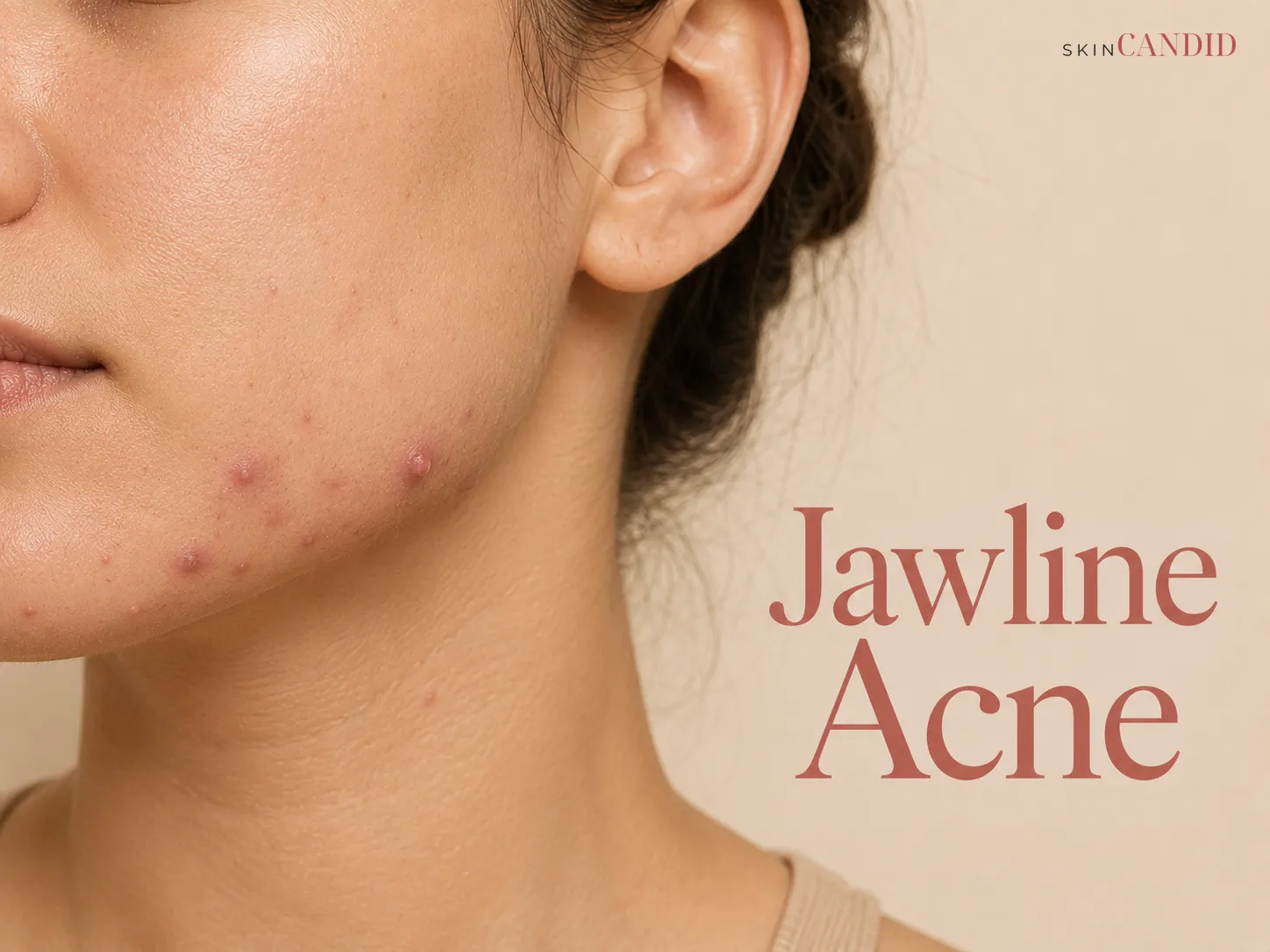
Jawline acne describes deeper, often tender breakouts along the jaw and lower cheek, a lower-face pattern that dermatologists commonly associate with hormonal fluctuation, especially in adult women.
Overview
What is jawline acne?
Jawline acne is acne that concentrates along the jaw and lower cheek rather than the forehead or nose. It develops through the same follicular blockage and inflammation process as acne elsewhere, but this particular distribution, sometimes described clinically as the lower face, jawline and neck, is closely associated with hormonal influence.
It is especially recognised in adult women, where breakouts in this zone often flare around the menstrual cycle, though it can also occur in men and in people without an obvious hormonal trigger.
Common signs and patterns
What jawline acne can look or feel like
These features can provide context, but they do not confirm a diagnosis on their own.
Deep, tender lesions
Papules and nodules along the jaw often sit deeper and feel more tender than surface breakouts.
Cyclical flares
Breakouts that reliably appear around the same point in the menstrual cycle suggest a hormonal contributor.
Recurring in the same spots
Lesions often return to the same area of the jaw rather than appearing randomly across the face.
Post-acne marks
Flat red or brown marks can persist along the jaw after deeper lesions settle.
Causes and contributors
Androgen-related sebum changes drive much of the jawline pattern.
Androgens can increase sebaceous gland activity and sebum production, and sebaceous glands along the lower face and jaw appear particularly responsive to these hormonal signals. This is why jawline breakouts are so often reported around menstrual periods, during pregnancy, after stopping hormonal birth control, or alongside conditions such as polycystic ovary syndrome.
Friction from phone calls, chin straps or resting a hand along the jaw, and shaving irritation in men, can add to the pattern without being the primary driver.
What it may be confused with
Similar-looking concerns need different decisions
Bumps along the jaw are not automatically hormonal acne.
Ingrown hairs
Shaving along the jaw can trap curled hairs and create bumps that mimic acne.
Perioral dermatitis
Can extend toward the jaw and usually lacks the comedones typical of acne.
Rosacea
Usually centres on flushing and visible redness rather than comedones or deep tender lesions.
Hidradenitis suppurativa
Deep recurring lumps or drainage in body folds require medical assessment and are not ordinary acne.
Bottom line
Track the cycle, then match treatment to the pattern.
Noting whether jawline breakouts cluster around the menstrual cycle helps a clinician judge whether hormonal therapy is worth discussing.
Topical treatment remains the starting point, but persistent lower-face acne is one of the more common reasons dermatologists move to combined approaches.
Evidence-supported options
Choose the option that matches severity and pattern
This is general education, not a personal treatment plan. Product strengths, permitted uses and prescription status vary by country.
Topical retinoids
Help prevent blocked follicles and support long-term improvement of jawline breakouts.
Limit: Irritation is common during introduction and pregnancy-related restrictions apply.
Benzoyl peroxide or azelaic acid
Reduce inflammatory acne and may help with lingering discoloration.
Limit: Can dry or irritate skin, especially on the sensitive jawline.
Combined oral contraceptives
Certain formulations are approved to help treat acne in women by reducing androgen-related sebum production.
Limit: Requires clinician assessment; results are typically judged over two to three months.
Spironolactone
Can reduce breakouts and oiliness in women, sometimes combined with birth control.
Limit: Prescription only, with monitoring; not appropriate for men.
Supportive skincare
A simple routine while jawline acne is being managed
Supportive skincare should protect the jawline barrier and support tolerance of any prescribed treatment.
Morning
- Cleanse gentlyUse a mild cleanser without scrubbing the jawline.
- Apply treatment if directedFollow the product label or clinician’s instructions.
- Moisturise and protectUse a non-comedogenic moisturiser and daily sunscreen.
Evening
- Remove makeup and sunscreenCleanse once without rough cloths or brushes.
- Use the selected acne treatmentIntroduce gradually and avoid combining several new actives at once.
- MoisturiseSupport the skin barrier, especially if shaving the area.
Common mistakes
What can make jawline acne harder to manage
- Treating persistent jawline breakouts only as a surface problem without noting a cyclical pattern.
- Picking or squeezing deeper lesions, which raises the risk of marks and scarring.
- Stopping treatment after a few days because improvement is not immediate.
- Ignoring shaving-related irritation as a separate contributor to jawline bumps.
When professional help makes sense
Seek assessment when jawline acne is deep, cyclical or resistant to topical care.
- Deep, painful nodules or breakouts that reliably recur around the menstrual cycle
- No meaningful improvement after a consistent evidence-based topical treatment period
- Suspected polycystic ovary syndrome or other hormonal conditions
- Pregnancy, pregnancy planning or interest in hormonal therapy
Related reading
Continue with the next useful question
Editorial record
What this page knows, and what remains uncertain
Evidence summary
Authoritative dermatology guidance associates lower-face and jawline acne with androgen-related sebum production and supports hormonal therapy as an option for appropriately selected women.
Review status
Financial transparency
No paid product placement or affiliate ranking is included on this foundation page.
Recommendation logic
Options are organised by evidence grade and the point at which hormonal or prescription therapy becomes a reasonable next step.
Frequently asked questions
Short answers to common questions
Why do I keep getting acne in the same spot on my jaw?
Sebaceous glands along the jaw can be particularly responsive to hormonal signals, which is why breakouts often recur in the same area rather than appearing randomly.
Is jawline acne always hormonal?
It is commonly linked to hormonal activity, especially in adult women, but friction, shaving irritation and ordinary acne can also produce breakouts in this area without a clear hormonal trigger.
Does birth control help jawline acne?
Certain combined oral contraceptives are approved to treat acne in women by reducing androgen-related sebum production, though this requires a clinician’s assessment.
Can men get hormonal jawline acne?
Men can develop acne along the jaw, but hormonal therapies used for women, such as spironolactone, are not recommended for men due to side effects.
Sources reviewed
Guidance behind this page
- American Academy of Dermatology: Stubborn acne? Hormonal therapy may help
- Cleveland Clinic: Hormonal acne — causes, treatment and prevention
Sources support general editorial guidance. They do not replace regional product labels, prescribing information or personal medical assessment.