
Breakouts & Pores
Teen Acne
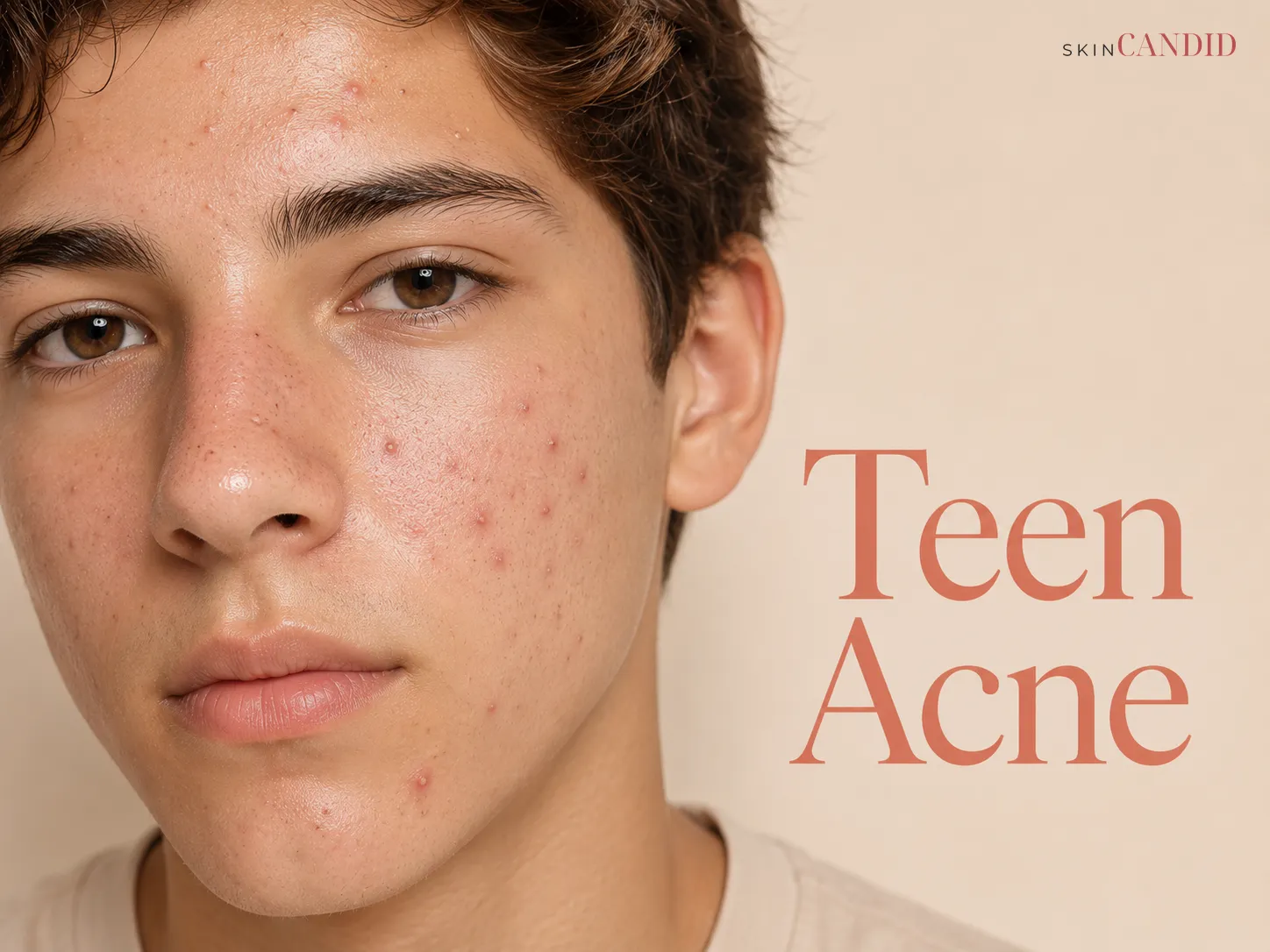
Teen acne is acne linked to puberty, when rising hormone levels activate the sebaceous glands, most often starting on the forehead and T-zone before spreading to the cheeks and jaw.
Overview
What is teen acne?
Teen acne is acne occurring during adolescence, when a stage of development called adrenarche raises androgen hormone levels and stimulates the sebaceous glands to grow and produce more oil. This oil, combined with dead skin cells and naturally occurring skin bacteria, blocks follicles and can lead to inflammation.
An estimated 80% of people aged 11 to 30 experience at least a mild form of acne, making it one of the most common skin conditions of adolescence. Younger adolescents often first notice comedones across the forehead, nose and chin, known as the T-zone, with inflammatory lesions developing across the wider face as puberty progresses.
Common signs and patterns
What teen acne can look or feel like
These features can provide context, but they do not confirm a diagnosis on their own.
Closed comedones on the forehead
Small, blocked follicles often appear first across the forehead in early puberty.
Blackheads around the nose
Open comedones commonly form in the T-zone alongside forehead breakouts.
Papules spreading to the cheeks
As puberty progresses, inflammatory lesions often extend beyond the T-zone to the cheeks and jaw.
Oily T-zone shine
Increased sebum production often makes the forehead and nose look and feel oilier than the rest of the face.
Causes and contributors
Puberty activates sebaceous glands through rising androgen levels.
During adrenarche, the body increases production of androgen hormones, which stimulate the sebaceous glands to grow and produce more sebum. This creates conditions in which naturally occurring skin bacteria can multiply, and combined with dead skin cells blocking follicles, this leads to the comedones and inflammatory lesions typical of teen acne.
Genetics can influence how early acne starts and how severe it becomes. Picking, scrubbing or using harsh products does not address this underlying hormonal process and can increase irritation.
What it may be confused with
Similar-looking concerns need different decisions
Not every bump on a teenager’s face is acne.
Seborrheic dermatitis
Causes flaking and redness along the hairline and eyebrows rather than true comedones.
Milia
Small, firm white bumps of trapped keratin, distinct from blocked oily follicles.
Perioral dermatitis
Clusters around the mouth and usually lacks the comedones typical of acne.
Prepubertal acne in younger children
Acne appearing well before the usual age of puberty can warrant medical evaluation rather than routine skincare.
Bottom line
Start simple, stay consistent, and avoid overloading a developing skin barrier.
Most teen acne responds to a gentle, consistent routine paired with an evidence-supported treatment, given several weeks to work.
Escalating to multiple strong products at once increases irritation without speeding up results.
Evidence-supported options
Choose the option that matches severity and tolerance
This is general education, not a personal treatment plan. Product strengths, permitted uses and prescription status vary by country, and some options require parental involvement for minors.
Topical retinoids
Help prevent blocked follicles and improve both comedonal and inflammatory acne over time.
Limit: Irritation is common when starting out; introduce gradually.
Benzoyl peroxide
Helps reduce inflammatory acne and is widely used as a first-step treatment for teenagers.
Limit: Can dry or irritate skin and bleach fabrics; lower strengths are often easier to tolerate.
Salicylic acid
May help loosen material within clogged pores, particularly in the T-zone.
Limit: Results vary and it does not replace treatment for deeper or scarring acne.
Prescription combinations or oral treatment
Topical combinations, oral antibiotics or other prescription options may be appropriate for moderate to severe teen acne.
Limit: Requires clinician selection, monitoring and often parental involvement.
Supportive skincare
A simple routine for a developing skin barrier
Supportive skincare for teenagers should stay simple and protect the skin barrier while treatment takes effect.
Morning
- Cleanse gentlyUse a mild cleanser and lukewarm water without scrubbing.
- Apply treatment if directedFollow the product label or clinician’s instructions.
- Moisturise and protectUse a comfortable non-comedogenic moisturiser and daily sunscreen.
Evening
- Remove sunscreen and any makeupCleanse once without rough cloths or brushes.
- Use the selected acne treatmentIntroduce one new product at a time.
- MoisturiseSupport the skin rather than trying to dry every lesion out.
Common mistakes
What can make teen acne harder to manage
- Scrubbing, squeezing or picking lesions, which can worsen inflammation and marks.
- Starting several strong treatments at once and being unable to identify the cause of irritation.
- Stopping treatment after a few days because improvement is not immediate.
- Assuming acne reflects poor hygiene rather than a normal hormonal stage of puberty.
When professional help makes sense
Seek assessment when teen acne is severe or affecting wellbeing.
- Deep, painful nodules, widespread inflammation or rapidly worsening acne
- Scarring, persistent dark marks or a noticeable effect on confidence and wellbeing
- No meaningful improvement after a consistent evidence-based treatment period
- Acne appearing well before the typical age of puberty
Related reading
Continue with the next useful question
Editorial record
What this page knows, and what remains uncertain
Evidence summary
Current dermatology references describe teen acne as driven by adrenarche-related androgen activity, with a well-documented shift from a T-zone-dominant pattern in early adolescence to a broader facial distribution as puberty progresses.
Review status
Financial transparency
No paid product placement or affiliate ranking is included on this foundation page.
Recommendation logic
Options are organised by evidence grade, tolerability for a developing skin barrier, and the point at which professional care becomes appropriate.
Frequently asked questions
Short answers to common questions
Why does teen acne often start on the forehead?
The forehead sits within the T-zone, which tends to be affected first as rising androgen hormones activate sebaceous glands in early puberty, with breakouts often spreading to the cheeks and jaw later.
Is teen acne caused by not washing enough?
No. Teen acne is driven by hormonal changes during puberty that increase sebum production, not by inadequate washing, and excessive scrubbing can make irritation worse.
Will teen acne go away on its own?
Acne often improves as hormone levels stabilise after puberty, but many teenagers benefit from evidence-supported treatment in the meantime to reduce breakouts and the risk of marks or scarring.
At what age does teen acne usually start?
Acne linked to puberty often begins between around ages 7 and 12 as a normal part of adrenarche, though the age and severity vary between individuals.
Sources reviewed
Guidance behind this page
- DermNet NZ: Acne in children
- StatPearls (NCBI Bookshelf): Acne Vulgaris — pathophysiology and facial distribution
- Cleveland Clinic: Acne — types, causes, treatment and prevention
Sources support general editorial guidance. They do not replace regional product labels, prescribing information or personal medical assessment.